What to Do If You Lose Your Invisible Aligner?

Losing an invisible aligner during treatment can interrupt your routine, but it is usually manageable with timely guidance from your orthodontist. Clear aligner treatment involves wearing a planned sequence of customised trays. Each tray is designed to apply controlled forces that gradually move teeth towards their intended positions. Therefore, every aligner has a specific role in the overall treatment plan.
If you lose one, the first step is to contact your orthodontist or aligner provider. Avoid independently skipping the missing tray or moving to the next one without professional advice.
Steps To Follow If You Lose Your Invisible Aligners
Here are the immediate steps you should follow:
Check whether the aligner is actually lost: Look in its storage case, bags, pockets, workplace, car and other places where you may have removed it.
Contact your orthodontist: Inform them which tray you have lost, when you last wore it and how long you had been using it.
Keep your previous aligner: If available, retain the previous tray instead of discarding it. Your orthodontist may recommend wearing it temporarily.
Avoid wearing the next tray without approval: Advancing prematurely can cause discomfort or prevent the teeth from tracking correctly.
Follow the recommended instructions: Your orthodontist may advise you to return to the previous tray, proceed to the next one or arrange a replacement.
The appropriate decision depends on your treatment progress and the condition of your teeth.
Should You Wear Your Previous Aligner After Losing the Current One?
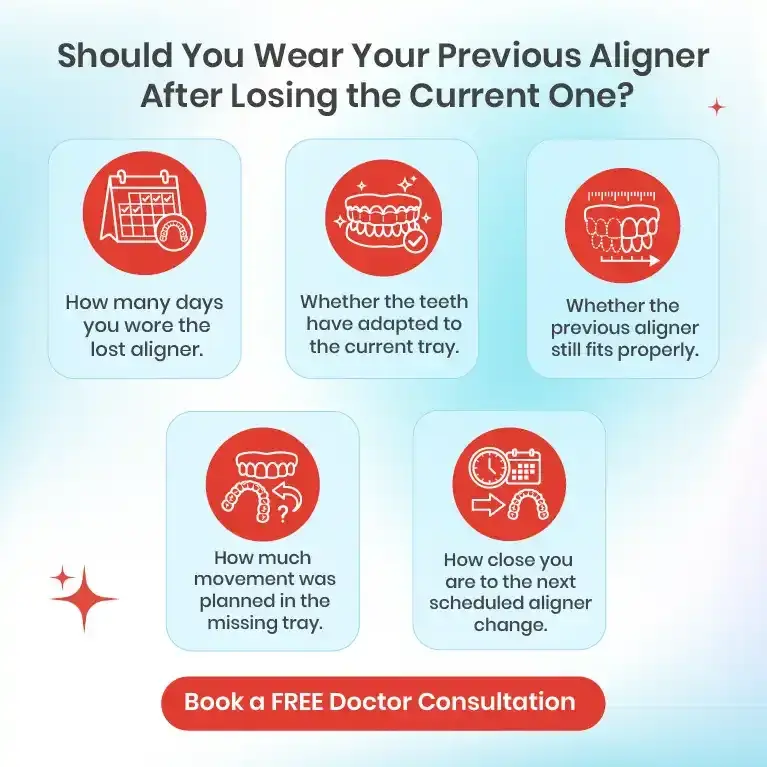
In many situations, an orthodontist may recommend temporarily wearing the previous aligner while deciding the next course of action. This can help maintain the tooth positions achieved during the previous stage and reduce the risk of unwanted movement. However, the previous tray may not fit perfectly if your teeth have already moved significantly into the positions planned by the missing aligner.
Do not force an old aligner onto your teeth if it causes significant discomfort, does not seat properly or puts excessive pressure on individual teeth. Whether you should return to the previous tray depends on:
How many days you wore the lost aligner.
Whether the teeth have adapted to the current tray.
Whether the previous aligner still fits properly.
How much movement was planned in the missing tray.
How close you are to the next scheduled aligner change.
Your orthodontist can assess these factors and recommend the safest option.
How Can You Get a Replacement for a Lost Toothsi Aligner?
If you lose an aligner while undergoing Toothsi Aligner treatment, you do not have to restart your treatment.
Toothsi provides a replacement aligner facility for patients who have lost or damaged their trays. The replacement is customised according to the patient's treatment requirements and progress.
Here is how you can proceed:
Contact Toothsi: Inform the customer support team about the missing aligner and your current treatment stage.
Share the required details: Provide your treatment information and any details requested by the team to assess your replacement requirement.
Follow the recommended instructions: The orthodontic team can guide you on whether to wear your backup aligner while the replacement is arranged.
Order the replacement: Toothsi offers replacement aligners through its website and app.
Resume treatment as advised: Once the replacement arrives, follow the instructions provided by your orthodontic team before continuing with the next stage.
At Toothsi, we customize replacement aligners after assessing treatment progress. The listed delivery timeline is 7–10 working days.
You can also explore the Toothsi aligner pricing and treatment information for details about replacement options.
How Can You Prevent Losing Your Invisible Aligners?
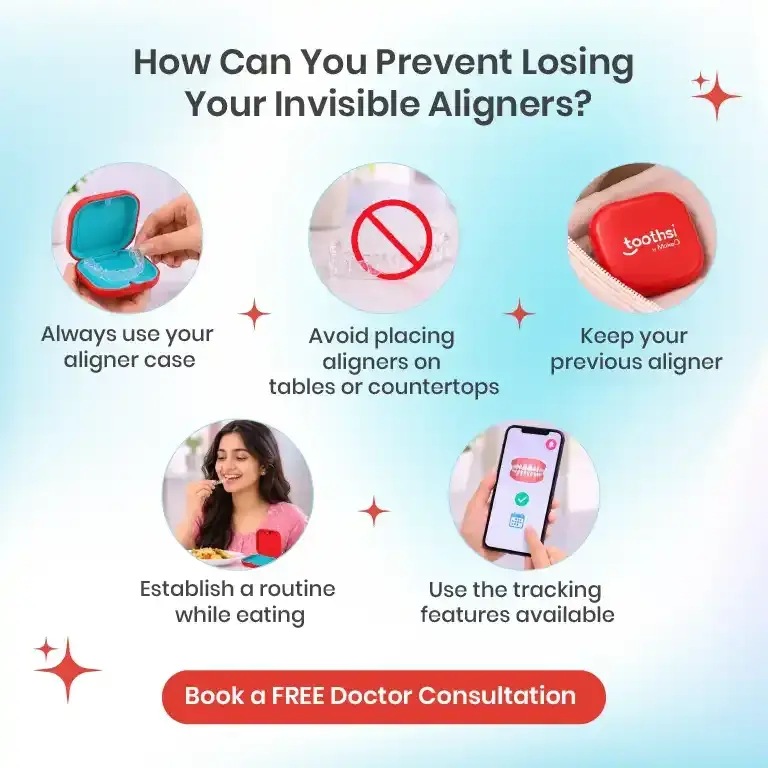
Prevention is important because losing an aligner can interrupt your treatment schedule and require additional coordination.
A few simple habits can reduce the chances of misplacing your trays.
- Always use your aligner case
Whenever you remove your aligners, place them directly in their designated storage case. Avoid wrapping them in tissues or napkins, as they may accidentally be thrown away.
- Avoid placing aligners on tables or countertops
Leaving aligners on restaurant tables, office desks or bathroom counters increases the likelihood of forgetting them or accidentally damaging them.
- Keep your previous aligner
Do not discard your previous set immediately after moving to the next stage. Keep it in the designated backup case, as your orthodontist may recommend using it temporarily if the current tray is lost or damaged.
- Establish a routine while eating
Remove your aligners before meals and place them in their case. Making this a consistent habit can prevent accidental loss.
- Use the tracking features available
Toothsi's Smile Journey app helps patients monitor aligner usage and treatment progress. Use the app and scheduled reminders to stay organised throughout treatment.
For additional guidance, read Toothsi's instructions on maintaining and handling clear aligners.
Will Losing an Aligner Affect Your Final Results?
Losing an aligner does not automatically compromise your final orthodontic results. The outcome depends on how quickly the issue is addressed and whether the recommended treatment instructions are followed. If you replace the missing tray or promptly receive an appropriate alternative, treatment can often continue without significant disruption.
However, leaving teeth without the prescribed appliance for an extended period may allow them to shift away from their planned positions. This can affect how subsequent aligners fit and may require the orthodontist to reassess the treatment plan. The most important factors are timely communication, appropriate use of backup aligners, and adherence to the prescribed treatment sequence.
Skipped Stages

Skipping an aligner stage without professional guidance can interfere with the planned sequence of tooth movements.
Each aligner is designed to move specific teeth by a small, controlled amount. The next tray assumes that the teeth have reached the positions planned for the previous stage.
If you move directly to the next aligner before your teeth are ready, you may experience:
Difficulty seating the aligner properly.
Increased pressure or discomfort.
Poor aligner tracking, where the teeth do not follow the planned movements.
Delays in treatment or the need for additional aligners.
This is why you should not independently skip a stage, even if the next aligner appears to fit.
We, at Toothsi, also advise patients to follow the switching schedule provided in their personalized treatment plan. If you have questions about changing trays, you can contact the team through the MakeO app.
References
The following sources support the clinical guidance and Toothsi-specific information covered in this article.
American Association of Orthodontists – What to Do If You Misplace an Aligner: Guidance on contacting your orthodontist and managing a missing aligner.
Toothsi – Technical Documentation and Aligner Instructions: Official instructions on lost or broken aligners, backup trays, storage and handling.
Toothsi – Frequently Asked Questions: Toothsi's replacement aligner facility and treatment-related queries.
Toothsi – Replacement Aligner Product: Replacement options, customisation and delivery timelines.
Toothsi – Pricing and Treatment Information: Reordering misplaced aligners through the MakeO app.