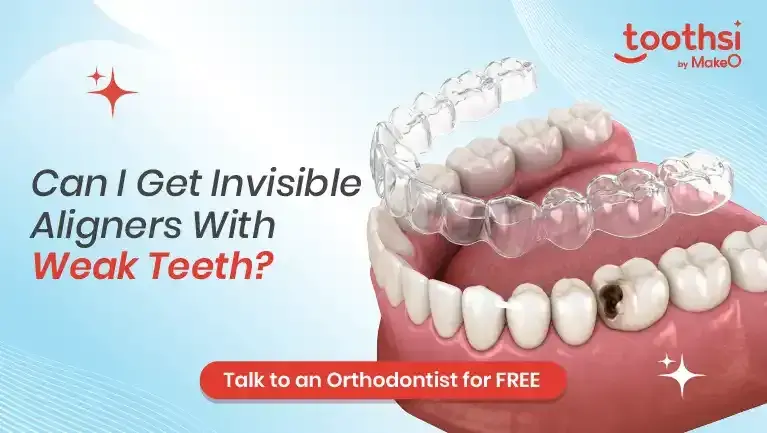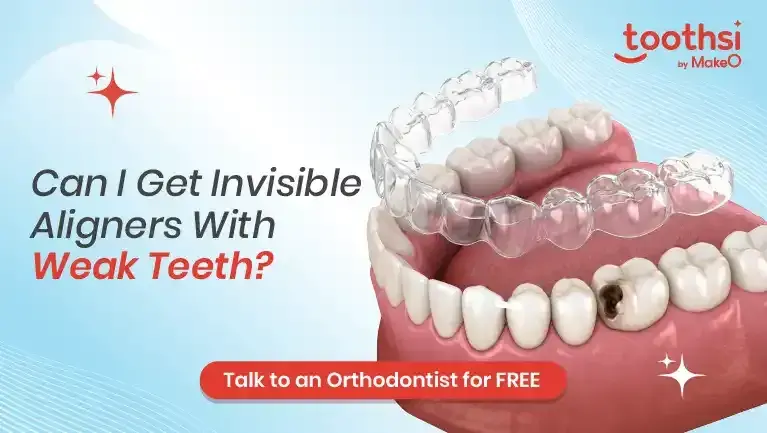
Can I Get Invisible Aligners With Weak Teeth?

MDS - Orthodontics, a senior dental specialist with 25 years of focused clinical expertise in orthodontics known for delivering high-precision results.
Updated on November 11, 2026
Yes, you may be able to get invisible aligners or teeth aligners if you have weak teeth, but your eligibility depends on what is causing the weakness. Not all dental conditions affect orthodontic treatment in the same way.
For example, weakened enamel, dental cavities, gum inflammation and reduced bone support are different conditions and require different approaches. Some can be managed before starting orthodontic treatment, while others may require more extensive dental or periodontal care.
Invisible aligners work by applying controlled forces to gradually move teeth into planned positions. For this movement to occur safely, the teeth must have adequate support from the surrounding periodontal ligament and alveolar bone.
If these supporting structures are compromised, applying orthodontic forces without addressing the underlying condition may increase the risk of tooth mobility, further bone loss or other complications.
Therefore, having weak teeth does not automatically disqualify you from clear aligner treatment. However, a clinical examination is necessary to determine whether your teeth can safely undergo orthodontic movement.
What Does Having Weak Teeth Mean?
The term 'weak teeth' is commonly used to describe several dental conditions. Identifying the underlying problem is important because each condition has different implications for aligner treatment.
- Weak or Thin Enamel
Enamel is the hard outer layer that protects teeth from physical and chemical damage. Enamel weakness may result from developmental defects, excessive acid exposure, erosion or other dental conditions.
Thin or damaged enamel does not automatically prevent someone from getting invisible aligners. However, the orthodontist must assess the condition of the teeth and determine whether attachments or other treatment procedures can be used safely.
- Tooth Decay and Cavities
Dental cavities develop when acids produced by oral bacteria gradually damage tooth structure. Untreated decay can weaken teeth and progress into deeper layers.
Existing cavities should generally be treated before starting aligner treatment. This helps prevent further damage and ensures that the teeth are sufficiently healthy for orthodontic movement.
- Weak Gums or Gum Disease
Healthy gums provide essential support to the teeth. Gingivitis causes gum inflammation, while periodontitis can progressively damage the tissues and bone supporting the teeth.
Mild gum inflammation should be treated before orthodontic treatment begins. Patients with a history of periodontitis may still be candidates for aligners, provided their periodontal condition is adequately treated and stable.
- Loose Teeth or Reduced Bone Support
Teeth can become loose when their supporting periodontal tissues and surrounding bone are damaged. This may occur due to advanced gum disease, trauma or other dental conditions.
Significant tooth mobility requires careful investigation before orthodontic treatment. Moving already unstable teeth can increase the risk of further damage or even tooth loss.
Can Invisible Aligners Make Weak Teeth Worse?
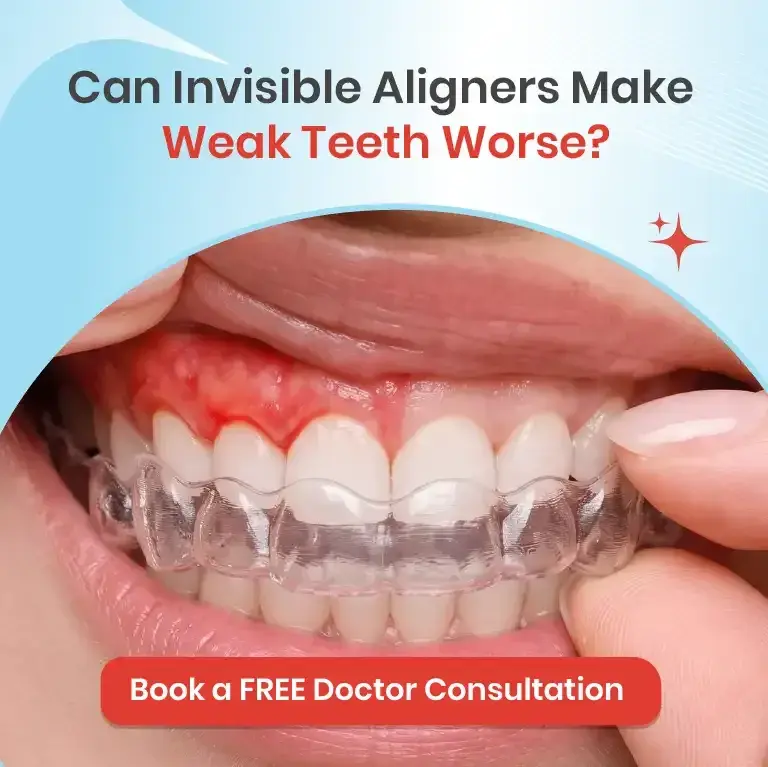
Invisible aligners do not automatically make teeth loose. In fact, controlled orthodontic tooth movement is a normal biological process involving temporary changes in the surrounding bone.
When orthodontic forces are applied, the periodontal ligament responds through a process of bone remodelling. If the supporting bone has already been significantly compromised by periodontal disease, the teeth may not tolerate these forces in the same way as teeth with healthy periodontal support.
Patients with active periodontitis or significant tooth mobility may therefore need periodontal treatment before considering aligners.
In selected patients with treated and stable periodontal disease, orthodontic treatment may still be possible with modified treatment mechanics, lighter forces and closer monitoring by the dental team.
The important distinction is between teeth that are naturally undergoing orthodontic movement and teeth that are already unstable because of inadequate periodontal support.
What Weak Teeth Conditions Should Be Treated Before Getting Invisible Aligners?
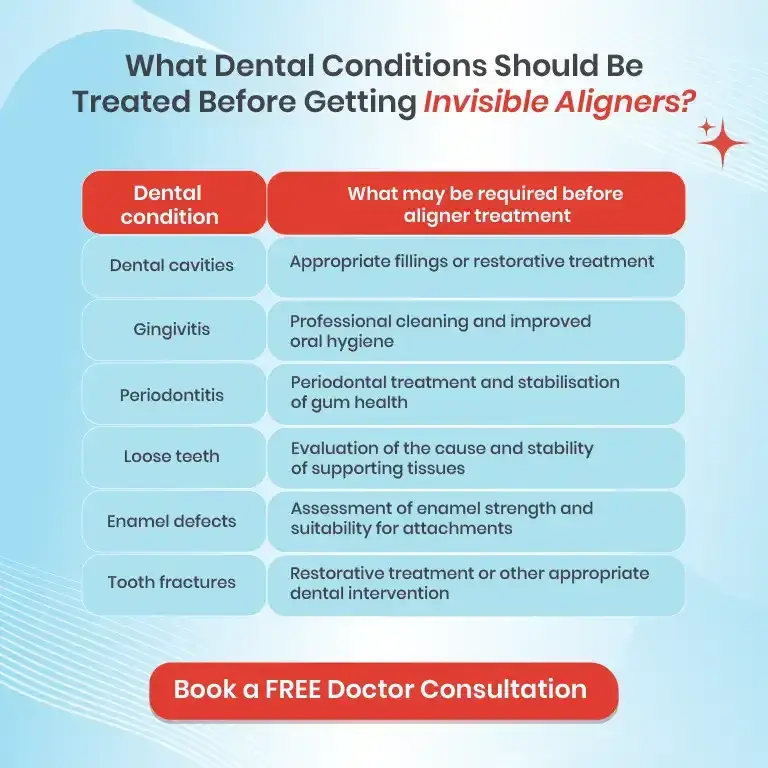
Before starting clear aligner treatment, an orthodontist should assess the condition of the teeth, gums and supporting bone. Depending on the findings, certain dental problems may need to be addressed first.
Dental condition | What may be required before aligner treatment |
|---|---|
Dental cavities | Appropriate fillings or restorative treatment |
Gingivitis | Professional cleaning and improved oral hygiene |
Periodontitis | Periodontal treatment and stabilisation of gum health |
Loose teeth | Evaluation of the cause and stability of supporting tissues |
Enamel defects | Assessment of enamel strength and suitability for attachments |
Tooth fractures | Restorative treatment or other appropriate dental intervention |
In some cases, treatment may require coordination between an orthodontist and a periodontist. The objective is to establish a healthy and stable foundation before moving the teeth.
Are Invisible Aligners Better Than Braces for People With Weak Teeth?
Neither invisible aligners nor traditional braces are automatically better for people with weakened teeth. The choice depends on the underlying dental condition and the movements required.
However, clear aligners offer certain practical advantages for patients who need to maintain particularly good oral hygiene.
Removability: Aligners can be removed while eating and brushing, allowing patients to clean their teeth more easily.
Access to teeth and gums: Unlike fixed brackets and wires, removable aligners do not obstruct access to tooth surfaces during routine cleaning.
Customised treatment planning: Digital scans help the orthodontist plan individual tooth movements and assess the complexity of treatment.
Controlled monitoring: Treatment progress can be reviewed regularly so that unexpected changes in tooth mobility or gum health can be identified.
Research and clinical consensus suggest that clear aligners may offer periodontal hygiene advantages over fixed braces in selected patients. However, they do not eliminate the risks associated with moving teeth that have inadequate bone or gum support.
The choice of appliance must therefore be based on clinical assessment rather than convenience or appearance alone.
How Does Toothsi's Invisible Aligners Help to Straighten in Weak Teeth Condition?
Toothsi offers customised clear aligner treatment using digital 3D scans and orthodontist-supervised treatment planning.
For individuals concerned about weak teeth, the initial assessment is particularly important. Before recommending aligners, the dental professional needs to evaluate whether the teeth and their supporting structures can safely undergo orthodontic movement.
Toothsi's treatment process includes:
Free consultation and 3D scanning: Patients can arrange a consultation and scan at home or visit an experience centre.
Personalised treatment planning: Digital scans help assess tooth positioning and develop a customised alignment plan.
Professional supervision: Dental professionals monitor treatment progress and provide guidance during the process.
Convenient treatment: Removable aligners allow patients to maintain their regular brushing and flossing routines.
However, a digital scan alone cannot establish whether someone has healthy periodontal tissues or sufficient bone support. Patients with suspected gum disease, loose teeth or significant dental damage may require an additional clinical and periodontal examination before treatment is recommended.
Toothsi aligners should only be considered after establishing that the patient's oral health is suitable for orthodontic treatment.
What Should You Do If Your Teeth Feel Weak or Loose?
If your teeth feel loose, your gums bleed frequently or you experience discomfort while chewing, do not begin aligner treatment without a dental examination.
These symptoms may indicate an underlying condition that needs attention.
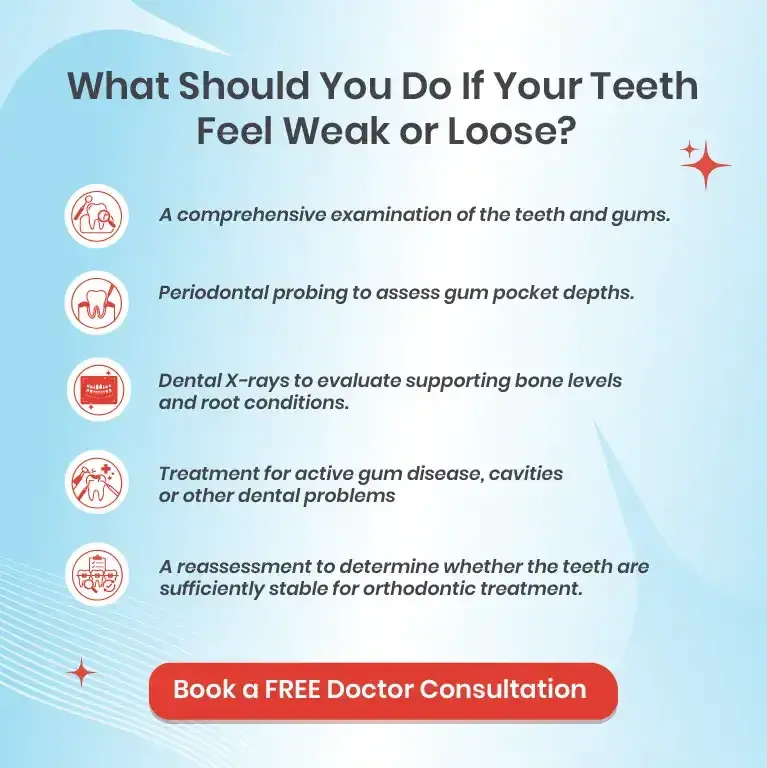
A dentist or periodontist may recommend:
A comprehensive examination of the teeth and gums.
Periodontal probing to assess gum pocket depths.
Dental X-rays to evaluate supporting bone levels and root conditions.
Treatment for active gum disease, cavities or other dental problems.
A reassessment to determine whether the teeth are sufficiently stable for orthodontic treatment.
If periodontal treatment is required, aligner treatment may be considered once inflammation is controlled and adequate periodontal stability has been achieved.
The timing will depend on the severity of the condition and the response to treatment.
Final Thoughts
Having weak teeth does not necessarily mean you cannot get invisible aligners. However, the underlying cause of dental weakness must be identified before orthodontic treatment begins.
Patients with minor enamel concerns or previously treated cavities may still be suitable candidates. Those with active gum disease, reduced bone support or significant tooth mobility require more careful evaluation and, in some cases, periodontal treatment before considering aligners.
Invisible aligners can offer a convenient way to straighten teeth while maintaining oral hygiene, but they cannot compensate for inadequate dental or periodontal health.
The safest approach is to undergo a comprehensive dental examination and let an orthodontist determine whether clear aligners are appropriate for your condition.
Medical Reference Links
These references can be used for the doctor's medical review and fact-checking:
US FDA – Clear Dental Aligners: How clear aligners work, clinical evaluation, treatment supervision and potential risks.
Expert Consensus on Orthodontic Treatment of Patients With Periodontal Disease – International Journal of Oral Science (2025): Orthodontic treatment considerations for patients with periodontal disease, tooth mobility and reduced bone support.
Expert Consensus on the Clinical Strategies for Orthodontic Treatment With Clear Aligners (2025): Clear aligner indications, case selection, periodontal health and treatment planning.
European Journal of Orthodontics – Optimizing Orthodontic Treatment Protocol for Patients With Periodontitis or Reduced Periodontium: Systematic review of orthodontic treatment in patients with compromised periodontal support.
Periodontal Considerations in Orthodontic Treatment: A Review of the Literature and Recommended Protocols: Importance of periodontal screening, oral hygiene and monitoring before and during orthodontic treatment.