

7 Best Hair Fall Treatments That Actually Work in 2026
BHMS with PGDCC, an experienced aesthetic physician specializing in PRP, GFC, Profhilo, MNRF, Botox, advanced laser treatments, & permanent makeup.
Updated on August 17, 2026
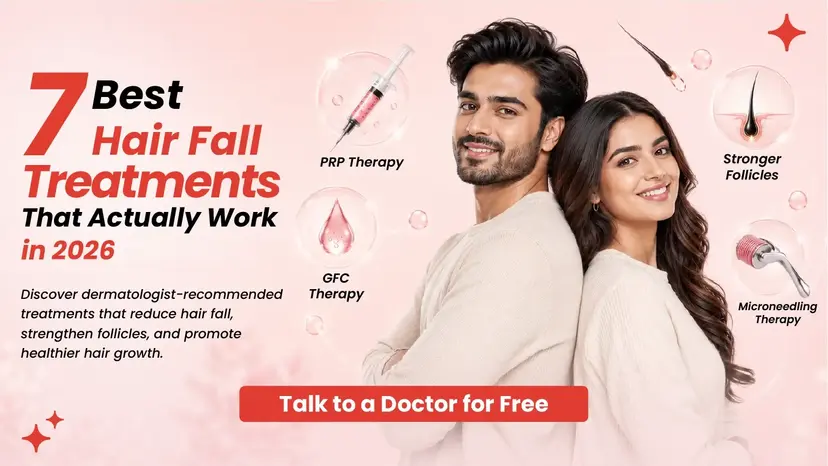
Hair Fall Treatment is no longer limited to oils or home remedies. Today, dermatologists use evidence-based treatments such as Hair PRP treatment, GFC Hair Treatment, Exosome Therapy, Mesotherapy, Microneedling, and medications to reduce hair fall and stimulate natural hair regrowth. The best hair fall treatment depends on the underlying cause, hair-loss pattern, and stage of thinning.
According to the American Academy of Dermatology (AAD), early diagnosis and treatment can help to reduce hair fall and improve hair regrowth in many people with pattern hair fall. Evidence-based treatments such as topical minoxidil, finasteride (for eligible men), and regenerative therapies may be recommended depending on the underlying cause.
Learn about the best hair fall treatments available, such as PRP, GFC, Exosome Therapy, Mesotherapy, Microneedling, medications, and combination therapies. Discover which treatment is best suited for you, expected results, treatment combinations recommended by dermatologists, and how specialists at MakeO Skin & Hair Clinic personalize hair restoration plans based on your scalp condition and hair fall pattern.
Restore Stronger, Healthier Hair with MakeO. Book Your Free Consultation Now!
Best Hair Fall Treatments That Actually Work in 2026
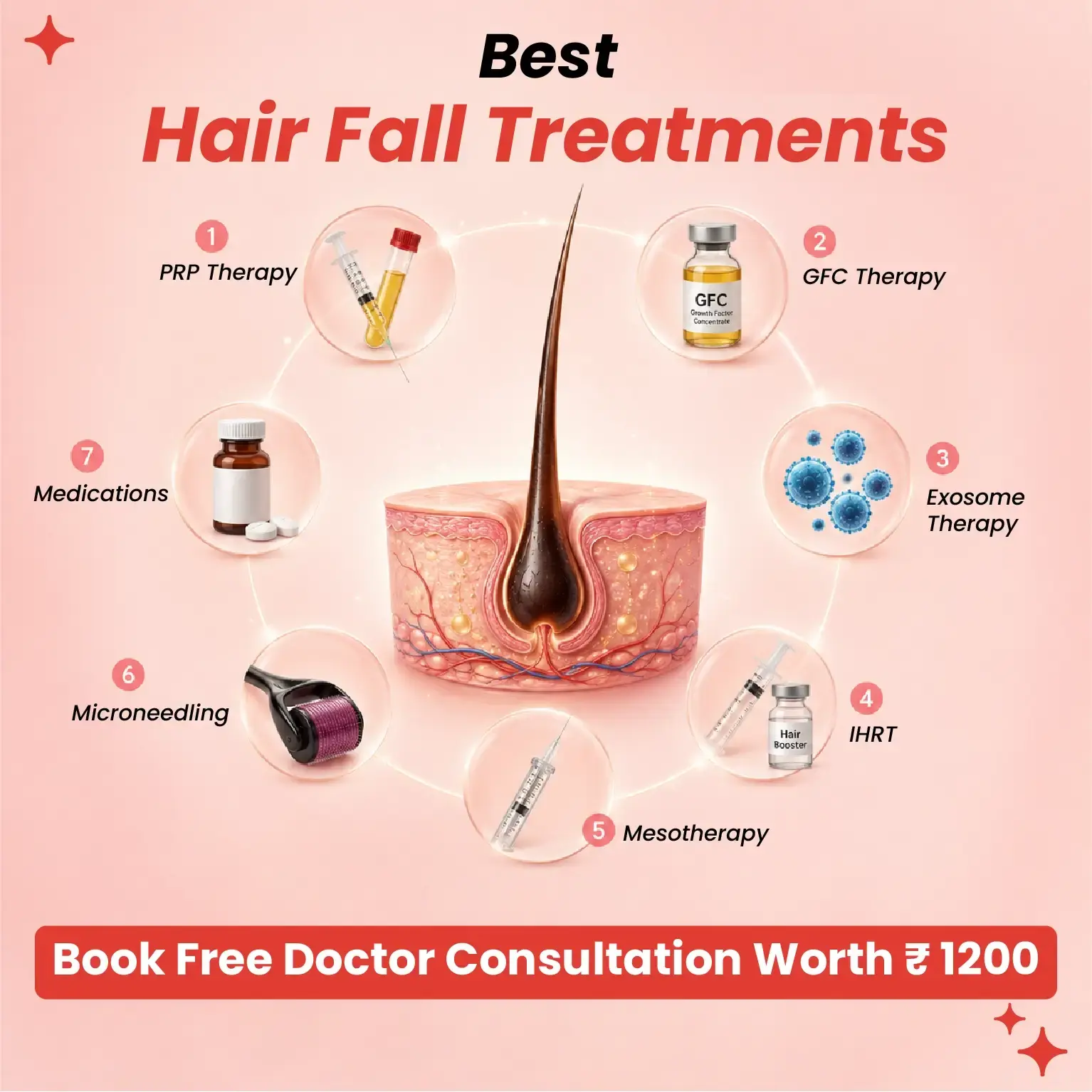
Modern hair fall treatment has evolved beyond topical medications. Today, dermatologists use regenerative therapies, growth factor treatments, injectable therapies, and hair restoration procedures to manage hair fall, stimulate dormant follicles, and improve hair density. The best treatment depends on the underlying cause, stage of hair fall, and individual treatment goals.
1. Hair PRP (Platelet-Rich Plasma) Treatment for Hair Growth
Hair PRP treatment is one of the best options for managing hair fall or early hair thinning. PRP hair treatment uses the healing properties of your own blood to stimulate inactive hair follicles, improve scalp health, and encourage natural hair regrowth.
How does it work?
PRP works by delivering concentrated platelets directly to the scalp. These platelets release proteins and growth factors that support the natural hair growth cycle and improve follicle function.
A 2019 systematic review published in the Aesthetic Plastic Surgery journal found that PRP therapy significantly improved hair density and hair count in patients with androgenetic alopecia.
Benefits of Hair PRP
- Stimulates natural hair regrowth.
- Reduces excessive hair fall.
- Strengthens weak hair follicles.
- Improves hair thickness and density.
- Enhances scalp health and blood circulation.
- Uses your own platelets, reducing the risk of allergic reactions.
- Suitable for men and women with early- to moderate-stage hair loss.
- Can be combined with GFC, microneedling, or medications for better results.
Cost of Hair PRP Treatment
Hair PRP Treatment costs between ₹4,000 and ₹12,000 per session. At MakeO Skin & Hair Clinic, Hair PRP Treatment starts at ₹2,000 to ₹7,000 per session, making advanced regenerative hair-fall treatment more accessible.
Read More - Does alcohol affect hair PRP treatment?
2. GFC (Growth Factor Concentrate)
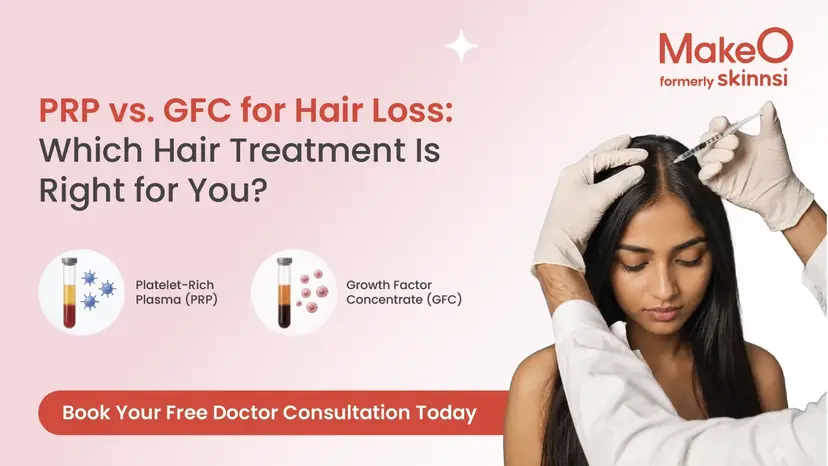
GFC (Growth Factor Concentrate) hair treatment is an advanced regenerative treatment for hair fall that uses concentrated growth factors derived from your own blood to stimulate hair follicles, reduce hair fall, and improve hair density.
How is it different from PRP?
GFC and PRP hair treatments are different hair fall treatments. While both treatments use your own blood, GFC contains a purified concentration of growth factors, whereas PRP includes platelets along with plasma. This makes GFC a more targeted treatment, with less post-procedure inflammation, and may require fewer sessions than PRP for some individuals.
Benefits of GFC Hair Treatment
- Reduces excessive hair fall
- Stimulates natural hair regrowth
- Improves hair thickness and density
- Strengthens weak hair follicles
- Minimally invasive with little downtime
- Can be combined with medications or other hair restoration treatments
Cost of GFC Treatment
GFC hair treatment in India costs between ₹9,500 and ₹12,000 per session, depending on the clinic, technology used, and the extent of hair fall.
But at MakeO Skin & Hair Clinic, GFC treatment starts at just ₹2,500 - ₹10,000 per session, making advanced regenerative hair fall treatment more accessible without compromising on quality.
3. Hair Exosome Therapy
Hair exosome therapy is an advanced regenerative hair-fall treatment that uses exosomes, tiny extracellular vesicles containing growth factors, proteins, and signaling molecules to stimulate hair follicles, support tissue repair, and promote healthier hair growth.
What are Exosomes?
Exosomes are microscopic vesicles naturally released by cells. They carry bioactive molecules that help cells communicate, reduce inflammation, and support hair follicle repair and regeneration.
How they stimulate follicle repair
When these are injected into the scalp, these exosomes deliver growth signals, which may
- Reactivate dormant hair follicles
- Improve scalp healing
- Extend the hair growth (anagen) phase
- Increase hair thickness and density
- Reduce ongoing hair shedding
Benefits of exosome hair fall treatment
- Supports natural hair regrowth
- Improves hair density and quality
- Minimally invasive with little downtime
- May be combined with PRP, GFC, or microneedling for enhanced results
Cost of Exosome Therapy
Hair Exosome Therapy costs between ₹25,000 and ₹40,000 per session in India. At MakeO Skin & Hair Clinic, Hair Exosome Therapy starts at just ₹15,000-₹20,000 per session. With advanced treatment planning and a professional team of hair doctors, MakeO makes treatment accessible without compromising on quality or clinical care.
4. Intense Hair Root Therapy (IHRT)
Intense Hair Root Therapy (IHRT) is a personalized hair restoration treatment that combines multiple clinically guided therapies to treat hair fall, improve scalp health, and stimulate stronger hair growth. Rather than a single procedure, IHRT is designed to address the underlying causes of hair thinning through a customized treatment plan.
How Does IHRT Work?
Depending on individual needs, IHRT may include a combination of:
- Growth factor therapies such as PRP or GFC
- Hair booster injections
- Microneedling
- Scalp nourishment and hydration therapies
- Medications and nutritional support
This multi-modality approach helps strengthen hair follicles, improve scalp circulation, and reduce progressive hair thinning.
Benefits of Intense Hair Root Therapy
- Helps reduce hair fall and thinning
- Stimulates healthier, thicker hair growth
- Improves scalp health and follicle function
- Strengthens existing hair roots
- Personalized for men and women based on the cause of hair fall
- Can be an effective hair fall treatment for male and female pattern hair fall
5. Mesotherapy for Hair Fall
Mesotherapy is a minimally invasive hair fall treatment that delivers a customized blend of vitamins, amino acids, peptides, and growth factors directly into the scalp. It nourishes hair follicles, improves scalp health, and supports healthier hair growth.
How Does Mesotherapy Work?
Mesotherapy works by using fine microinjections that deliver active ingredients into the scalp, where the hair follicles are located. These nutrients help strengthen weak follicles, improve blood circulation, and support the natural hair growth cycle. It is often combined with PRP, GFC, or medications for better results.
Benefits of Mesotherapy
- Helps reduce hair fall and thinning
- Improves hair strength, thickness, and density
- Nourishes hair follicles with essential nutrients
- Enhances scalp health and circulation
- Suitable for men and women with early to moderate hair loss
- Can be recommended as part of a PCOS hair fall treatment or hair fall treatment for males, depending on the underlying cause
Key Ingredients
- Vitamins: Support healthy hair growth and follicle function.
- Amino Acids: Help produce keratin, the protein that forms hair.
- Peptides: Stimulate hair follicles and encourage stronger hair growth.
- Growth Factors: Promote follicle repair and improve hair density.
Cost of Mesotherapy for Hair Fall
The cost of Mesotherapy for hair fall ranges from ₹2,500 to ₹4,500 per session in India, depending on the clinic, the ingredients used, and your hair restoration needs. At MakeO Skin & Hair Clinic, Mesotherapy starts at just ₹2,000 to ₹4,000 per session, offering an affordable, dermatologist-led solution for early hair thinning and excessive hair fall. Following a comprehensive scalp analysis, MakeO specialists create a personalized treatment plan to help improve hair strength, nourish hair follicles, and support healthier hair growth.
6. Microneedling for Hair Regrowth
Another hair fall treatment is microneedling. Microneedling for hair, which is a minimally invasive hair-fall treatment, uses tiny, sterile needles to create controlled micro-injuries in the scalp. This stimulates the body's natural healing response, encourages healthier hair follicles, and supports hair regrowth.
How Does Microneedling Work?
Microneedling works by stimulating collagen production and activating wound-healing pathways that promote hair follicle regeneration. It also improves the absorption of topical treatments such as minoxidil and is often combined with PRP or growth factor therapies to enhance results.
Benefits of Microneedling
- Helps reduce hair fall and hair thinning
- Stimulates natural hair regrowth
- Improves hair density and thickness
- Boosts collagen production for healthier follicles
- Enhances the effectiveness of topical hair growth treatments
- Suitable as a hair fall treatment for women and men with early to moderate hair loss
Cost of Microneedling hair fall treatment
Microneedling for hair costs between ₹15,000 and ₹50,000, depending on the clinic, treatment protocol, and whether it is combined with therapies such as PRP or growth factors. At MakeO Skin & Hair Clinic, Microneedling starts at ₹2,000-₹4,000 per session, making this clinically proven hair restoration treatment significantly more affordable.
Check out - How to use a derma roller for hair?
7. Medications
Medications are often the first-line treatment for hair fall and are commonly combined with regenerative therapies such as PRP or GFC for better results. They help slow hair loss, stimulate hair growth, and maintain existing hair.
- Topical Minoxidil: Applied directly to the scalp to stimulate hair follicles and promote hair regrowth. Suitable for both men and women.
The American Academy of Dermatology recommends topical minoxidil as a first-line treatment for male and female pattern hair loss.
- Oral Minoxidil (selected patients): Prescribed in low doses for selected patients when topical treatment is unsuitable or ineffective.
- Finasteride: An oral medication commonly prescribed for male pattern hair loss to reduce DHT, the hormone linked to hair follicle miniaturization.
Can You Combine Hair Fall Treatments?
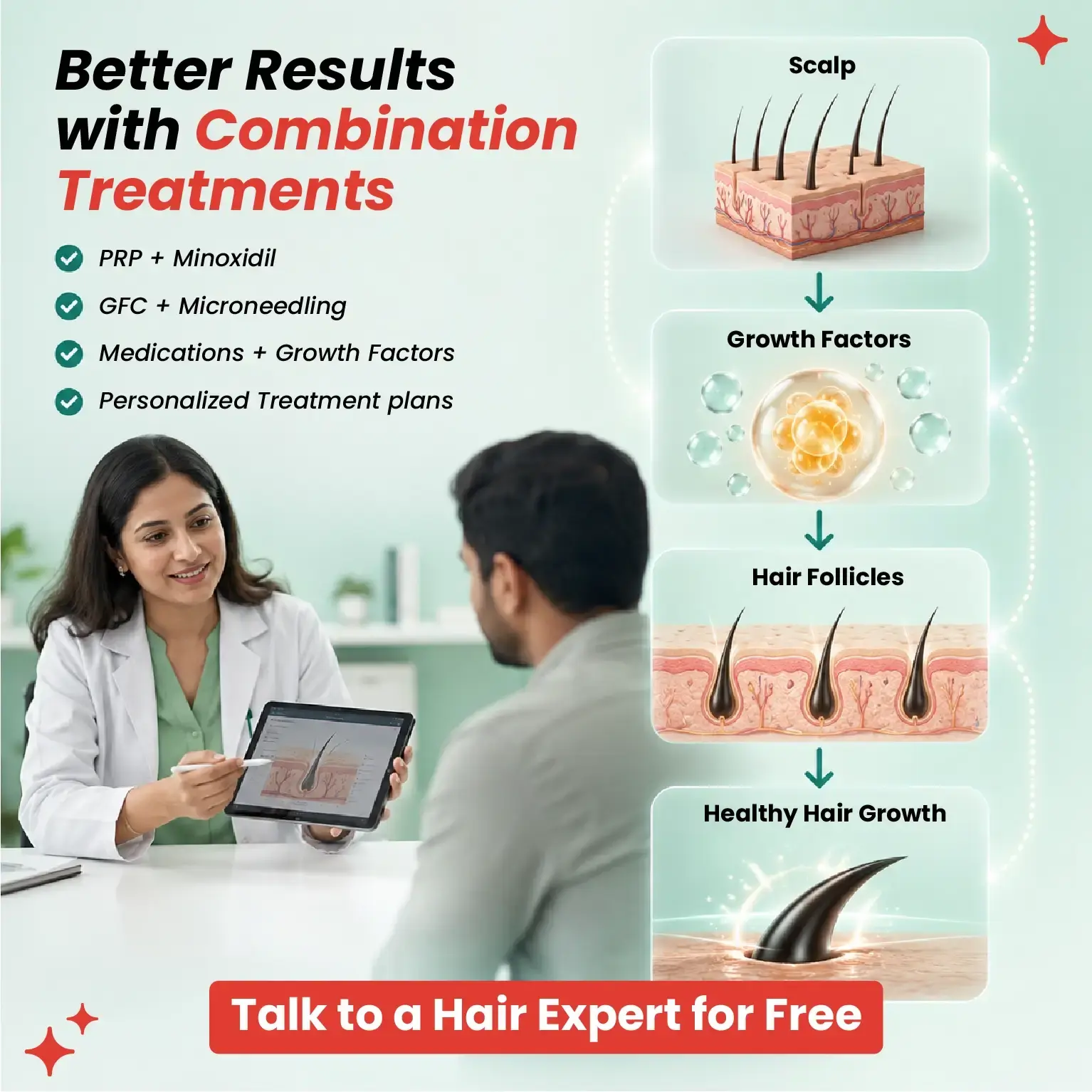
Yes. In fact, dermatologists often recommend combining hair fall treatments because hair loss usually has multiple causes. A personalized treatment plan can address hormone-related hair loss, inactive follicles, poor scalp health, and nutritional deficiencies simultaneously.
For example, someone with male-pattern baldness may benefit from Minoxidil + Finasteride + PRP. In contrast, someone with female-pattern hair loss or PCOS-related hair fall may require a different combination of regenerative treatments and medications.
The best hair fall treatment is one that's customized after a dermatologist evaluates your scalp and identifies the cause of your hair loss.
Hair Concern | Recommended Combination | Why it works |
|---|---|---|
Early Hair Thinning | Minoxidil + PRP | Minoxidil stimulates growth while PRP activates dormant follicles. |
Male Pattern Baldness (Androgenetic Alopecia) | Finasteride + Minoxidil + GFC | Reduces DHT, slows hair loss, and improves hair density. |
Female Pattern Hair Loss | PRP + Minoxidil + Nutritional Support | Improves follicle health while addressing nutritional deficiencies. |
PCOS Hair Fall | Anti-androgen Therapy + PRP/GFC + Minoxidil | Manages hormonal imbalance and stimulates hair regrowth. |
Severe Hair Fall | GFC + Microneedling + Hair Booster Injections | Improves scalp health and delivers growth factors directly to weakened follicles. |


According to Dr. Regina Joseph, MD, Dermatology
Consultant Dermatologist & Aesthetic Physician, MakeO Skin & Hair Clinic | 30+ Years of Experience
"One of the biggest misconceptions about hair fall is that the same treatment works for everyone. In my experience, the best hair-fall treatment depends on identifying the underlying cause, whether genetics, hormonal changes, nutritional deficiencies, stress, or an underlying medical condition.
That's why I recommend a detailed scalp evaluation before starting any treatment. Once we understand the cause, we can create a personalized plan that may include treatments such as PRP, GFC, mesotherapy, medications, or other regenerative therapies. Early diagnosis and timely intervention often lead to better, long-lasting hair regrowth and help prevent further hair thinning."
Get a Personalized Hair Fall Treatment Plan at MakeO
There is no universal best hair-fall treatment. The right combination depends on your hair fall pattern, scalp health, age, hormones, and medical history.
At MakeO Skin & Hair Clinic, our experienced dermatologists and hair doctors perform a comprehensive scalp assessment before recommending a personalized treatment plan. Whether you need PRP, GFC, Mesotherapy, Microneedling, Hair Booster Therapy, medications, or Hair Transplant support, your treatment is customized to maximize hair regrowth and long-term results.
Claim your free consultation today and discover which treatment combination is right for your hair restoration journey.
Can Hair Grow Back Naturally?
Yes, hair can grow back naturally in some cases, such as when the cause is stress, a nutritional deficiency, illness, or temporary hormonal changes. Healthy lifestyle habits support stronger hair growth, but they may not be enough to reverse genetic hair fall or advanced hair thinning.
How Much Hair Fall Is Normal?
Ideally, losing 50 to 100 hair in a day is normal. However, if you are noticing excessive shedding, visible thinning, or reduced hair volume, it could indicate an underlying condition that requires medical attention.
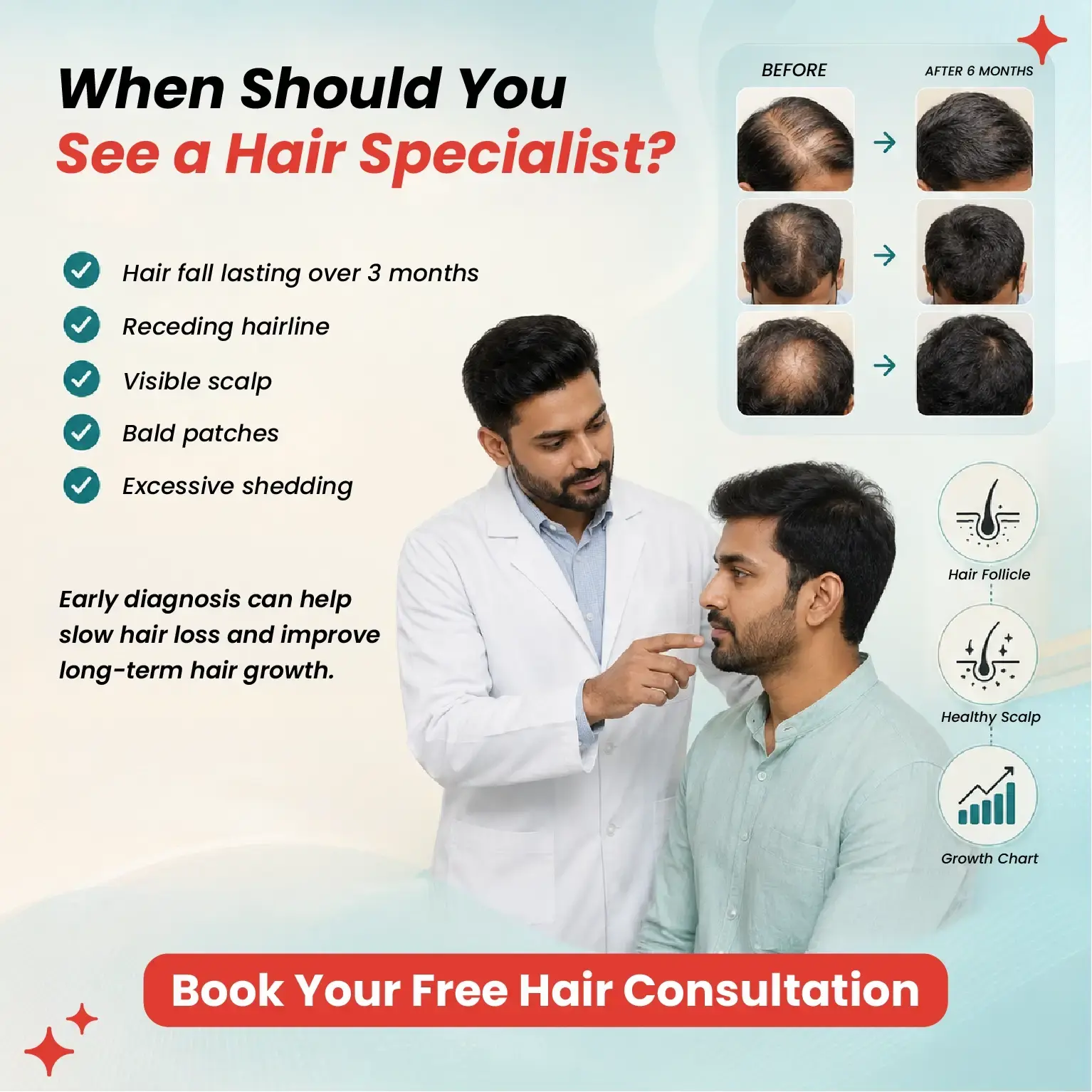
When Should You See a Hair Doctor for Hair Fall?
You can consult a dermatologist or hair doctor if you notice any of the following signs:
- Hair fall lasting more than three months despite home care.
- When you see a receding hairline or widening part line.
- If you notice a visible scalp or noticeable hair thinning.
- Bald patches or patchy hair loss.
- Sudden or excessive hair shedding.
- Hair fall after pregnancy, illness, or significant stress that doesn't improve.
According to Dr. Regina Joseph, MD, Dermatology, "Many people wait until they have significant hair thinning or visible bald patches before seeking treatment. In reality, hair fall is much easier to manage when addressed early.
If your hair fall has persisted for more than three months, or your hair density has reduced, I recommend getting a professional scalp evaluation. At MakeO, our goal is not just to reduce hair fall but to restore healthier, stronger hair with treatments tailored specifically to you."
Where Can I Get the Best Hair Fall Treatment?
If you're looking for a hair fall treatment that goes beyond temporary solutions, MakeO Skin & Hair Clinic provides personalized, dermatologist-led care designed to address the root cause of hair fall, not just the symptoms.
Unlike one-size-fits-all treatments, MakeO creates a customized hair restoration plan after a detailed scalp assessment. Depending on your hairfall pattern, your doctor may recommend a combination of advanced treatments to maximize results.
Why Choose MakeO for Hair Fall Treatment?
- 93% success rate with advanced, doctor-led hair restoration treatments.
- 360° hair fall treatment designed according to hair and scalp needs.
- US FDA-approved treatment protocols for safety and quality.
- Personalized treatment plans by experienced dermatologists.
- Long-lasting results with evidence-based regenerative therapies.
After evaluating your scalp and hair condition, our dermatologists recommend a personalized combination of treatments designed to reduce hair fall, stimulate hair follicles, and maximize hair growth.
- PRP (Platelet-Rich Plasma): Stimulates dormant hair follicles using your body's natural growth factors.
- Mesotherapy: To deliver vitamins, peptides, and nutrients directly to the scalp to nourish hair follicles.
- Dermaroller (Microneedling): Improves blood circulation, boosts collagen production, and enhances the effectiveness of hair growth treatments.
- Scalp Hydra: Deeply hydrates and improves scalp health, creating an ideal environment for healthy hair growth.
- Oral Medications: Help manage underlying causes of hair fall and support long-term hair regrowth when prescribed by a dermatologist.
Book Your Hair Fall Consultation at MakeO
Hair fall is easier to treat when it's addressed early. If you're noticing persistent hair fall, thinning, or a receding hairline, don't wait for it to progress.
Get your appointment scheduled at MakeO Skin & Hair Clinic and receive a personalized treatment plan from experienced dermatologists.
With advanced treatments like PRP, Mesotherapy, Microneedling, Scalp Hydra, and medical therapy, MakeO offers one of the best hair fall treatment programs designed to restore stronger, healthier, and fuller-looking hair.
Key Takeaways
- Hair fall can result from genetics, hormonal changes, nutritional deficiencies, stress, medical conditions, or aging, and the best treatment depends on the underlying cause.
- Evidence-based hair fall treatments, such as PRP, GFC, Mesotherapy, Microneedling, and medications, can help reduce hair loss and promote hair regrowth when recommended by a dermatologist.
- Combination treatments often deliver better outcomes than a single therapy, especially for male pattern baldness, female pattern hair loss, PCOS hair fall, and severe hair fall.
- Healthy lifestyle habits, including a protein-rich diet, stress management, and correcting vitamin deficiencies, support stronger hair growth but may not completely prevent hair fall. Early diagnosis is important. Consulting the best doctor for hair fall treatment can help prevent further hair thinning and create a personalized treatment plan.