

Can Alcohol Influence PRP Hair Treatment Outcomes?
BHMS with PGDCC, an experienced aesthetic physician specializing in PRP, GFC, Profhilo, MNRF, Botox, advanced laser treatments, & permanent makeup.
Updated on April 13, 2026
What Is PRP Hair Treatment & How Does It Work?
“Platelet-Rich Plasma hair treatment," commonly known as “Hair PRP Treatment” is a minimally invasive procedure that uses the patient's own blood to promote hair growth and thickness. It is a regenerative therapy that uses the natural healing power of your own blood to strengthen and thicken your hair.
How does PRP hair treatment work?
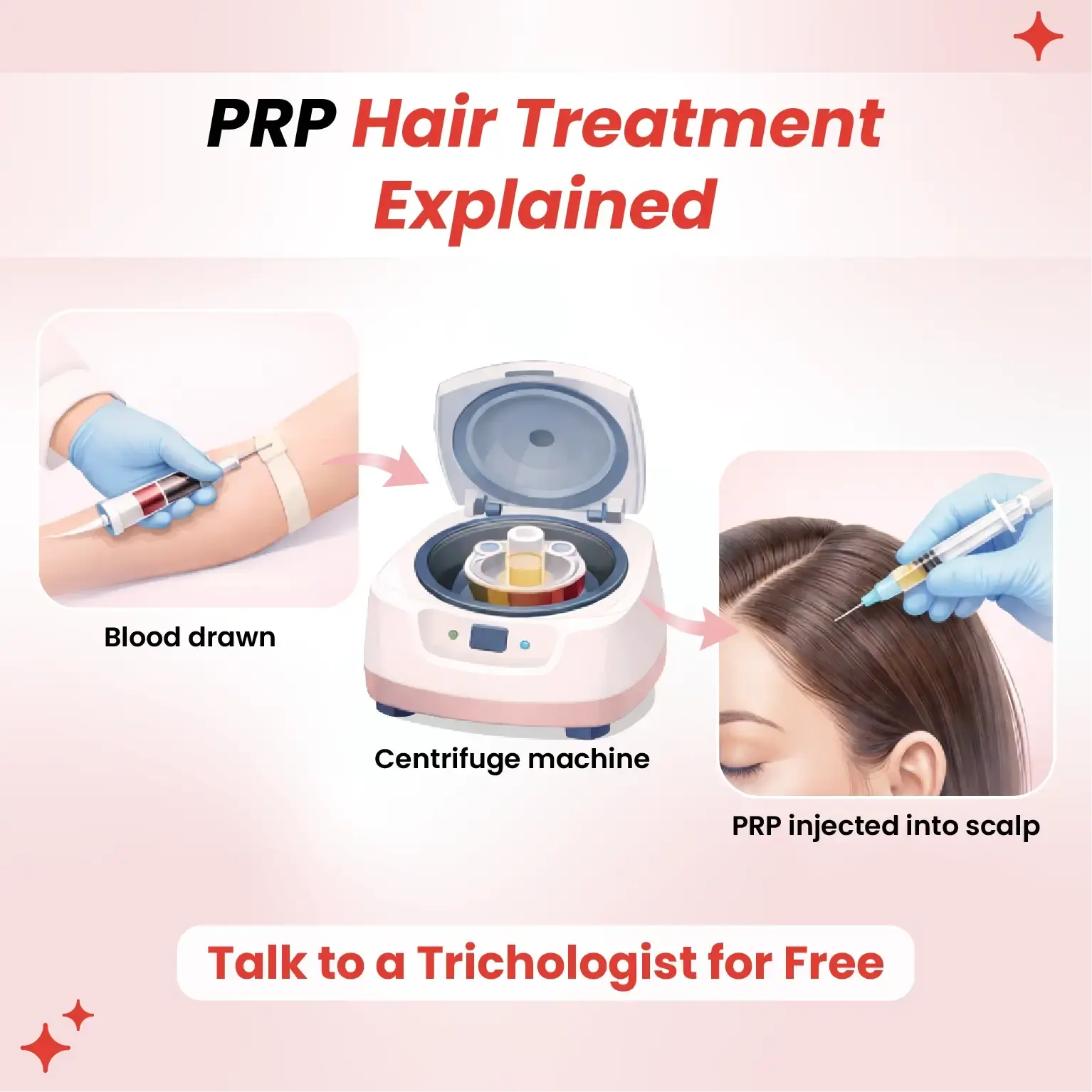
Hair PRP treatment begins with a simple process of collecting your own blood and placing it in a centrifuge. The machine separates plasma from other blood components, concentrating platelets, which are rich in growth factors that support healing and tissue repair.
This platelet-rich plasma treatment is then carefully injected into targeted areas of the scalp. These growth factors boost blood flow to hair follicles, stimulate new hair growth, and strengthen existing strands.
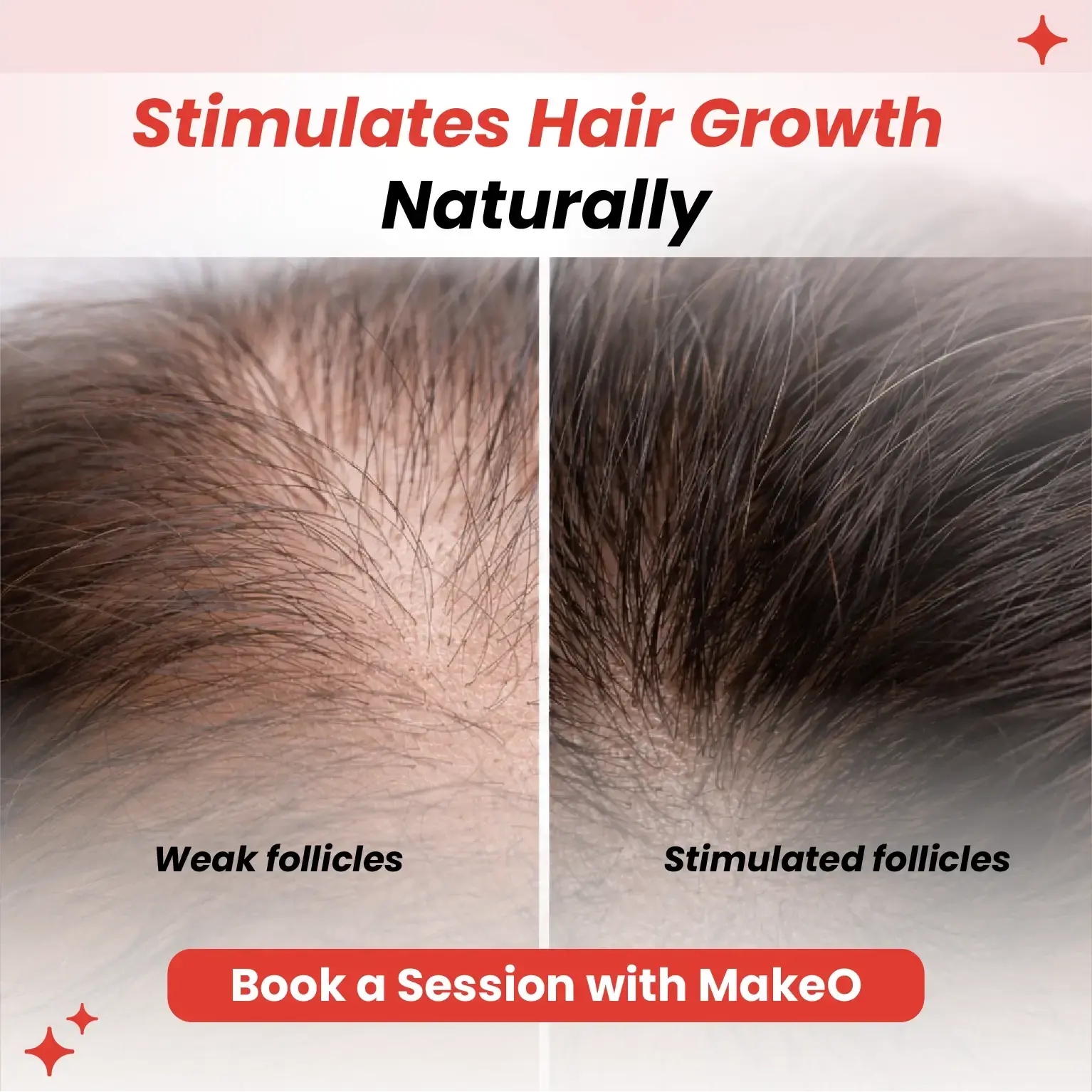
This entire process helps promote scalp healing, improve follicle activity, and enhance overall hair density, making the PRP hair treatment ideal for those dealing with thinning, shedding, or early hair loss.
This treatment follows a systematic procedure, with our dermatologist closely supervising to ensure precision, comfort, and maximum PRP hair treatment results. Experts evaluate your scalp health, map thinning areas, and customize the treatment based on your goals.
Post-Treatment Recovery: Why You Should Skip the Drink?
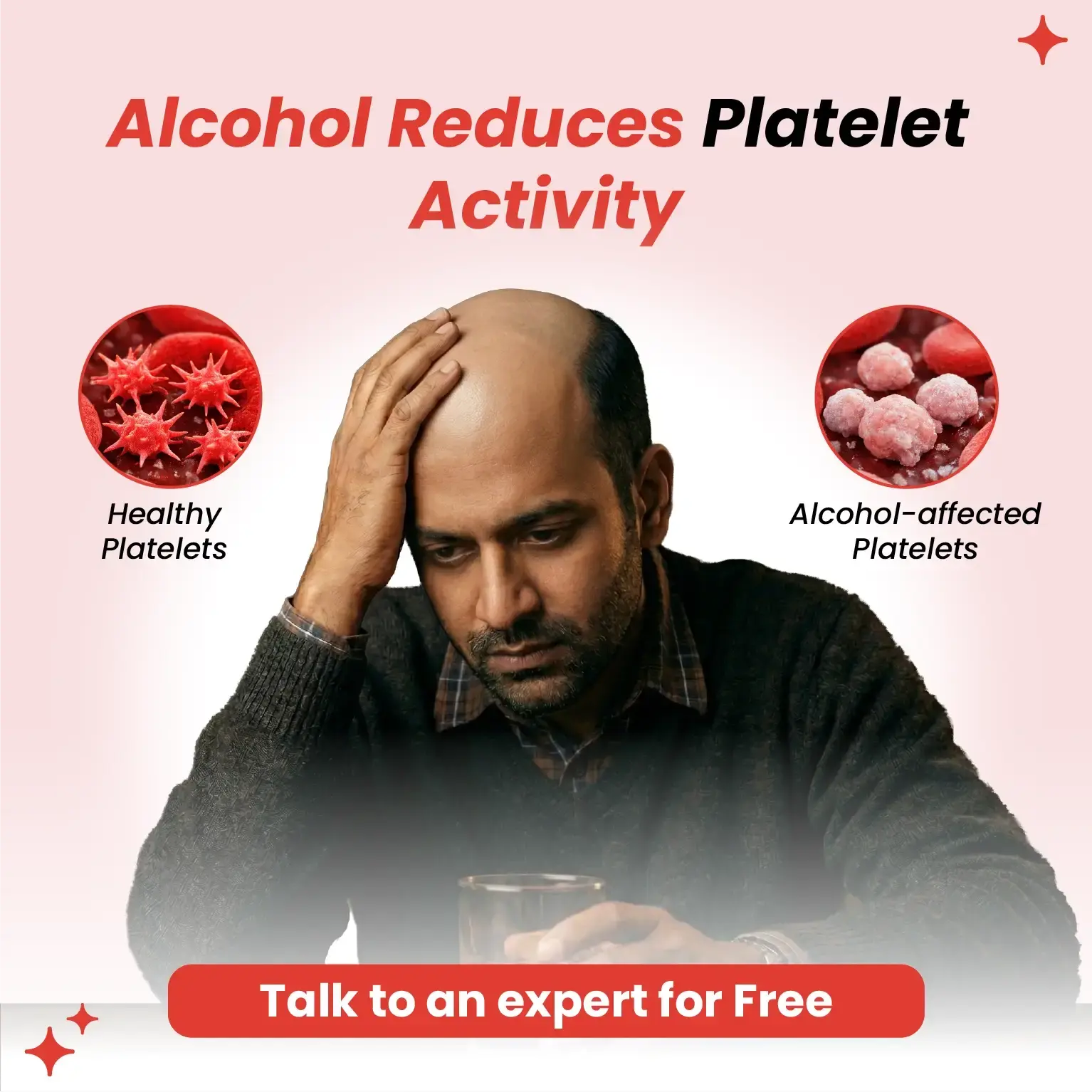
Hair PRP treatment uses the power of our blood platelets to stimulate hair growth, hair thickening, and tissue regeneration. The most crucial step in a PRP hair treatment is isolating platelets from red and white blood cells. Platelets contain multiple growth factors and proteins that kick-start tissue repair. But keep in mind that several factors can influence platelet concentration in the injections and affect your recovery from the procedure.
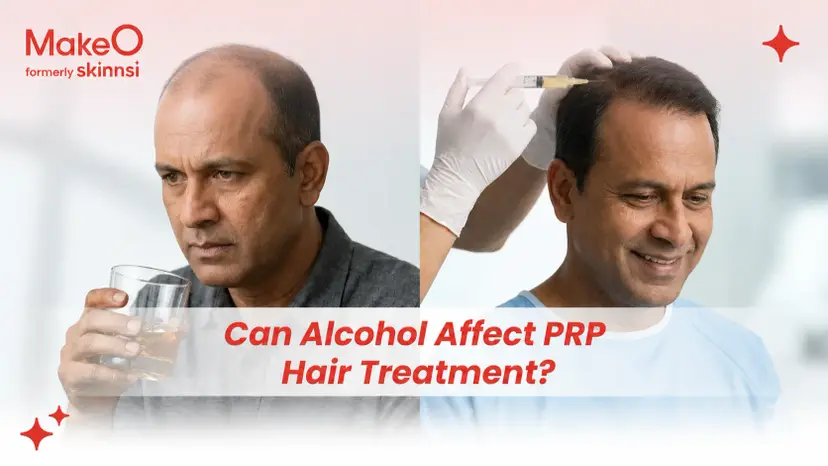
One of the important reminders given to any PRP patient is to avoid alcohol after the hair PRP Treatment. While it’s a fact that excessive alcohol consumption has long-term effects on health, it can specifically affect Hair PRP treatment too. Here are 3 reasons why you should not drink alcohol after hair PRP treatment.
Alcohol reduces platelet activity and healing function
When you consume alcohol after hair PRP treatment, there are high chances that alcohol can lower the platelet counts and can weaken the platelet hair growth activity, which means a lower platelet count can lead to reduced hair growth, a slower or weaker repair response, and limited improvements in hair density. So, when platelet count decreases, the benefits of hair PRP treatments also decrease.
Alcohol Slows Tissue Repair & Increases Bruising
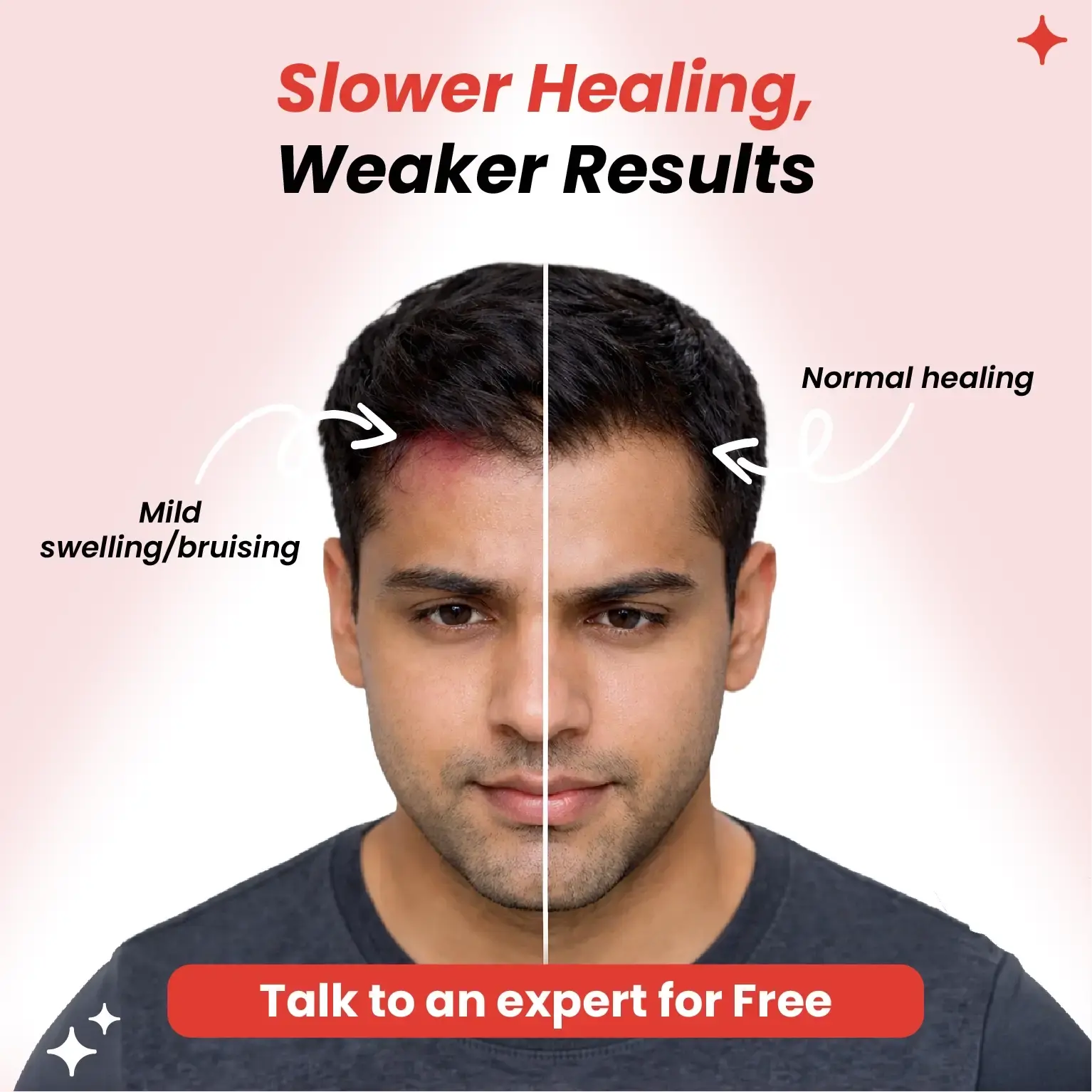
Consumption of alcohol after hair PRP treatment can lead to widening of blood vessels and increased blood flow. While that may sound harmless, it makes your scalp more prone to excessive bruising, with prolonged swelling, increased risk of inflammation, and an overall slower healing process.
So if you consume alcohol shortly before or after PRP hair treatment, more blood can leak from widened vessels, increasing the chance of bruising at injection sites. This delays recovery and diminishes your overall treatment response. For individuals targeting hair thinning, these inflammatory delays can set back expected PRP hair treatment results.
Alcohol Causes Dehydration, Affecting Scalp Health & Cell Repair
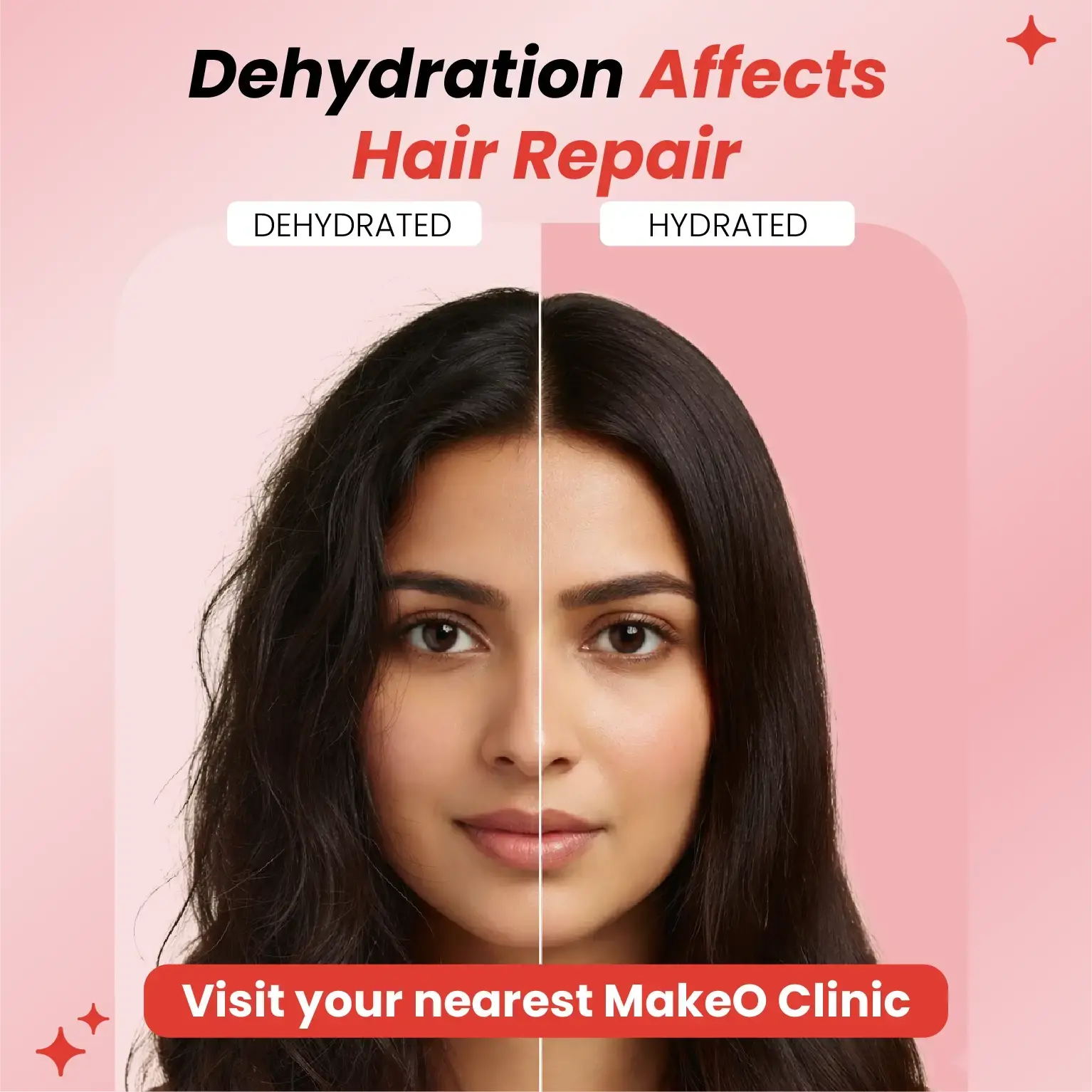
After the hair PRP treatment, hydration is the most important thing your body needs, as cells need adequate fluid to balance, heal, regenerate, and respond to platelet growth factors. Consumption of alcohol right after hair PRP treatment can hinder the hydration levels in the body, as alcohol acts as a strong diuretic and quickly dehydrates the body.
Dehydration from alcohol consumption can slow scalp tissue repair, reduce nutrient delivery to hair follicles, increase fatigue, and disrupt the optimal inflammation needed for healing. So, this dehydration directly contributes to poor outcomes and is a major factor in the link between alcohol and inefficiency in hair PRP treatment.
How Long Should You Avoid Alcohol after Hair PRP Treatment?
Though PRP has no major downtime, dermatologists recommend avoiding alcohol after hair PRP treatment for at least 24 - 72 hours before and after PRP therapy. This duration of time can help your body maintain optimal platelet function, ensure better healing, and maximize the treatment’s absorption into the scalp.

At MakeO, our experts recommend avoiding alcohol for 3 to 7 days post-treatment, especially if you want to support stronger platelet activity and achieve the best possible hair regrowth results. The longer you avoid alcohol after the hair treatment, the better your follicles respond to the injected growth factors. Drinking too soon or too much can interfere with your PRP results, weaken immune and platelet function, promote inflammation, and even worsen thinning hair over time.
If your goal is to maintain healthy hair after hair treatment, supporting your scalp with adequate hydration, proper nutrition, and alcohol-free recovery days will significantly improve the results of your PRP therapy.
Tips for Better Hair PRP Results - MakeO Expert Advice
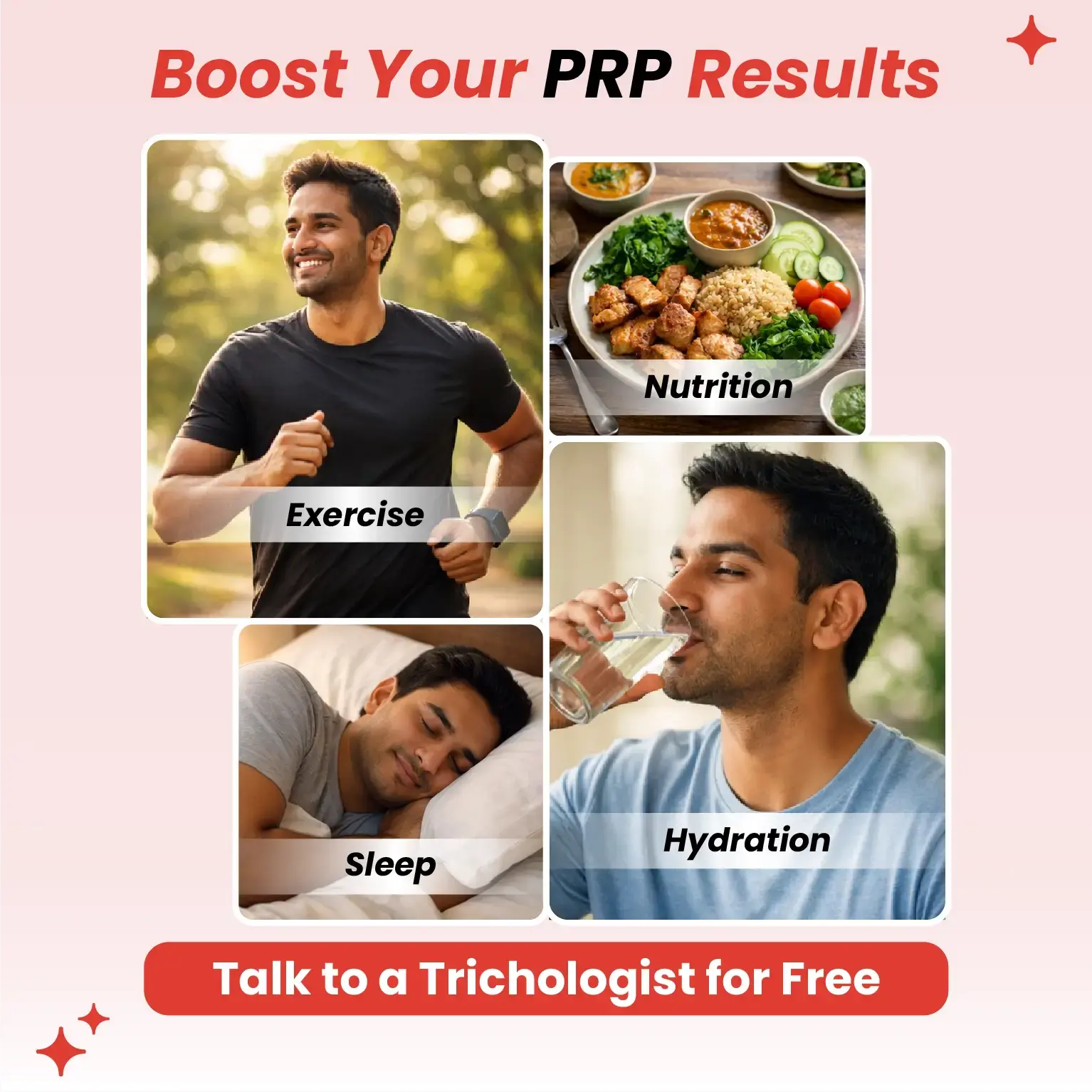
Undergoing PRP (Platelet-Rich Plasma) therapy for hair restoration is an exciting step towards achieving fuller, healthier hair. To maximize your results and ensure optimal hair growth, it’s crucial to follow a few key tips for pre- and post-treatment care.
- Focus on nutrient-rich food: Include protein in your food after the hair PRP treatment, like fish, beans, and lentils in your diet, to support hair growth follicles. Focus on foods rich in Vitamins A, C, E, and B, as well as omega-3 fatty acids, such as flaxseeds and walnuts, to nourish the scalp.
- Manage stress levels: Practice meditation and stress-reducing techniques, and get adequate sleep for at least 7 to 8 hours, as it helps support healthy hair growth.
- Maintain a healthy lifestyle: Engage in regular physical activity to improve blood circulation, which can benefit hair growth after hair PRP treatment. Drink plenty of water to keep your body and scalp hydrated.
- Opt for consistent follow-up sessions: Follow the doctor’s instructions for post-treatment care and attend all follow-up appointments. Schedule regular consultations with a dermatologist to monitor your progress and address any concerns. Lifestyle habits play a significant role in hair growth, how your body heals, repairs, and responds to treatments. These factors lead to a restorative treatment option called PRP hair Treatment, which completely changes your hair's appearance and condition.
By incorporating these tips into your lifestyle, you can significantly enhance the results of PRP hair treatment and achieve a healthier, fuller head of hair.
Final Verdict
Hair PRP treatment offers many benefits, but to make those benefits last, aftercare plays a major role in determining how well your scalp responds. Alcohol may seem harmless, but it can directly impact PRP hair treatment results by weakening platelet function, slowing healing, and dehydrating the scalp. This is why experts strongly recommend avoiding alcohol before and after PRP hair treatment to ensure maximum absorption and effectiveness.
Key takeaways:
- Hair PRP treatment uses your own platelets to help stimulate hair growth and improve hair density.
- Alcohol can reduce platelet activity, which may lower the effectiveness of PRP results.
- Drinking alcohol around the time of treatment can slow healing, increase bruising, and prolong swelling.
- Alcohol also causes dehydration, which can affect scalp repair and follicle recovery.
- To make the treatment work best for you, follow proper nutrition, hydration, stress control, and follow-up sessions.
Experience clinically guided PRP hair treatment with MakeO. Visit the nearest MakeO clinic today!