What Happens If I Don't Wear Invisible Aligners Enough?

MDS - Orthodontics, an Orthodontist and Implantologist with 30 years of experience. He practices in Andheri West, Mumbai.
Updated on October 30, 2026
Invisible aligners are a removable teeth-straightening option that gradually move your teeth into their planned positions. But what happens if you don't wear invisible aligners enough? Inconsistent wear can affect tooth movement, cause your aligners to fit improperly and extend your overall treatment duration.
Wearing your clear aligners for the prescribed number of hours each day is essential to staying on track with your personalised treatment plan.
At Toothsi, clear aligner treatment combines expert dental supervision with advanced technology to help you work towards your desired smile. Clear aligner prices at Toothsi start with ₹42,999 for students and ₹52,999 for adults, with EMI options starting at ₹1,499 per month.
How Many Hours a Day Should You Wear Invisible Aligners?
For effective teeth-alignment treatment, wear clear aligners for 20 to 22 hours a day, depending on your personalised treatment plan. Following the recommended aligner wear time helps your teeth move gradually into their planned positions and supports your overall treatment progress.
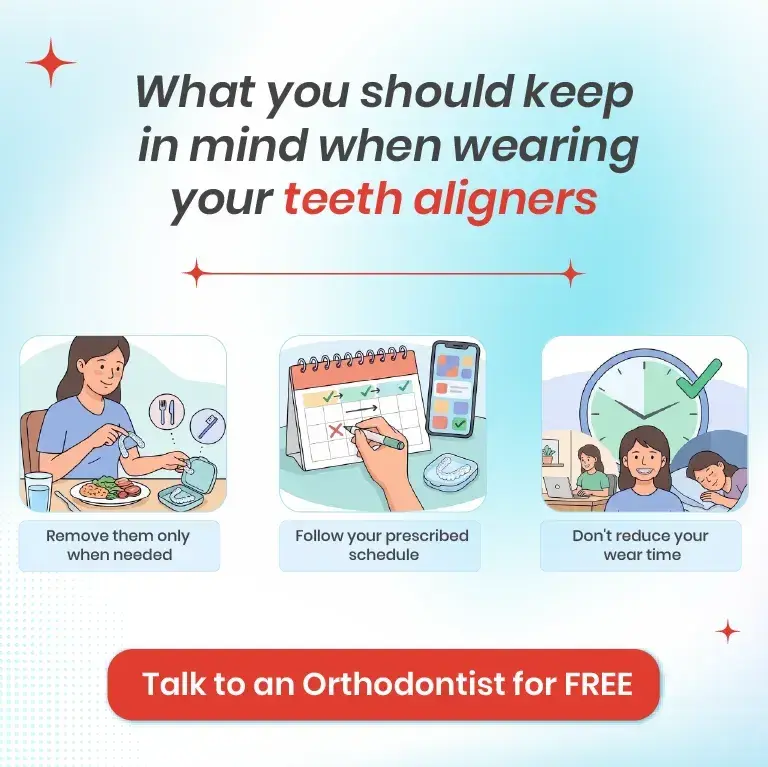
Here’s what you should keep in mind when wearing your teeth aligners:
Remove them only when needed: Take out your invisible aligners while eating, drinking beverages other than water, brushing and flossing your teeth. Reinsert them promptly after maintaining proper oral hygiene.
Follow your prescribed schedule: Consistent wear helps your teeth adapt to each stage of treatment and reduces the risk of delays caused by insufficient wear.
Don't reduce your wear time: Wearing teeth aligners for fewer hours than recommended may affect their fit and your treatment progress. Follow your orthodontist's instructions rather than adjusting your wear schedule independently.
What Happens If You Don't Wear Your Invisible Aligners Enough?
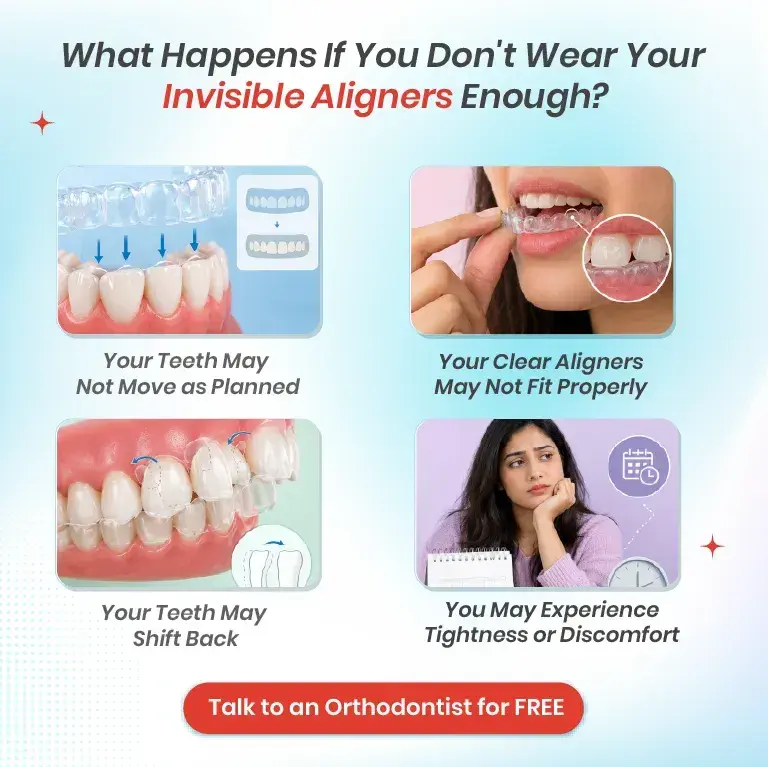
Not wearing your invisible aligners for the recommended hours each day can bring much discomfort and make it harder for the treatment to happen properly. Here’s what inconsistent wear may mean for your progress.
1. Your Teeth May Not Move as Planned
Clear aligners apply controlled pressure to gradually move your teeth into their planned positions. When you don't wear them for the prescribed duration, your teeth may not receive consistent pressure, preventing them from moving as expected at each stage. As a result, your actual tooth positions may fall behind your digital treatment plan, affecting the progress of your teeth alignment.
2. Your Clear Aligners May Not Fit Properly
Wearing aligners inconsistently can lead to aligners not tracking, which means your teeth are no longer moving in line with the planned movements for that stage. You may notice small gaps between your teeth and the aligner trays, or find that your aligners don't sit snugly over certain teeth. This can also make it difficult to fit the next tray as scheduled.
3. Your Teeth May Shift Back
When you leave your invisible aligners out for prolonged periods, your teeth may begin moving away from their planned positions. This can disrupt the progress made during treatment and make it harder for your current aligners to fit correctly. Teeth shifting during aligner treatment may affect how well subsequent trays work, so it's important to follow your prescribed wear schedule and put your aligners back in promptly after meals and oral hygiene.
4. Your Treatment May Take Longer
An aligner treatment delay can occur when inconsistent wear prevents your teeth from completing the planned movements on schedule. Your orthodontist may recommend wearing your current aligner for longer, arranging additional check-ups or revising your treatment plan based on how your teeth are responding. This may extend your overall treatment duration.
5. You May Experience Tightness or Discomfort
You may notice tight aligners after not wearing them for an extended period because your teeth may have shifted slightly from their intended positions. When you reinsert your trays, they may feel tighter than usual or create mild pressure. However, don't force an aligner into place if it doesn't fit properly, or ignore significant pain. If the discomfort is severe or persists or the tray won't seat correctly, contact your orthodontist for advice before continuing.
What Should You Do If You Haven't Worn Your Aligners Enough?
If you have missed your prescribed aligner wear time, take these steps to get your treatment back on track:
Resume your prescribed wear schedule: If your aligners fit properly and you have no concerning symptoms, keep wearing them as your orthodontist directed.
Check the fit: Make sure your trays sit securely over your teeth. If you notice persistent gaps or your aligners are not fitting properly, seek professional advice.
Don't rush the next tray: If you've missed significant wear time, ask your orthodontist whether to continue with your current aligners or adjust your changeover date.
Contact your orthodontist if needed: Seek advice if your aligners won't fit, are damaged or cause significant pain. Avoid forcing a tray into place.
Track your wear time: Set daily reminders or connect aligner wear to your meal and bedtime routines to reduce missed hours.
Tips to Wear Your Toothsi Invisible Aligners Consistently

Building a simple daily routine can help you wear your invisible aligners consistently and stay on track with your treatment. Here are a few easy habits to follow:
Set reminders: Use phone alarms to remind yourself to reinsert your aligners after meals and oral hygiene.
Carry your aligner case: Keep your case handy when travelling or eating out to store your trays safely whenever you remove them. Use the aligner case box to keep it safe.
Limit removal time: Remove your aligners only for meals, brushing, flossing and other activities recommended by your orthodontist.
Maintain oral hygiene: Brush and floss before reinserting your trays to keep your teeth and aligners clean.
Track your wear time: Monitor your daily wear hours and follow your prescribed aligner change schedule instead of switching trays early.