Can Invisible Aligners Fix a Severe Underbite?

MDS - Orthodontics, 20+ years of experience. Co-Founder of MakeO Toothsi, consultant lingual Orthodontist, inventor of India's 1st CAD/CAM lingual bracket system, and aligners specialist.
Updated on November 4, 2026
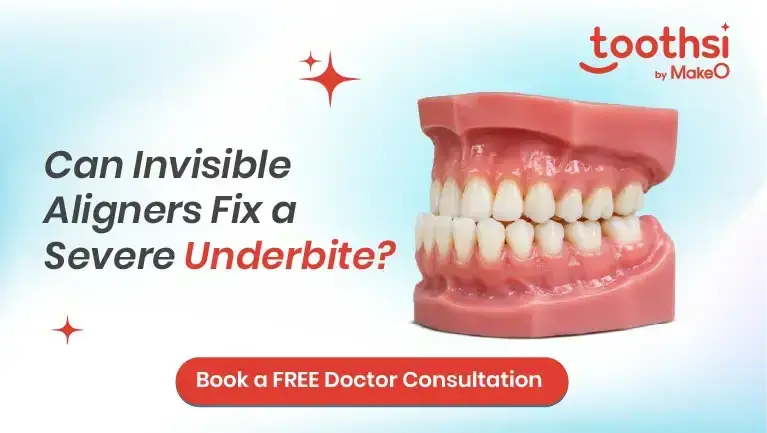
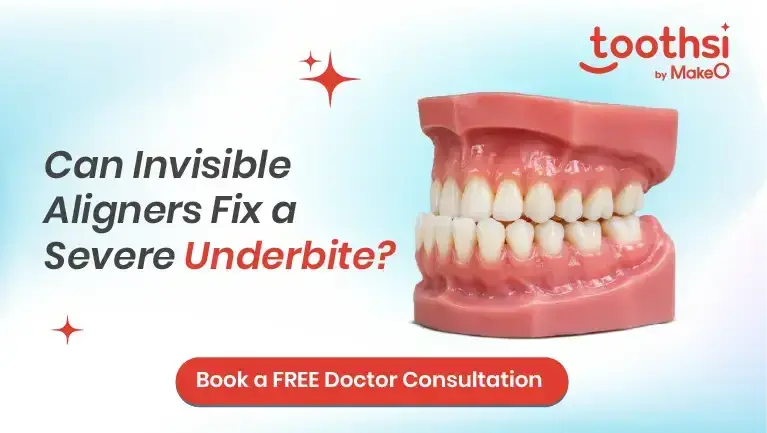
Invisible aligners can correct certain underbites, but a severe underbite cannot always be treated with aligners alone. The deciding factor is whether the condition is caused primarily by the position of the teeth or by a significant discrepancy between the upper and lower jaws.
An underbite, also known as anterior crossbite in some presentations, occurs when the lower front teeth sit ahead of the upper front teeth when the jaws are closed. Clinically, it may be associated with a Class III malocclusion. The cause can be dental, skeletal, or a combination of both.
Clear aligners can reposition teeth gradually. However, they cannot independently correct a substantial skeletal discrepancy in an adult. An orthodontist must determine the underlying cause before recommending treatment.
What Causes a Severe Underbite?
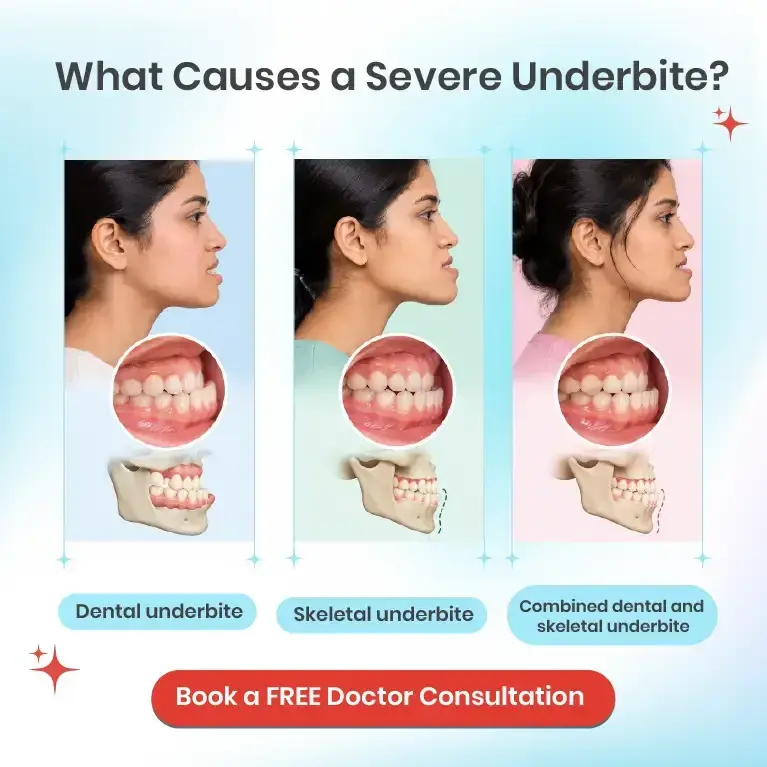
An underbite teeth can develop for several reasons.
Dental underbite: The upper and lower jaws may have a relatively appropriate relationship, but individual teeth are positioned incorrectly. For example, the lower front teeth may tilt forward, or the upper front teeth may tilt backwards.
Skeletal underbite: The lower jaw may be positioned too far forward, the upper jaw may be underdeveloped or positioned too far back, or both conditions may occur together.
Combined dental and skeletal underbite: Some patients have both jaw discrepancies and misaligned teeth, complicating treatment.
These distinctions matter because correcting tooth position does not necessarily correct jaw position. In a growing child, selected treatments may guide jaw development. In an adult with a significant skeletal discrepancy, surgery may be required to correct the underlying jaw relationship.
How Can Invisible Aligners Correct an Underbite?
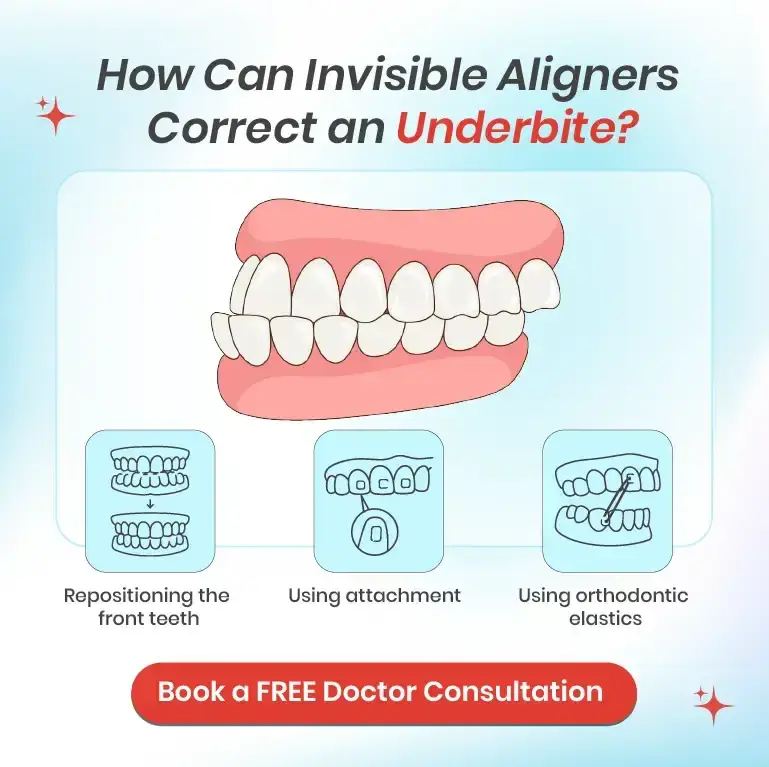
Clear Aligners are appropriate when the underbite can be corrected primarily through controlled tooth movement. Treatment usually involves a comprehensive assessment of the teeth, bite, and supporting structures.
Depending on the diagnosis, treatment may include:
- Repositioning the front teeth
When the discrepancy is primarily dental, aligners may gradually reposition the upper and lower incisors to improve their relationship. The amount of movement must remain within the limits of the supporting bone and gum tissues.
- Using attachments
Tooth-coloured attachments may help control selected movements. Their use depends on which teeth need to move and the degree of control required.
- Using orthodontic elastics.
In selected cases, elastics connecting the upper and lower arches can assist with bite correction. Their suitability depends on the force direction, jaw relationship, and treatment objectives. They do not replace surgery when a substantial skeletal discrepancy requires correction.
Can Toothsi Aligners Treat a Severe Underbite?
Yes,Toothsi aligners are absolutely effective for an underbite when the case is clinically suitable for aligner-based treatment. However, it would not be accurate to claim that aligners alone can correct every severe underbite.
The assessment must establish whether the discrepancy is dental or skeletal, how much tooth movement is required, and whether the expected result can be achieved without compromising periodontal health or bite function.
For an adult with a pronounced skeletal underbite, aligners may sometimes be used as part of treatment before or after jaw surgery, but they do not replace the surgery needed to reposition the jaws. Patients should receive a clear explanation of these limitations before committing to treatment.
When Is Jaw Surgery Necessary?

Orthognathic surgery may be considered when the upper and lower jaws have a significant positional discrepancy that cannot be corrected adequately through tooth movement alone.
The treatment process commonly involves orthodontic preparation, surgery performed by an appropriately qualified surgical team, and further orthodontic treatment to establish the final bite. The exact sequence depends on the clinical plan.
Not every underbite requires surgery. Mild dental underbites may be corrected without it, while some skeletal cases can be managed through orthodontic camouflage, depending on the severity, facial profile, periodontal limits, and treatment goals.
A proper evaluation may include photographs, digital scans or dental models, and radiographs when indicated. The clinician uses these records to assess tooth positions, jaw relationships, and the supporting structures.
What Happens If an Underbite Is Left Untreated?
The effects depend on the severity and the individual's bite. An underbite may contribute to uneven tooth wear, difficulty biting certain foods, or functional problems. Some patients may also experience concerns about facial appearance.
However, not every underbite causes symptoms or progresses in the same way. A dental examination can establish whether treatment is recommended and what risks are associated with delaying it.