Can Clear Aligners Fix Severe Crowding?

MDS - Orthodontics, an Orthodontist and Implantologist with 30 years of experience. He practices in Andheri West, Mumbai.
Updated on November 3, 2026
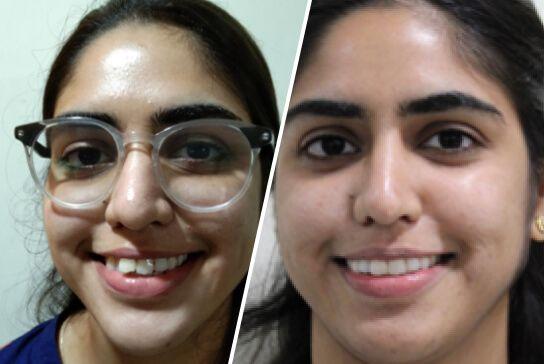
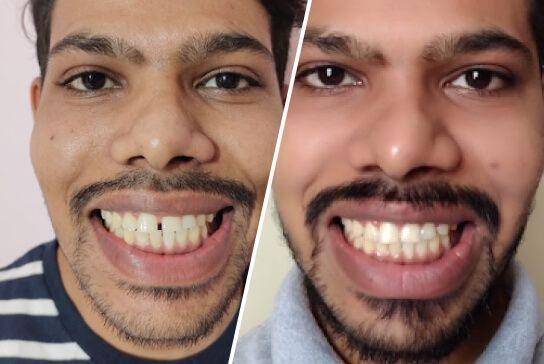
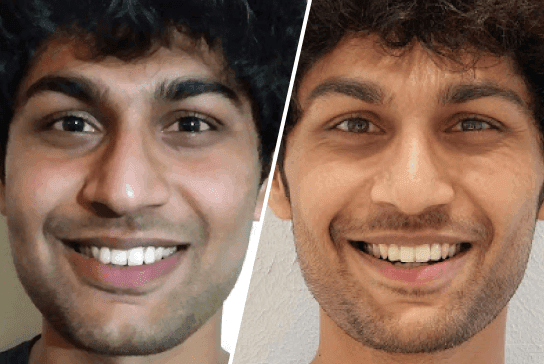
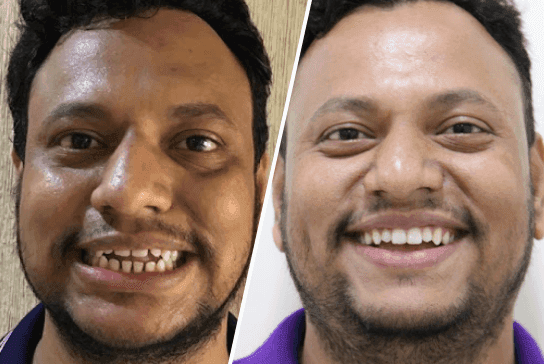
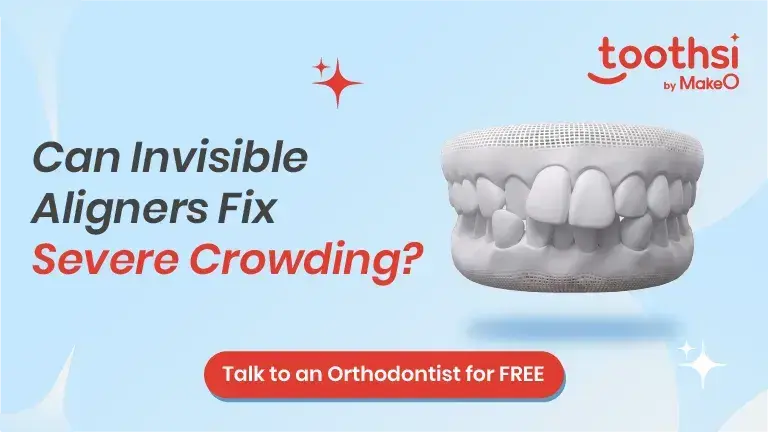
Yes, invisible aligners can correct severe teeth crowding. However, treatment depends on the amount of space available, the position and orientation of the teeth, the condition of the supporting gums and bone, and the movements required to achieve proper alignment.
Severe crowded teeth occurs when there is insufficient space in the dental arch for the teeth to align normally. This can cause teeth to overlap, rotate, erupt out of position, or become displaced towards the lips, cheeks, or tongue.
Clear aligners gradually reposition teeth using a planned sequence of removable trays. Although advances in aligner technology have expanded their clinical applications, severe crowding requires careful diagnosis and space management.
What Causes Severe Teeth Crowding?
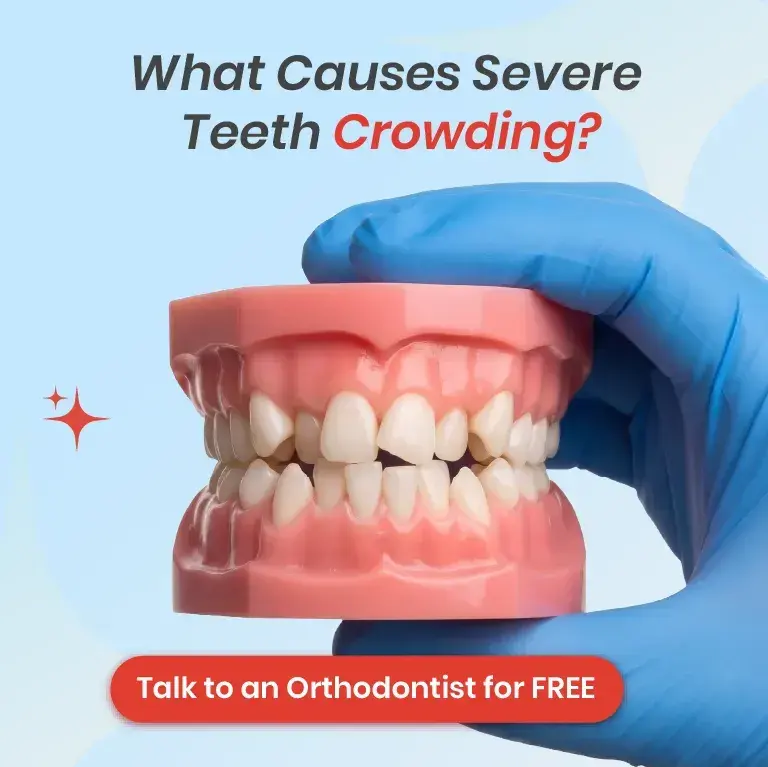
Teeth Crowding develops when the space available within the dental arch is insufficient for the size and arrangement of the teeth. Contributing factors include inherited differences in tooth and jaw size, early or premature loss of primary teeth, and the eruption of permanent teeth into limited space.
In some patients, crowding affects only the front teeth. In others, it involves several teeth across the arch and may occur alongside a narrow dental arch, bite discrepancies, or displaced teeth.
Severe crowding may make brushing and flossing more difficult because overlapping teeth create areas that are harder to clean. It can also affect the bite and the appearance of the smile. However, the presence of crowding does not automatically mean that extractions are necessary.
How Do Invisible Aligners Correct Severe Crowding?
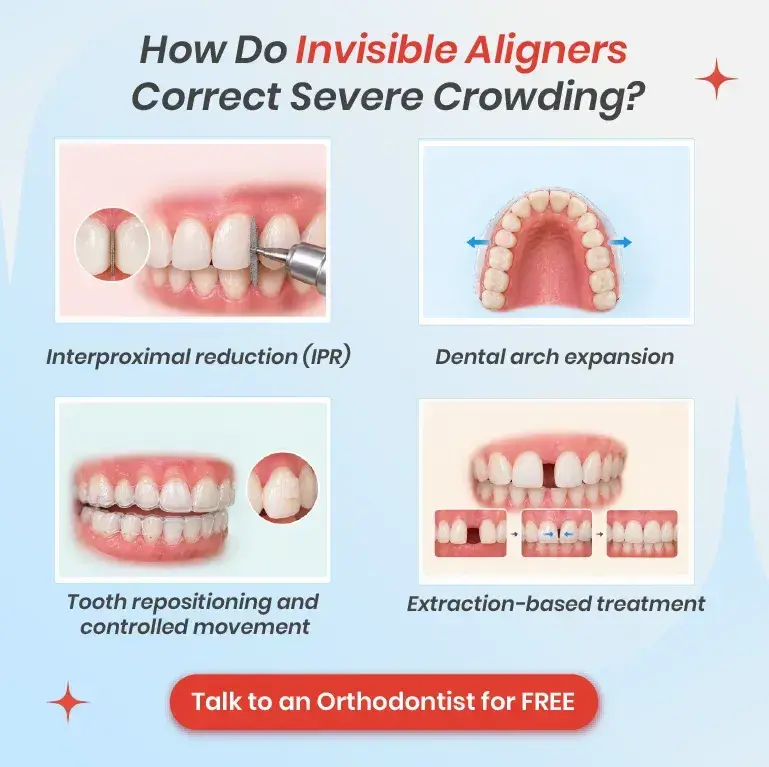
Aligner treatment begins with a clinical examination and a detailed assessment of the teeth and bite. The orthodontist determines how much space is required and which teeth need to move to achieve alignment.
Several methods may be used to create space.
- Interproximal reduction (IPR)
IPR involves removing a carefully measured amount of enamel from selected tooth surfaces. This creates small amounts of space between teeth and may help resolve crowding without extracting teeth. It is appropriate only when the tooth anatomy, enamel condition, and treatment plan permit it.
- Dental arch expansion
In selected cases, the teeth can be repositioned outward within the limits of the supporting bone. This may increase the available space. However, dental expansion is not the same as widening the jaw bone, and excessive movement beyond the supporting tissues can compromise periodontal health.
- Tooth repositioning and controlled movement
Aligners can gradually correct tooth overlap and certain rotations. Attachments may be needed to improve control over specific movements. The predictability of correction depends on the tooth involved and the extent of displacement.
- Extraction-based treatment
When the space deficiency is substantial, extracting one or more teeth may be necessary. Aligners can be used in some extraction cases, but closing extraction spaces requires careful control of tooth roots and anchorage.
The orthodontist must choose the method that provides sufficient space without compromising the health of the teeth, gums, or supporting bone.
Are Toothsi Aligners Suitable for Severe Crowding?
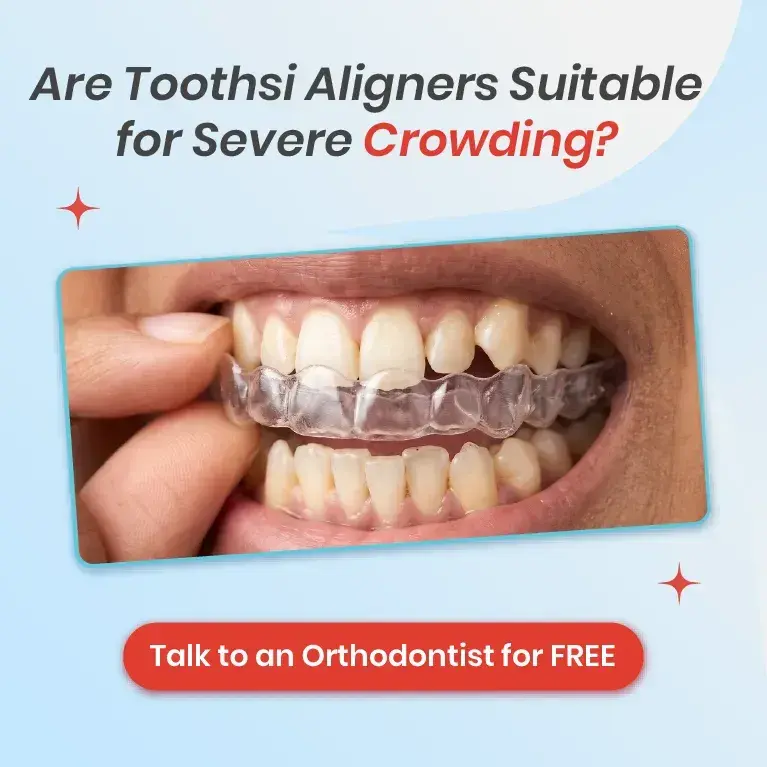
Yes, aligners like the ones provided by Toothsi serves patients with severe crowding after an orthodontic assessment. The decision depends on the crowding severity, the position of the affected teeth, the available space, and whether aligners can predictably achieve the planned movements.
A patient should not be advised to proceed solely because a digital preview shows straight teeth. The treatment plan must also consider root positions, the supporting bone, the bite relationship, and the stability of the expected result.
For some patients, aligners may be used with IPR or other planned orthodontic procedures. Others may benefit from fixed braces or a combined approach. If extractions are indicated, the clinician should explain why they are necessary and how the spaces will be managed.
What Should You Expect During Treatment?
Treatment generally involves wearing each aligner for the prescribed number of hours per day and changing trays according to the orthodontist's instructions. Many treatment plans require wear for approximately 20 to 22 hours daily, although the exact prescription should come from the treating clinician.
Regular reviews help the orthodontist check whether the teeth are following the planned movements. Additional aligners may be required if some teeth do not track as expected. Once alignment is complete, retainers are necessary to help maintain the result.
The duration cannot be determined by the term “severe crowding” alone. It depends on the amount of movement, the treatment method, the response of the teeth, and patient adherence.