


Can I Skip Wearing My Aligners for One Day?

MDS - Orthodontics, 20+ years of experience. Co-Founder of MakeO Toothsi, consultant lingual Orthodontist, inventor of India's 1st CAD/CAM lingual bracket system, and aligners specialist.
Updated on November 17, 2026
Clear aligners are designed to move teeth gradually through a planned sequence of small adjustments. For this process to work as intended, they must be worn consistently for the number of hours prescribed by an orthodontist. Most clear aligner treatment plans recommend approximately 20–22 hours of daily wear, although the exact instructions may vary by provider and individual treatment plan. This generally means removing aligners for meals, drinks other than water, and oral hygiene.
Missing one day does not automatically undo your treatment progress. The effect depends on your treatment stage, how long the aligners remained out, and how your teeth respond. To understand why consistency matters, it helps to know how clear aligners work. Each set is designed to guide specific tooth movements, so following the prescribed sequence is important.
What Happens If You Do Not Wear Your Aligners for One Day?
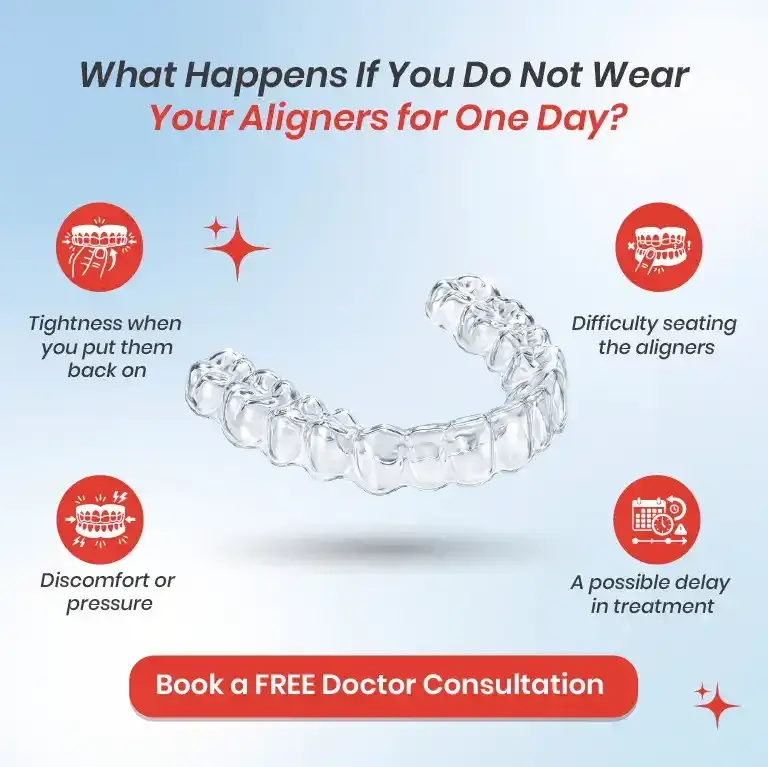
Clear aligners apply controlled forces to move teeth according to a treatment plan. When you stop wearing them, those forces are temporarily interrupted. A single day without aligners may have different effects depending on the individual. You may notice:
- Tightness when you put them back on: Your teeth may have shifted slightly, making the current aligners feel tighter than before.
- Difficulty seating the aligners: The trays may not fit as comfortably or completely as they did previously.
- Discomfort or pressure: Putting the aligners back in may create temporary pressure. Persistent or significant discomfort should be assessed by your orthodontist.
- A possible delay in treatment: If the aligners no longer fit as planned, your orthodontist may need to adjust the wear schedule or review your progress.
These effects are not guaranteed. One missed day does not affect every patient's treatment in the same way. The extent of any change depends on individual tooth movement and the stage of treatment.
What Should You Do If You Skip Aligners for One Day?
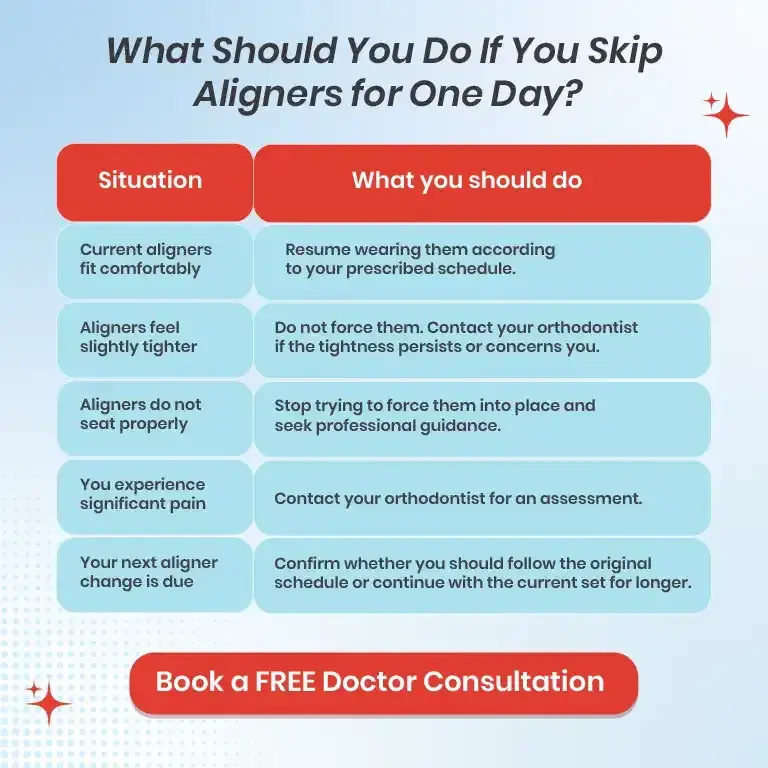
If you have missed wearing your aligners for a full day, do not panic. The next step depends on how your current trays fit and whether you experience discomfort.
Situation | What you should do |
|---|---|
Current aligners fit comfortably | Resume wearing them according to your prescribed schedule. |
Aligners feel slightly tighter | Do not force them. Contact your orthodontist if the tightness persists or concerns you. |
Aligners do not seat properly | Stop trying to force them into place and seek professional guidance. |
You experience significant pain | Contact your orthodontist for an assessment. |
Your next aligner change is due | Confirm whether you should follow the original schedule or continue with the current set for longer. |
You can also refer to Toothsi's guidance on aligner schedules and treatment for information about following your personalised plan.
Can One Day Without Aligners Delay Your Treatment?
It can, but a delay is not inevitable. The treatment timeline depends on several factors, including the complexity of the dental movements, the stage of treatment, how consistently the aligners are worn, and how well the teeth respond.
An isolated missed day may have little effect in some cases. However, repeated interruptions can make it harder for teeth to follow the planned sequence. If an aligner does not fit as intended, the orthodontist may recommend additional wear time or other adjustments before moving to the next stage.
This is why patients should not assume that every aligner can be changed on its original date regardless of actual wear time.
Is It Okay to Skip Aligners for Special Occasions?
Clear aligners are removable, which makes them convenient for eating, brushing, flossing, and certain social activities. However, they are not designed to be left out for long periods whenever it is convenient.
If you have a wedding, celebration, long journey, or professional event, plan your aligner wear in advance. You can remove them briefly when necessary, but try to stay within the daily wear time prescribed by your orthodontist. For longer events, carry your aligner case so that you can safely store the trays when they are not in your mouth. Avoid wrapping them in tissues or leaving them exposed, as this increases the risk of losing or damaging them.
For more guidance on daily care, read how to use and care for clear aligners.
How Can You Avoid Missing Aligner Wear Time?
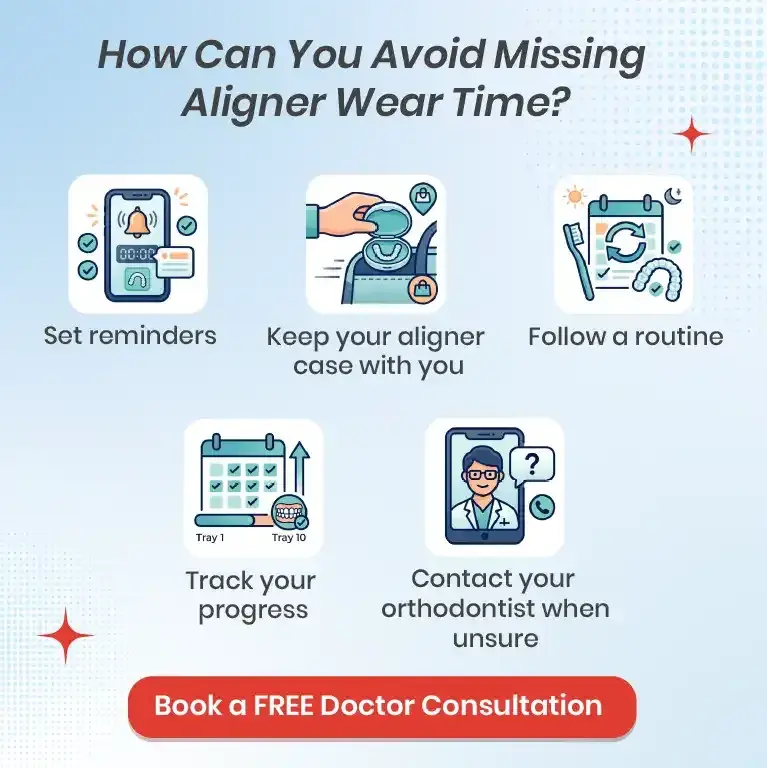
Building a consistent routine can make aligner treatment easier to manage.
- Set reminders: Use phone alarms or the MakeO app to keep track of your daily wear routine.
- Keep your aligner case with you: This reduces the chances of misplacing your trays when eating outside.
- Follow a routine: Put your aligners back in after meals and oral hygiene instead of leaving them out for an extended period.
- Track your progress: Follow the aligner change schedule shared in your treatment plan.
- Contact your orthodontist when unsure: If you miss wear time, lose a tray, or notice a change in fit, ask for guidance rather than adjusting the schedule yourself.
How Does Toothsi Help You Stay on Track With Aligner Treatment?
Toothsi clear aligner treatment is planned around an individual's dental alignment requirements and the movements prescribed by orthodontists. Patients receive a personalised treatment plan and an aligner schedule to help them understand when to wear and change each set.
The MakeO app also provides access to treatment information, progress monitoring, and communication with the orthodontic support team. Patients can refer to their treatment schedule and receive reminders about when to switch aligners.
The goal is not simply to wear aligners for a certain number of hours. It is to ensure that each stage of tooth movement progresses safely and as planned.