

Can Children Get Braces? A Complete Guide for Parents

MDS - Orthodontics, an Orthodontist and Implantologist with 30 years of experience. He practices in Andheri West, Mumbai.
Updated on November 18, 2026
Can Children Get Braces?
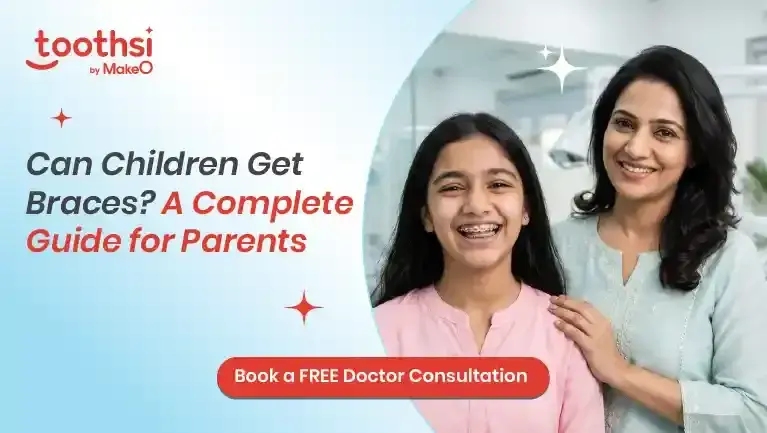
Yes, children can get braces. Orthodontic treatment is not restricted to teenagers or adults. Childhood is an important stage of dental development. As baby teeth gradually fall out and permanent teeth emerge, an orthodontist can identify problems involving tooth alignment, spacing and jaw development. Some of these conditions may benefit from early intervention, while others are better treated once more permanent teeth have erupted.
The decision to start braces depends on the child's dental development, the nature of the orthodontic problem and the overall condition of their teeth and gums.
It is important to understand that an early orthodontic evaluation does not automatically mean a child needs braces. In many cases, the orthodontist may recommend monitoring dental development and starting treatment at a later stage.
What Is the Right Age for Children to Get Braces?
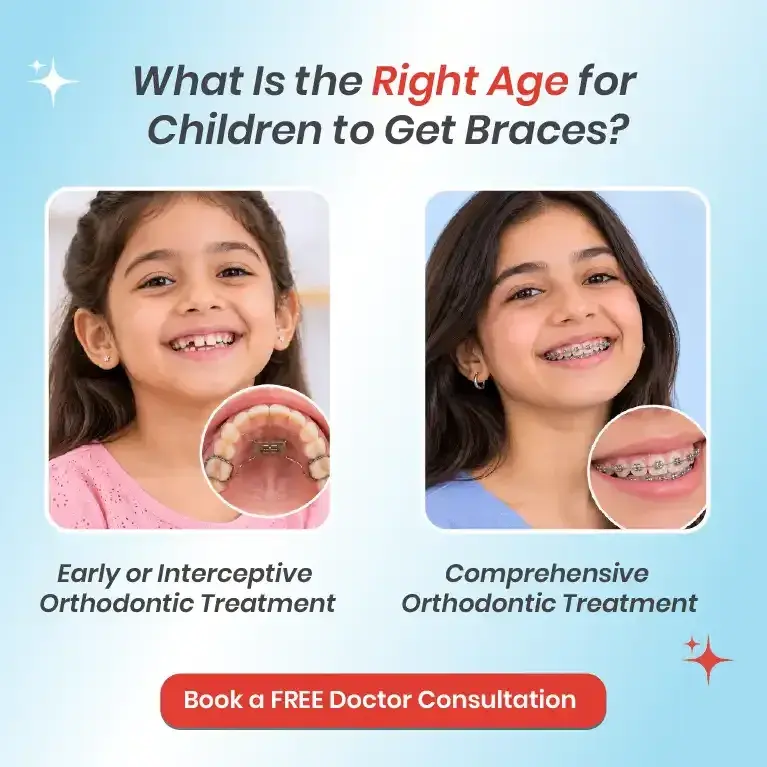
The American Association of Orthodontists (AAO) recommends that children have their first orthodontic evaluation by the age of seven.
At this stage, children generally have a combination of baby teeth and permanent teeth. This allows an orthodontist to assess how the teeth are erupting, how the upper and lower jaws are developing and whether any alignment problems are emerging.
However, the age of seven is recommended for an initial evaluation, not necessarily for starting braces.
Orthodontic treatment generally takes place in two stages:
Phase 1: Early or Interceptive Orthodontic Treatment
This treatment may begin between six and ten years of age, depending on the child's dental development and specific orthodontic needs.
The purpose is to address particular developing problems, such as significant jaw discrepancies, crossbites or insufficient space for permanent teeth. Treatment may involve specialised appliances rather than conventional full braces.
Phase 2: Comprehensive Orthodontic Treatment
This stage generally begins once most permanent teeth have erupted, commonly between 11 and 14 years of age.
It focuses on correcting tooth alignment, spacing and bite relationships. Depending on the condition, treatment may involve traditional braces, ceramic braces or suitable clear aligners.
Not every child requires both phases. The need for treatment and its timing must be determined through an individual clinical assessment.
What Signs Indicate That a Child May Need Braces?
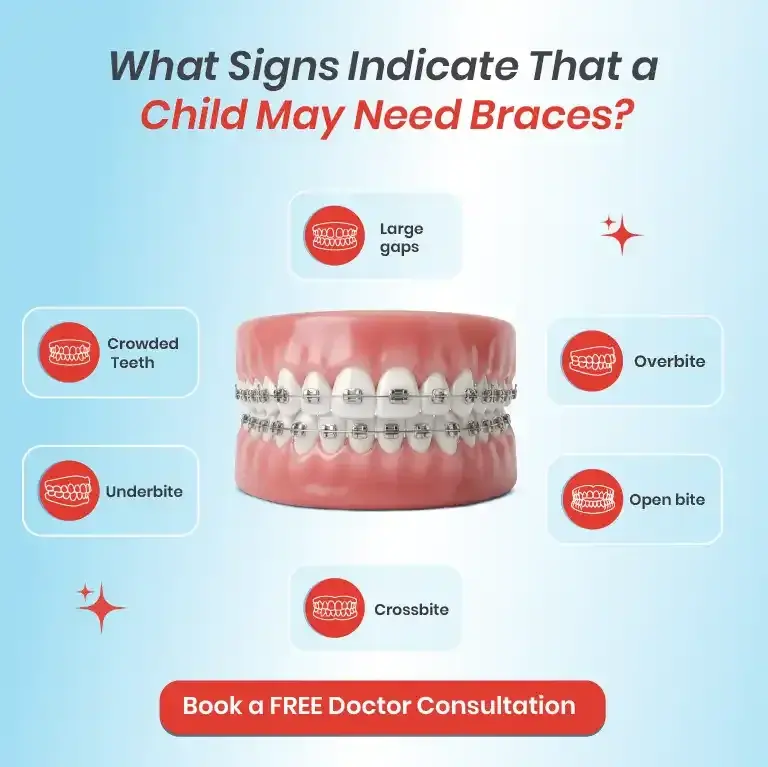
Parents may notice certain changes in their child's teeth or bite that warrant an orthodontic evaluation.
Common signs include:
Crowded teeth: Permanent teeth may not have sufficient space to erupt and align properly.
Large gaps: Excessive spacing between teeth may affect alignment and bite relationships.
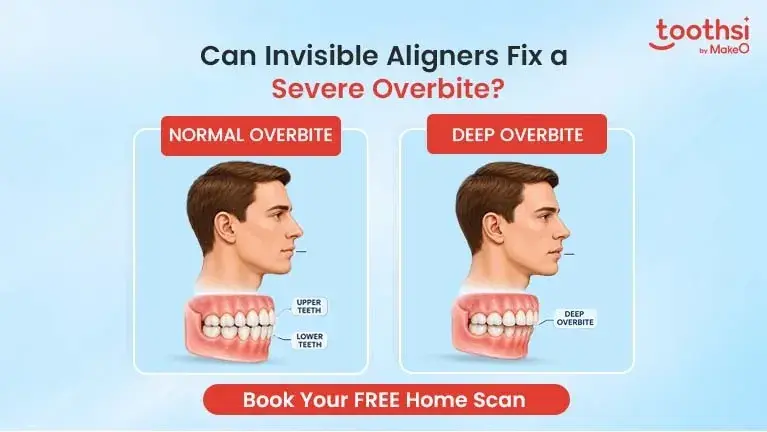
Overbite: The upper front teeth overlap the lower front teeth excessively.
Underbite: The lower front teeth sit ahead of the upper front teeth when the jaws are closed.
Crossbite: One or more upper teeth bite inside the corresponding lower teeth.
Open bite: The upper and lower front teeth do not meet when the back teeth are together.
Early or delayed loss of baby teeth: Unusual timing of tooth loss may affect the eruption and positioning of permanent teeth.
Difficulty biting or chewing: Incorrect tooth positioning may interfere with normal oral function.
Other signs, such as frequent cheek biting, jaws shifting while closing the mouth or permanent teeth erupting in unusual positions, may also require evaluation.
Parents should avoid attempting to diagnose these conditions themselves. An orthodontist can determine whether they indicate a developing problem and whether treatment is necessary.
What Types of Braces Are Available for Children?
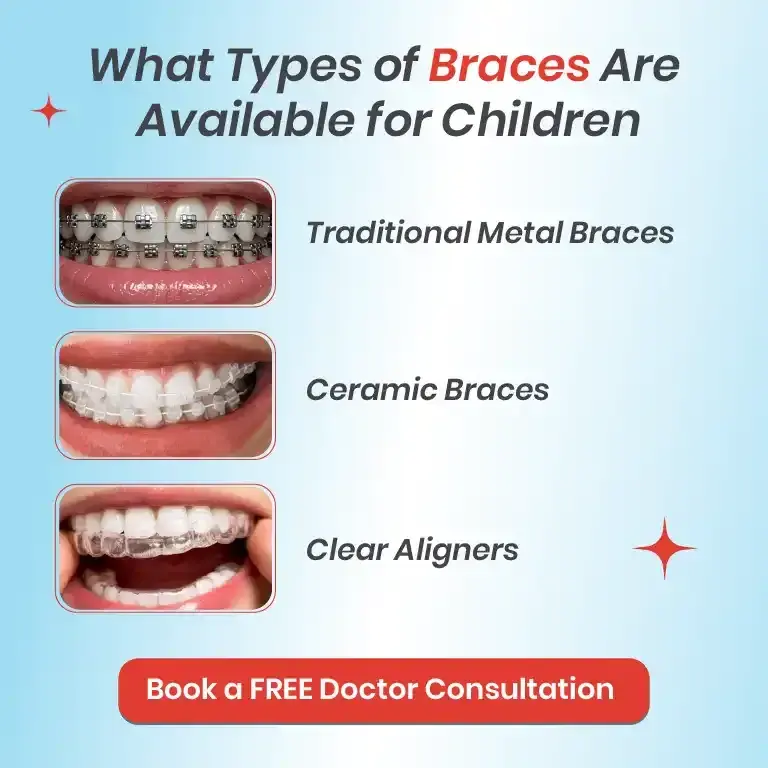
The choice of orthodontic appliance depends on the child's age, dental development and the complexity of the alignment problem.
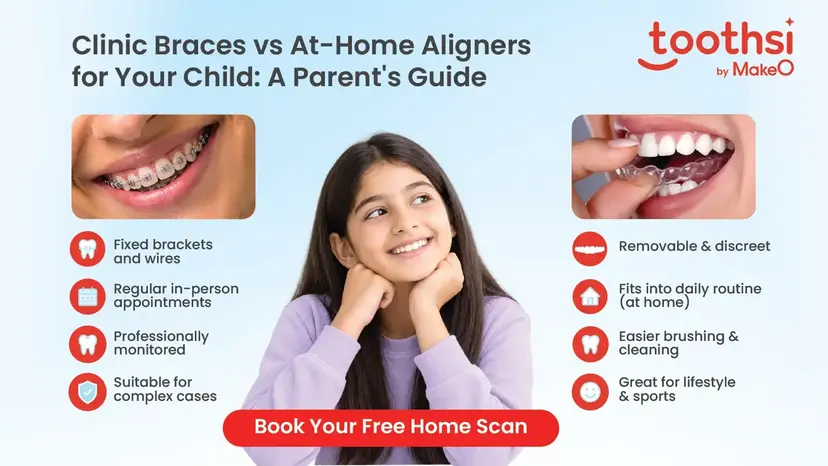
Traditional Metal Braces
Metal braces consist of brackets attached to the teeth and connected by orthodontic wires. The wires apply controlled pressure to gradually move teeth into their planned positions.
They are suitable for correcting several orthodontic problems, including crowding, spacing and certain bite irregularities. Since they are fixed to the teeth, children do not need to remember to wear or remove them.
However, they require careful brushing, regular orthodontic appointments and certain dietary precautions.
Ceramic Braces
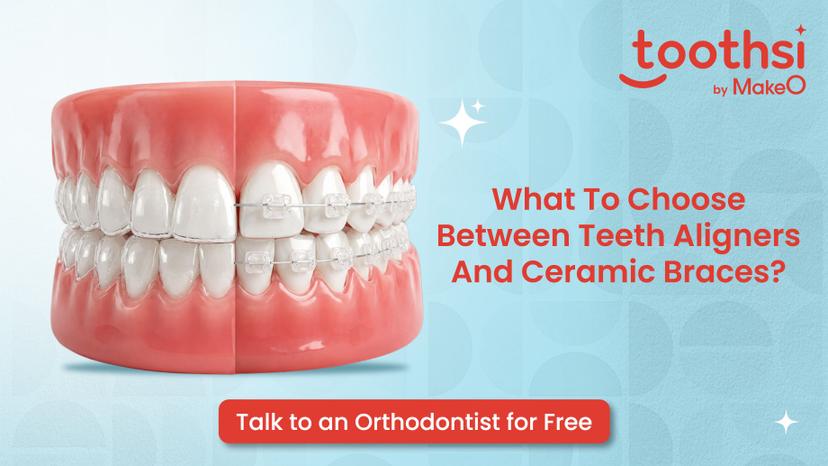
Ceramic braces work on the same principle as metal braces but use tooth-coloured or transparent brackets. They are less noticeable than conventional metal braces.
They may be considered for older children and teenagers who prefer a less visible fixed appliance. However, ceramic brackets require careful maintenance and may be more susceptible to staining or breakage.
Clear Aligners
Clear aligners are transparent, removable trays customised to fit the patient's teeth. Each set is designed to produce specific tooth movements according to an individualised treatment plan.
They offer certain practical advantages:
They can be removed while eating and brushing.
Their transparent appearance makes them less noticeable.
They allow easier access to teeth during brushing and flossing.
They do not involve the brackets and wires used in fixed braces.
Toothsi offers customised clear aligner treatment using digital 3D scans and professionally supervised treatment planning. Its process includes a free consultationtext and 3D scanning, which can be arranged at home or at an experience centre.
However, clear aligners are not automatically suitable for every child. They require sufficient permanent tooth eruption, appropriate clinical conditions and the ability to follow prescribed wear schedules. For younger children who still have developing dentition, an orthodontist may recommend other appliances or monitoring instead.
Why Is Early Orthodontic Treatment Important?
Early orthodontic treatment, also called interceptive orthodontics, can help address specific dental and jaw development problems while a child is still growing.
The objective is not simply to straighten teeth at an early age. It is to identify conditions that may benefit from intervention during a particular stage of development.
Depending on the diagnosis, early treatment may help:
Guide jaw development in selected cases.
Correct certain developing crossbites.
Preserve or regain space for erupting permanent teeth.
Address specific habits that affect dental development.
Reduce the severity of certain developing orthodontic problems.
However, early treatment does not eliminate the need for comprehensive braces later in every case. Some children may still require a second phase of orthodontic treatment once their permanent teeth have erupted.
The orthodontist should explain the expected benefits, limitations and treatment requirements before recommending early intervention.
How Can Parents Prepare Children for Braces?
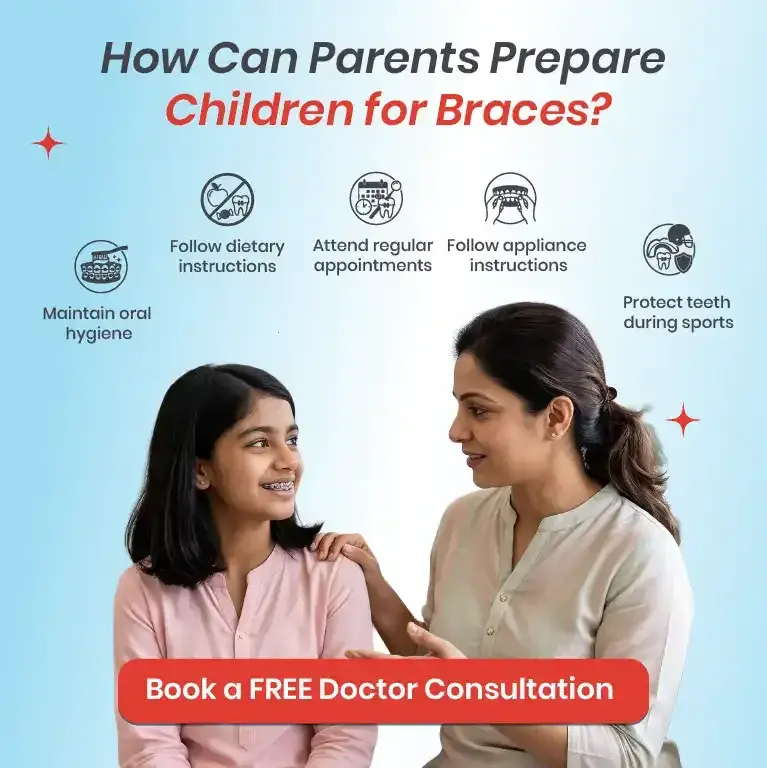
Orthodontic treatment requires cooperation from both children and parents. Maintaining good oral hygiene is particularly important because food particles and plaque can accumulate around brackets and wires.
Parents can support their children by following a few basic precautions:
Maintain oral hygiene: Encourage brushing twice daily using fluoride toothpaste and cleaning carefully around brackets or aligners.
Follow dietary instructions: Children wearing fixed braces may need to avoid hard, sticky and chewy foods that can damage the appliance.
Attend regular appointments: Follow-up visits allow the orthodontist to assess progress and make necessary adjustments.
Follow appliance instructions: Removable aligners and other appliances should be used according to the prescribed schedule.
Protect teeth during sports: A suitable mouthguard should be considered for children participating in contact sports.
Parents should also explain the treatment process to children so they understand why consistency and cooperation are important.
Is Orthodontic Treatment Safe for Children?
Orthodontic treatment is generally considered safe when it is appropriately planned and supervised by a qualified dental professional.
However, certain conditions must be evaluated before treatment begins. Active tooth decay, untreated gum problems and poor oral hygiene may need to be addressed first.
The orthodontist may also recommend dental X-rays, photographs, digital scans or other diagnostic records to assess tooth development, jaw relationships and the position of unerupted permanent teeth.
Final Thoughts
Children can get braces, but the right time to begin treatment depends on their dental development and orthodontic requirements. While some developing problems benefit from early intervention, others are better addressed once most permanent teeth have erupted.
The most important step for parents is to arrange an orthodontic evaluation by the recommended age of seven or earlier if a specific concern is noticed. This helps identify potential problems and establish an appropriate treatment timeline.
Whether treatment involves traditional braces, specialised orthodontic appliances or clear aligners for eligible patients, the priority should always be healthy dental development, functional bite alignment and long-term oral health.
Medical Reference Links
The following sources can be used for clinical fact-checking and medical review:
American Association of Orthodontists – Orthodontics for Children: Early orthodontic evaluation, signs of orthodontic problems and treatment options.
American Academy of Pediatric Dentistry – Management of the Developing Dentition and Occlusion: Clinical recommendations on developing teeth, jaw relationships and early orthodontic intervention.
NHS – Braces and Orthodontics: Braces, oral hygiene, treatment duration and dental health requirements.
Harvard School of Dental Medicine – When Should Children First Visit the Orthodontist?: Importance of early orthodontic assessment and monitoring jaw development.