

Who Is Eligible for Braces?

MDS - Orthodontics, an Orthodontist and Implantologist with 30 years of experience. He practices in Andheri West, Mumbai.
Updated on November 16, 2026
Braces are used to correct misaligned teeth and bite problems, but not everyone with crooked teeth requires orthodontic treatment. Eligibility depends on the position of the teeth, the relationship between the upper and lower jaws, oral health and the individual's stage of dental development.
Both children and adults may benefit from braces, provided their dental condition is suitable for treatment. The first step is to determine whether the concern requires orthodontic correction and which treatment option is appropriate. An orthodontist evaluates these factors before recommending conventional braces or alternatives such as clear aligners. The objective is not only to improve the appearance of the smile but also to establish a functional bite and support long-term oral health.
Which Dental Conditions May Require Braces?
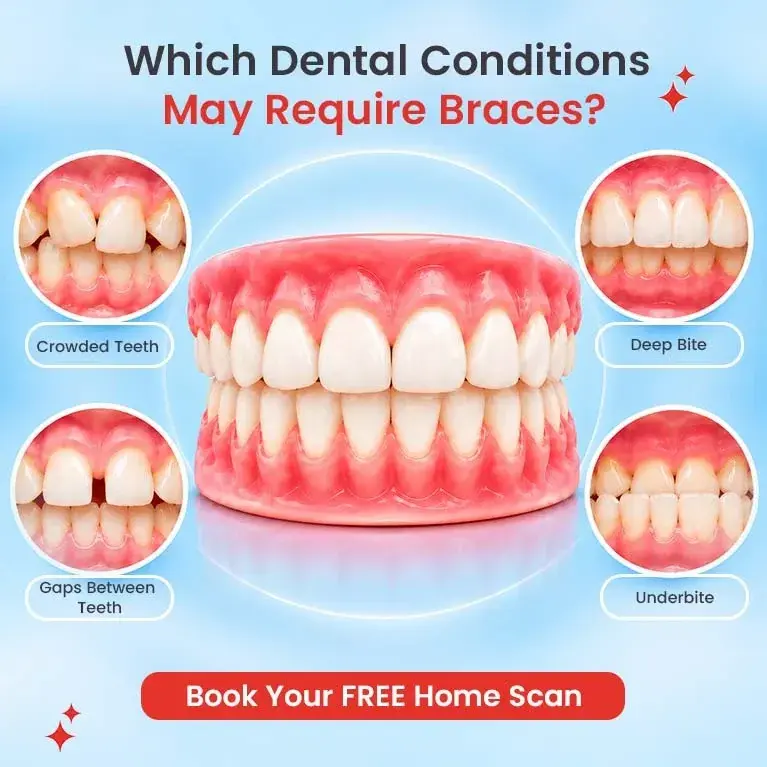
Anyone with a clinically significant tooth alignment or bite problem may be a candidate for braces. Common conditions that may benefit from orthodontic treatment include:
- Crowded teeth: Teeth overlap or appear twisted because there is insufficient space in the dental arch.
- Gaps between teeth: Noticeable spaces occur between adjacent teeth.
- Protruding teeth: The upper front teeth extend forward, sometimes increasing their vulnerability to injury.
- Overbite or deep bite: The upper front teeth overlap the lower front teeth excessively.
- Underbite: The lower front teeth sit ahead of the upper front teeth when the jaws close.
- Crossbite: One or more upper teeth bite inside the corresponding lower teeth.
- Open bite: Some upper and lower teeth do not meet when the mouth is closed.
The severity of the problem, its effect on oral function and the patient's dental health help determine whether treatment is necessary. Mild irregularities may not require correction, while more significant discrepancies may benefit from orthodontic intervention.
What Is the Right Age to Get Braces?
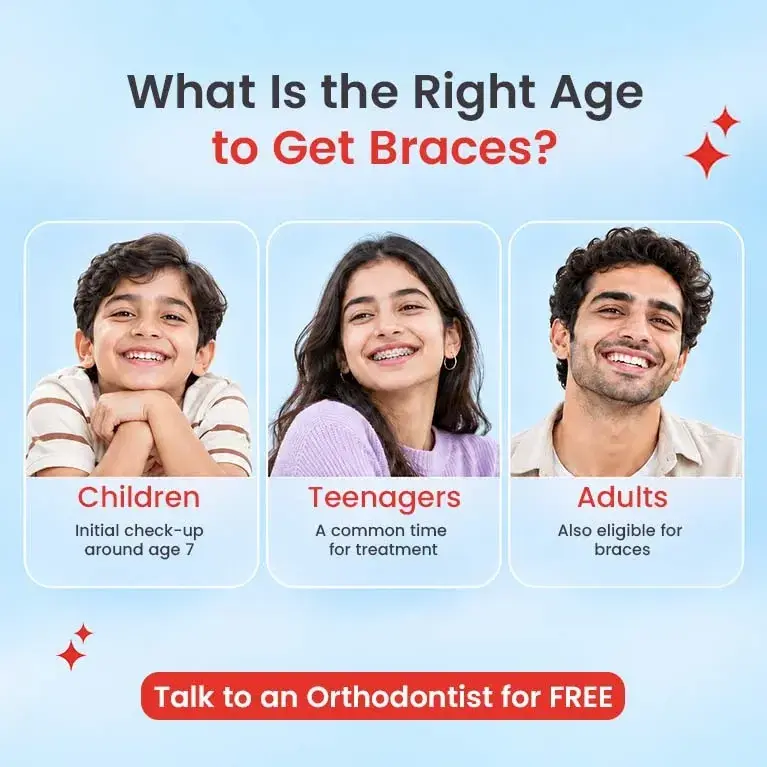
There is no single age at which everyone should begin orthodontic treatment. The appropriate timing depends on dental development, jaw growth and the nature of the alignment problem.
Children
An initial orthodontic evaluation around the age of seven is commonly recommended because developing permanent teeth and jaw growth can reveal potential problems early. This does not mean that every child needs braces at this age. Some conditions can be monitored as the child grows, while others may benefit from early intervention.
Teenagers
The teenage years are a common period for comprehensive orthodontic treatment because most permanent teeth have erupted. Depending on the case, an orthodontist may recommend fixed braces or clear aligners designed for suitable adolescent patients.
Adults
Adults can also be eligible for braces. Orthodontic treatment is not restricted to people whose teeth are still developing. However, the condition of the gums, supporting bone, existing dental restorations and overall oral health must be assessed before treatment begins.
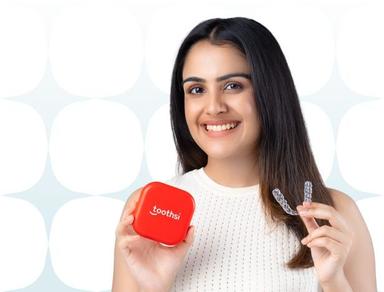
Toothsi offers clear aligner treatment for eligible teenagers and adults. Age alone does not determine whether a particular treatment will be effective.
Can You Get Braces If Your Teeth Are Only Slightly Crooked?
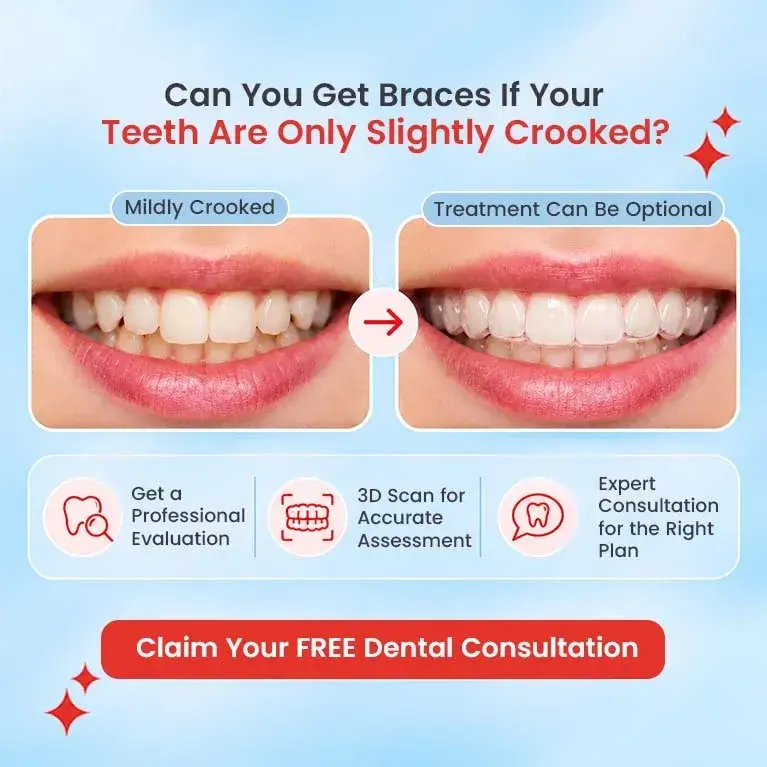
Slightly crooked teeth do not automatically require braces. If the irregularity is mild and does not affect the bite, cleaning or dental health, an orthodontist may determine that treatment is optional rather than clinically necessary.
However, even mild-looking irregularities can sometimes be associated with underlying bite problems. Conversely, teeth that appear significantly misaligned may not require immediate treatment if clinical and functional factors do not justify it.
The decision should therefore be based on a dental examination rather than photographs or self-assessment alone. If treatment is appropriate, the orthodontist can explain whether conventional braces or clear aligners are suitable for the movements required.
Toothsi's assessment process includes a 3D scan and orthodontic consultation to help plan treatment according to an individual's dental condition.
Can Braces Correct Severe Crowding or Bite Problems?
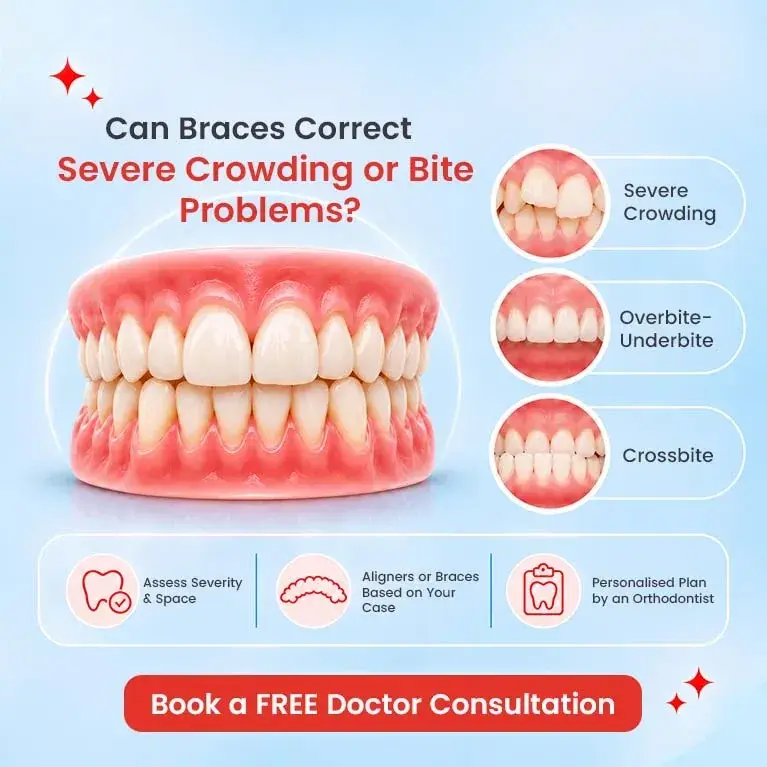
Yes, people with significant crowding or bite discrepancies may be eligible for orthodontic treatment. However, the severity of the condition influences which treatment approach is appropriate.
Severe crowding requires careful assessment of available space, tooth positions and the supporting bone. Depending on the case, treatment may involve creating space, removing selected teeth or using other orthodontic techniques.
Similarly, severe overbites, underbites and crossbites require an assessment of whether the problem arises
primarily from tooth positioning, jaw relationships or a combination of both. Some cases can be treated with orthodontic appliances alone, while significant skeletal discrepancies may require a combination of orthodontics and jaw surgery.
Clear aligners can correct a range of alignment and bite problems, including selected complex cases. Toothsi provides customised aligner treatment plans, but not every severe case is suitable for aligners alone. The orthodontist must determine the appropriate treatment based on clinical findings.
Who May Need to Delay Braces Treatment?
Being a potential candidate for braces does not always mean treatment should begin immediately. Certain oral health conditions should be addressed first.
Treatment may need to be delayed if a patient has:
- Untreated cavities: Tooth decay should be treated before orthodontic appliances are introduced.
- Active gum disease: Inflamed gums or damage to the supporting tissues must be evaluated and managed.
- Poor oral hygiene: Plaque accumulation increases the risk of cavities and gum problems during treatment.
- Certain dental or jaw conditions: Impacted teeth, significant skeletal discrepancies or previous dental trauma may require additional investigations or specialist care.
These factors do not necessarily make someone permanently ineligible for braces. In many cases, addressing the underlying problem allows orthodontic treatment to proceed safely.
Are Toothsi Clear Aligners an Alternative to Traditional Braces?
Traditional braces and clear aligners use different methods to move teeth into their planned positions. Braces use brackets and wires attached to the teeth, while clear aligners are removable trays designed to apply controlled pressure according to a personalised treatment plan.
Toothsi clear aligners may be suitable for patients with crowding, gaps, protruding teeth and selected bite problems. Their suitability depends on the movements required and the patient's overall dental condition.
For eligible patients, Toothsi aligners offer several practical advantages:
- Discreet appearance: Transparent trays are less noticeable than conventional metal braces.
- Removability: Aligners can be removed for meals, brushing and flossing, helping patients maintain their usual oral hygiene routine.
- Convenient assessment: Toothsi offers 3D scans at home or through its experience centres, followed by an orthodontic consultation and a customised treatment plan.
- Treatment monitoring: Patients can access virtual and in-person monitoring and support during treatment.
- Flexible payments: EMI options can help eligible patients spread the cost of treatment over time.
Toothsi aligners are manufactured using 3D printing technology, and the brand states that its aligners are US FDA 510(k)-cleared. However, clear aligners are not appropriate for every orthodontic condition. Some complex cases may require fixed braces or a combination of treatment approaches.
The choice should be based on clinical suitability rather than appearance, convenience or cost alone. An orthodontist can explain the expected results, limitations and responsibilities associated with each option.
How Much Do Braces and Toothsi Aligners Cost?
The cost of orthodontic treatment varies according to the type of appliance, the complexity of the dental condition, the duration of treatment and any additional procedures required. Conventional braces may have a lower initial cost than some clear aligner treatments, but the total expense should be evaluated against the patient's individual needs.
Toothsi's published pricing has listed clear aligner treatment starting at ₹52,999. The final cost depends on the complexity of the case and the treatment plan recommended by the orthodontist. Patients should confirm the current price and inclusions during their consultation, as pricing and offers may change.
For patients concerned about affordability, Toothsi offers EMI options for eligible treatment plans. Before committing, patients should clarify what the quoted price includes, such as consultations, monitoring, retainers and any additional aligners that may be required.
Choosing treatment solely on the basis of its starting price may not reflect the total cost of achieving and maintaining the desired result. A professional assessment helps establish the treatment requirements and associated expenses before treatment begins.
How Do You Find Out If You Are Eligible for Braces?
The most reliable way to establish eligibility is to consult an orthodontist. An assessment generally includes an examination of the teeth, gums and bite, along with a review of dental history. Photographs, digital scans and X-rays may be required depending on the clinical findings.
At Toothsi, patients can begin with a 3D scan and orthodontic consultation to understand whether clear aligners are suitable for their needs. The assessment helps determine the proposed treatment plan, expected duration and cost.
Patients should also discuss their expectations, ability to wear aligners as prescribed and any existing dental concerns. Clear aligners typically need to be worn for around 20–22 hours daily, or as directed by the treating orthodontist, to achieve the planned tooth movements.
Ultimately, braces are not limited to a particular age group or degree of misalignment. Children, teenagers and adults may all be candidates for orthodontic treatment, but the appropriate method depends on their individual dental condition. A professional assessment helps establish whether treatment is necessary, which option is suitable and when treatment should begin.