
- ToothsiSmile CorrectionBrighter smilenewToothsi Productsnew
- Skin & HairLaser hair removalnewestAdvance skin treatmentfacials



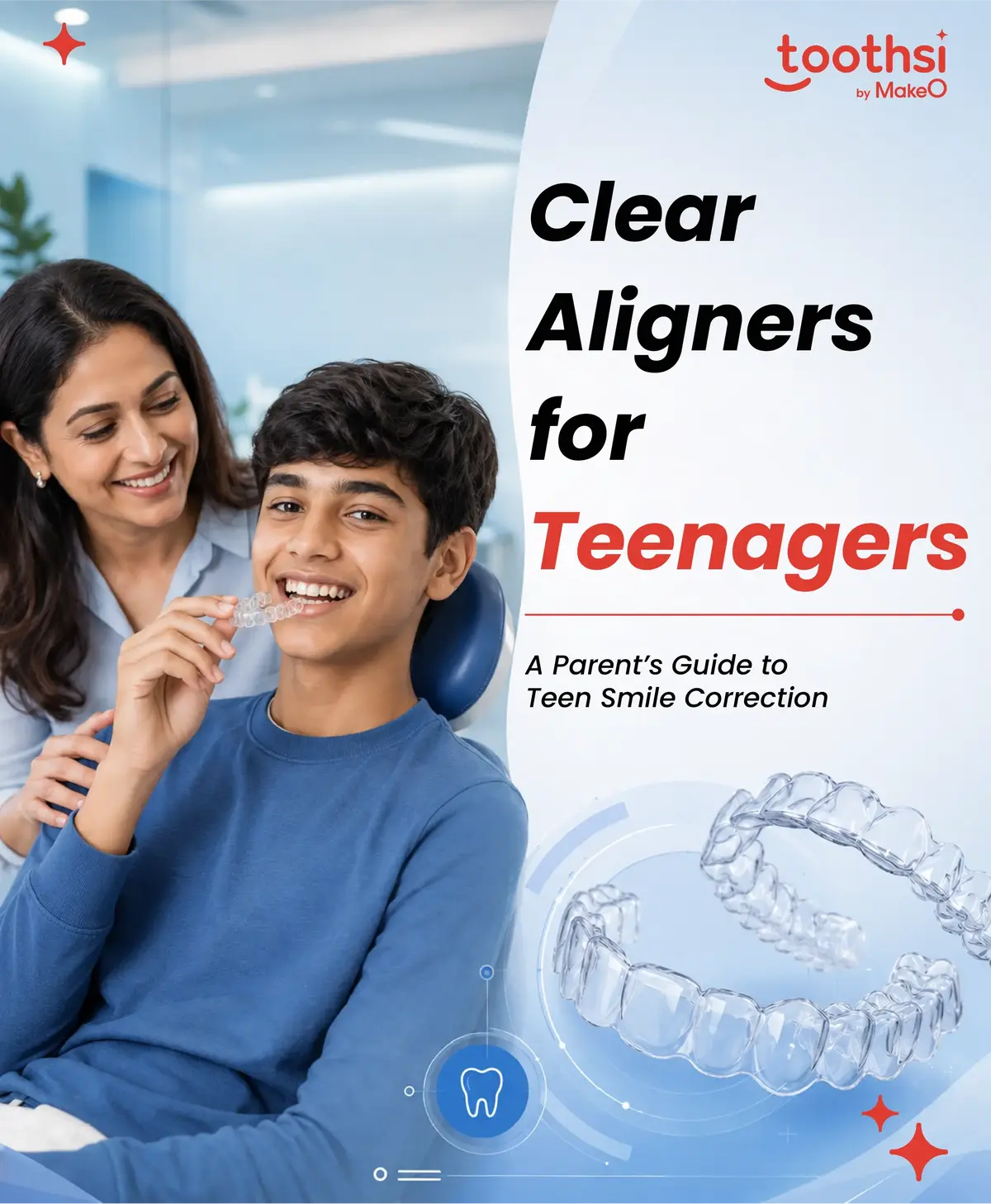
Teeth Straightening for Teens and Kids in India
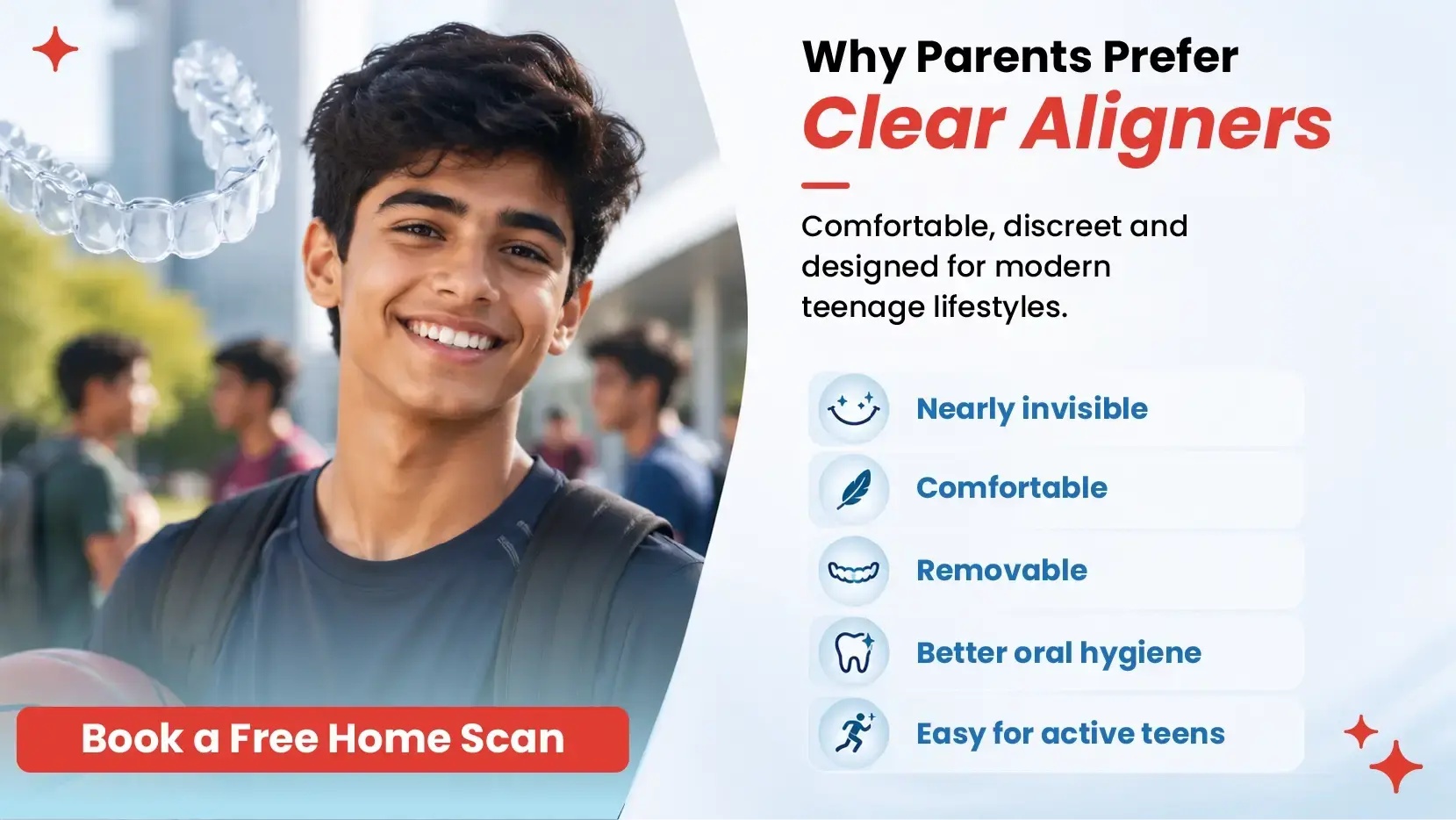
Teen Clear Aligners: Clear Aligners for Teenagers are no longer just a cosmetic trend; they're backed by real clinical evidence that they can deliver effective, comfortable, and confidence-building results for growing smiles.
Parents today are increasingly choosing Clear Aligners for teenagers as a modern alternative to traditional teeth braces. Unlike traditional Dental Braces, Clear Aligners are removable trays that gradually move teeth while allowing teens to eat, brush, and play sports more comfortably.”
Recent research has also shown promising outcomes for teen aligner treatment. A 2025 systematic review and meta-analysis found that Clear Aligner Therapy can effectively address mild-to-moderate orthodontic concerns in teens while improving comfort, oral hygiene, and treatment satisfaction among both teens and parents.
Whether your teen has crowded teeth, gaps, or mild bite concerns, understanding the treatment process can help you make a more informed decision about orthodontic care.
Book a FREE home scan for your child’s perfect smile today!
What Are Clear Aligners for Teenagers?
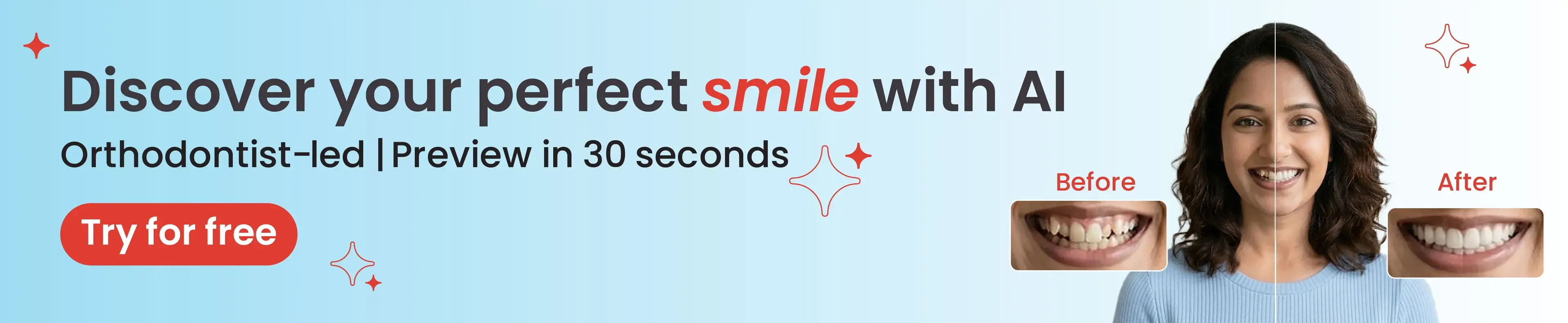
Clear aligners for teenagers are custom-made, transparent trays designed to move your teeth gradually into the right, aligned position. Clear aligners for teens are a modern alternative to traditional braces and are often chosen by parents who want their teens to experience discreet, convenient treatment.
What is the Ideal Age to Start with Clear Aligners for Teens?
There is no age restriction for getting clear aligners. However, the sooner you start your aligner treatment, the easier it is to achieve proper alignment. Clear aligners for teens can usually be started once the milk teeth have fallen out and most or all permanent adult teeth have developed naturally.
Are Clear Aligners Right for My Child?
Yes, choosing Clear Aligners for teens should depend upon several factors, such as dental condition, lifestyle, and treatment complexity. Clear aligners for teenagers are gaining popularity, but they're not always necessary for every orthodontic condition.
An orthodontist can help determine whether clear aligners for teens are the right option based on your teen’s smile alignment needs and oral habits.
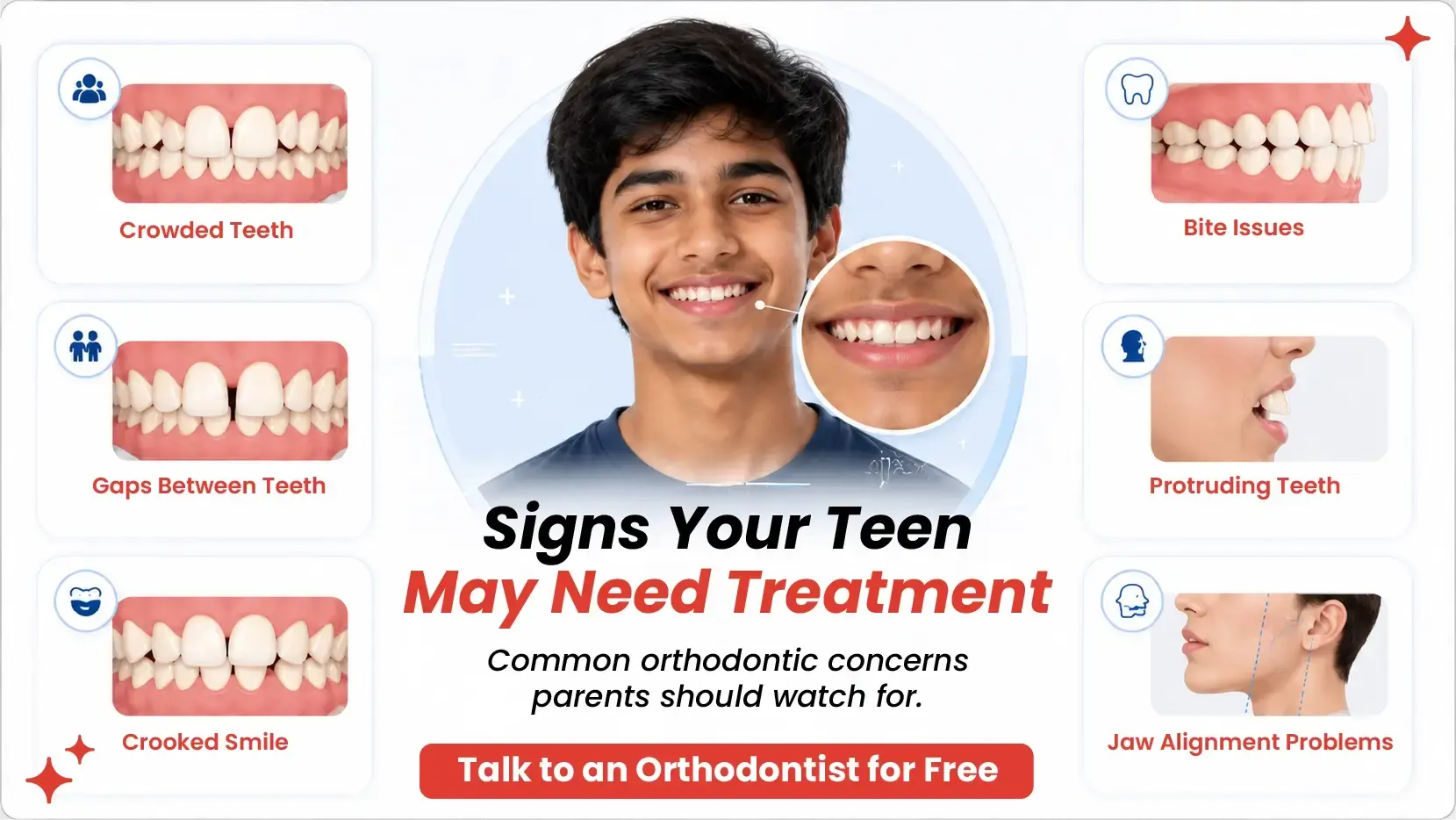
Signs when your teen needs orthodontic treatment
There are times when dental alignment issues become more prominent during the teenage years, as the permanent teeth have fully developed. Parents must consider these signs and opt for orthodontic consultation:
- overlapping or crowded teeth
- gaps between teeth
- uneven teeth or crossbite teeth
- difficulty biting or chewing properly
- protruding, forwardly placed teeth
- jaw alignment issues or open bite problems
An orthodontist may recommend clear aligners for teenagers who have all or most of their permanent teeth and can consistently follow treatment instructions. Since aligners are removable, successful treatment depends on wearing them for the recommended number of hours every day.
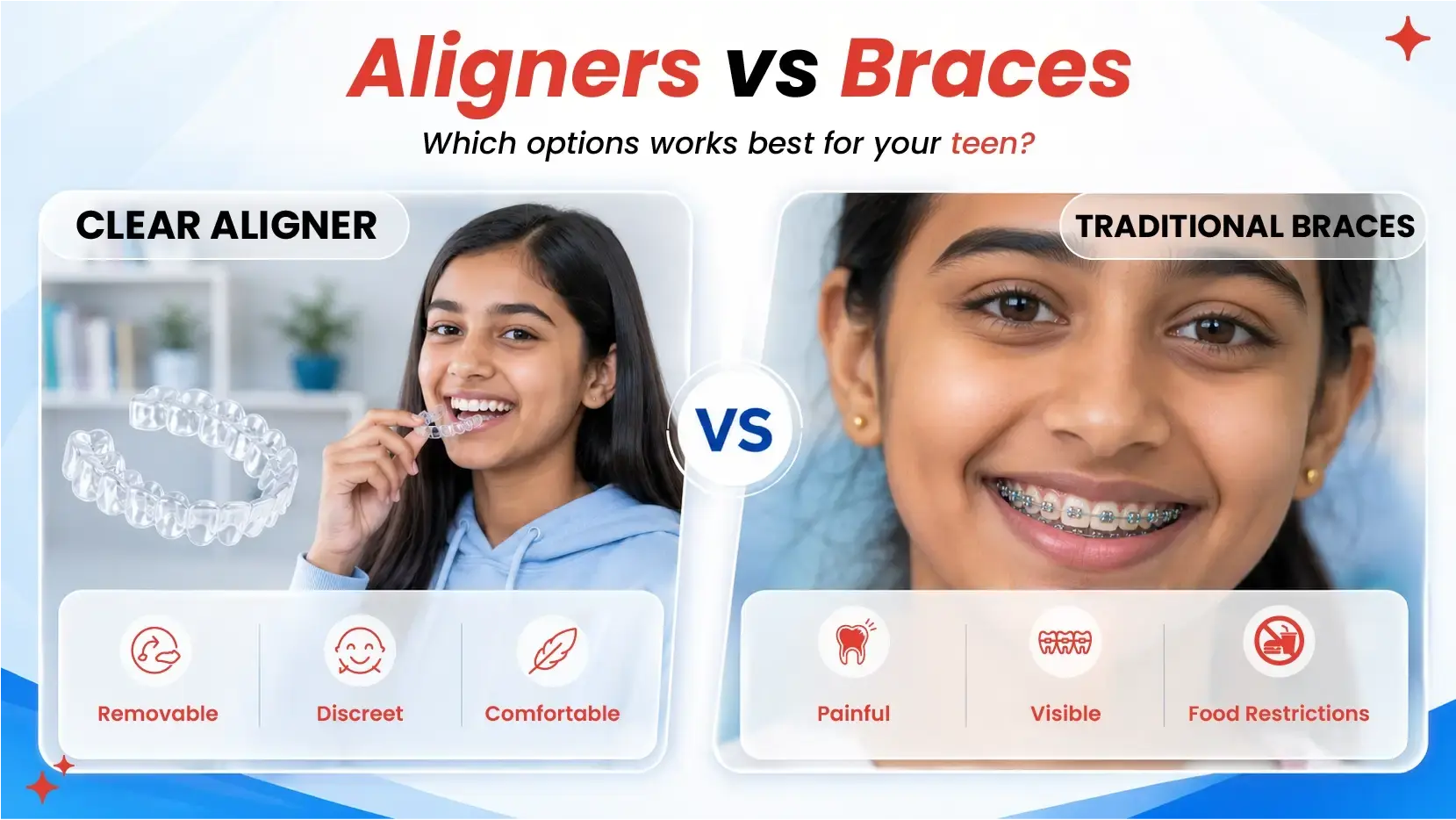
When Are Braces a Better Option?
Braces are the perfect option when alignment treatment cannot be managed with clear aligners for teens, such as in complex cases like severe crowding or bite problems, as they are better suited to address these issues.
Braces may also be a better choice if:
- The teen may forget to wear removable aligners regularly
- treatment requires more controlled tooth movement
- There are complex jaw or bite corrections involved
Clear aligners vs braces for teenagers
What Parents Need to Know Before Starting Treatment?
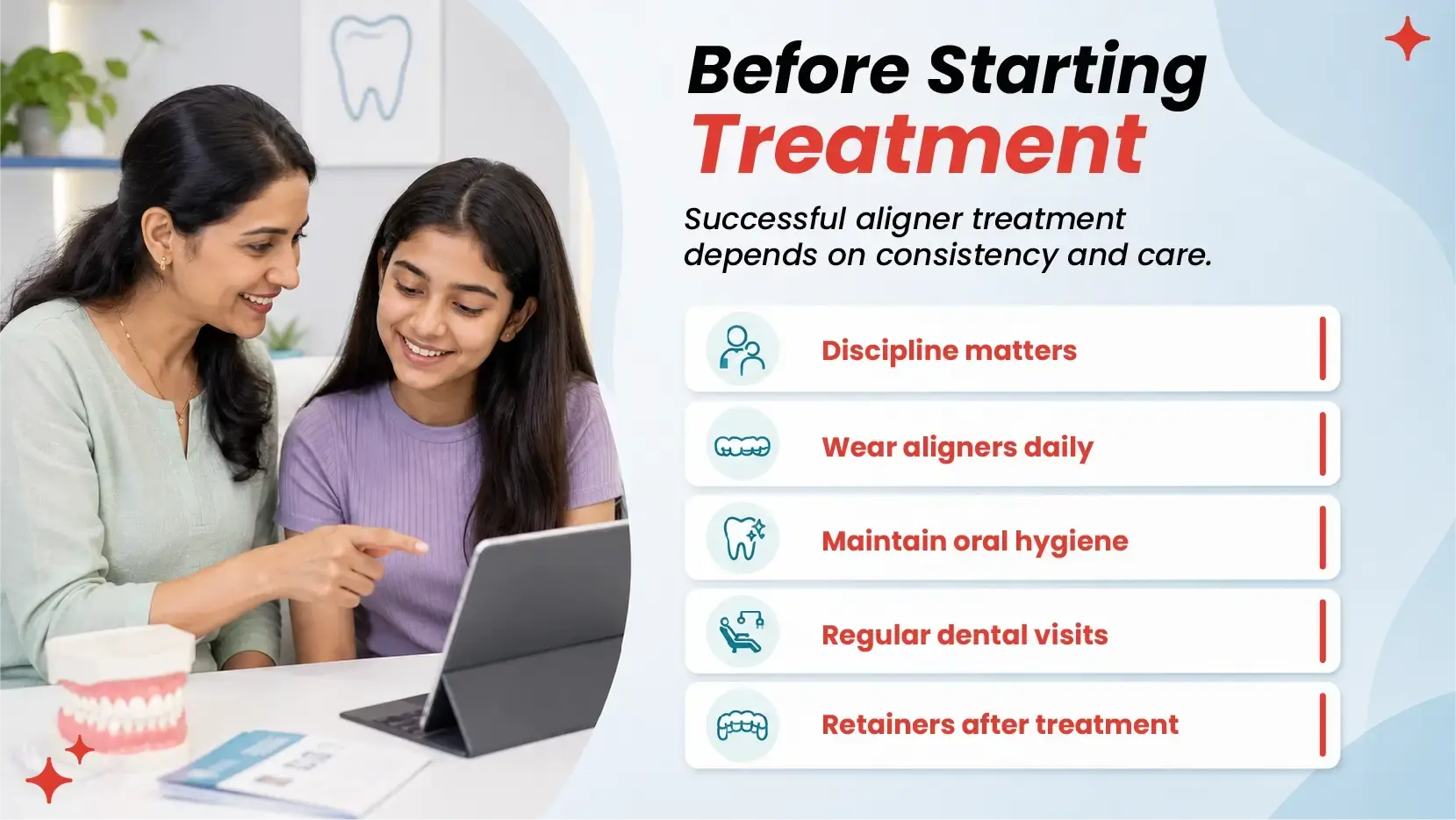
Before starting with teeth aligners for teenagers, parents should understand that successful treatment depends on consistency, oral hygiene, and regular monitoring. While clear aligners for teens are comfortable and convenient, they also require responsibility and commitment from the teen throughout the treatment journey.
1. Follow Systematic Discipline
Since clear aligners are removable, teens must remember to wear them for the recommended hours each day.
2. Cleaning and Caring for Aligners
Good oral hygiene is essential during orthodontic treatment for teens. Teens should brush and floss properly before wearing their aligners again to avoid food particles and bacteria getting trapped inside.
Parents should also encourage regular cleaning of the clear aligners to help keep them fresh, clear, and hygienic throughout treatment. Proper care supports both oral health and a smoother aligner experience.
3. Follow-Up Visits and Monitoring
Regular dental check-ups help monitor how the clear aligners for teens are working and whether the teeth are moving as planned. These visits allow the orthodontist to track progress, answer concerns, and make adjustments if needed.
4. Retainer After Treatment
When the aligner treatment is complete, retainers are usually recommended to help maintain the new tooth position. Wearing retainers as advised helps protect the results achieved with invisible aligners for teens and supports long-term smile stability.
How to Care for Clear Aligners at Home?
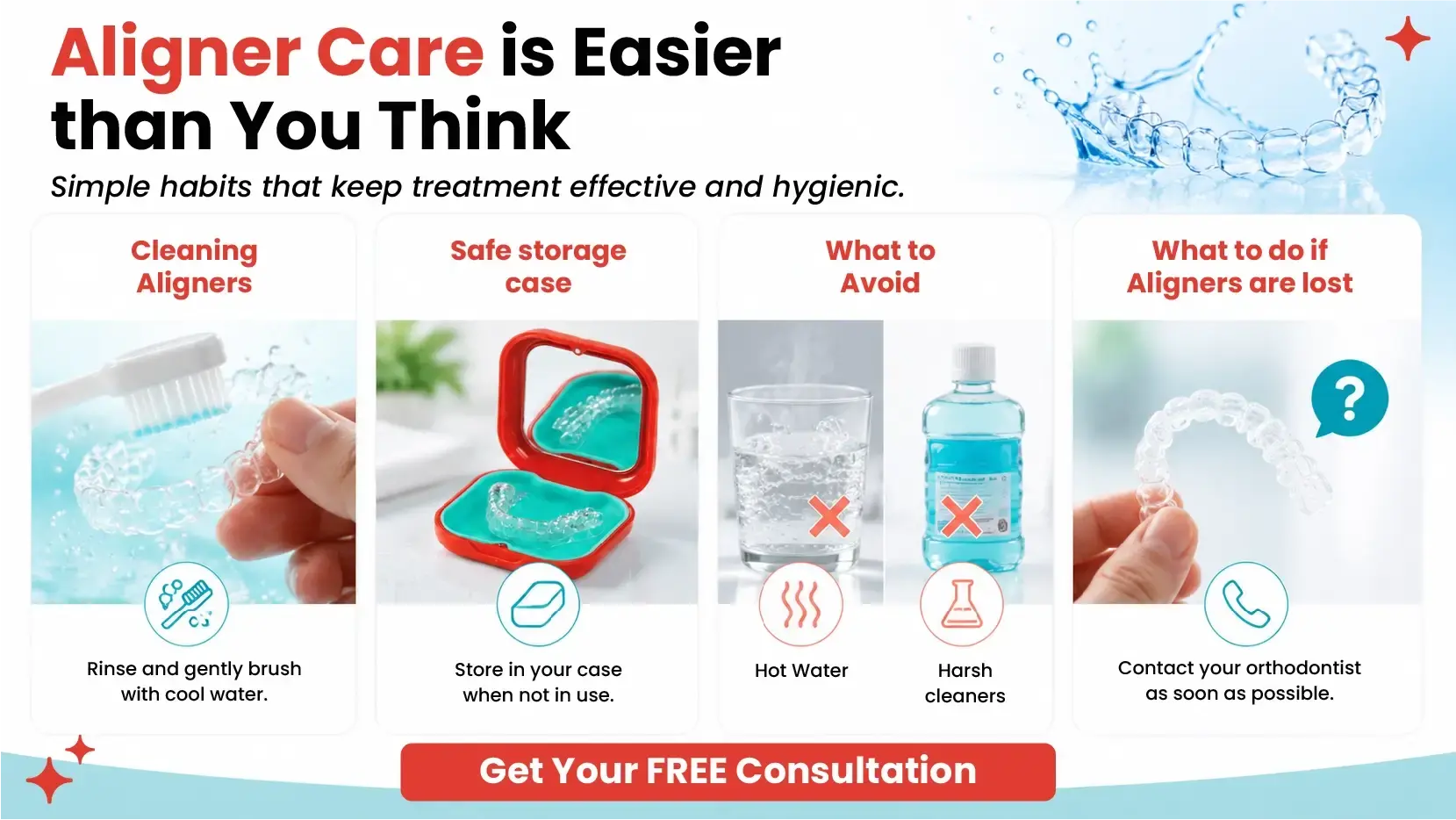
1. How to Clean Aligners?
Rinse clear aligners after each removal and clean them gently with an aligner-safe product. Regular cleaning helps keep teeth aligners fresh and clear throughout the day. Using a dedicated cleaner, like foamy aligner cleaning foam, can make daily maintenance easier for teens.
2. What to Avoid?
Avoid hot water, harsh toothpaste, or any strong cleaning agents, as these can damage clear aligners for teenagers.
3. How to Store Aligners Safely?
When not in use, keep the aligners in a clean, protective aligner care box, which is designed for safe storage and to help reduce the risk of loss or damage. This is especially useful for teens who carry aligners to school, sports practice, or outings.
4. What to Do If an Aligner Is Lost?
If one set of clear aligners is lost, contact the orthodontist or aligner provider right away. They can guide you on whether to move to the next set, wear the previous set, or replace it. the missing one.
How Do Clear Aligners Work for Teenagers?
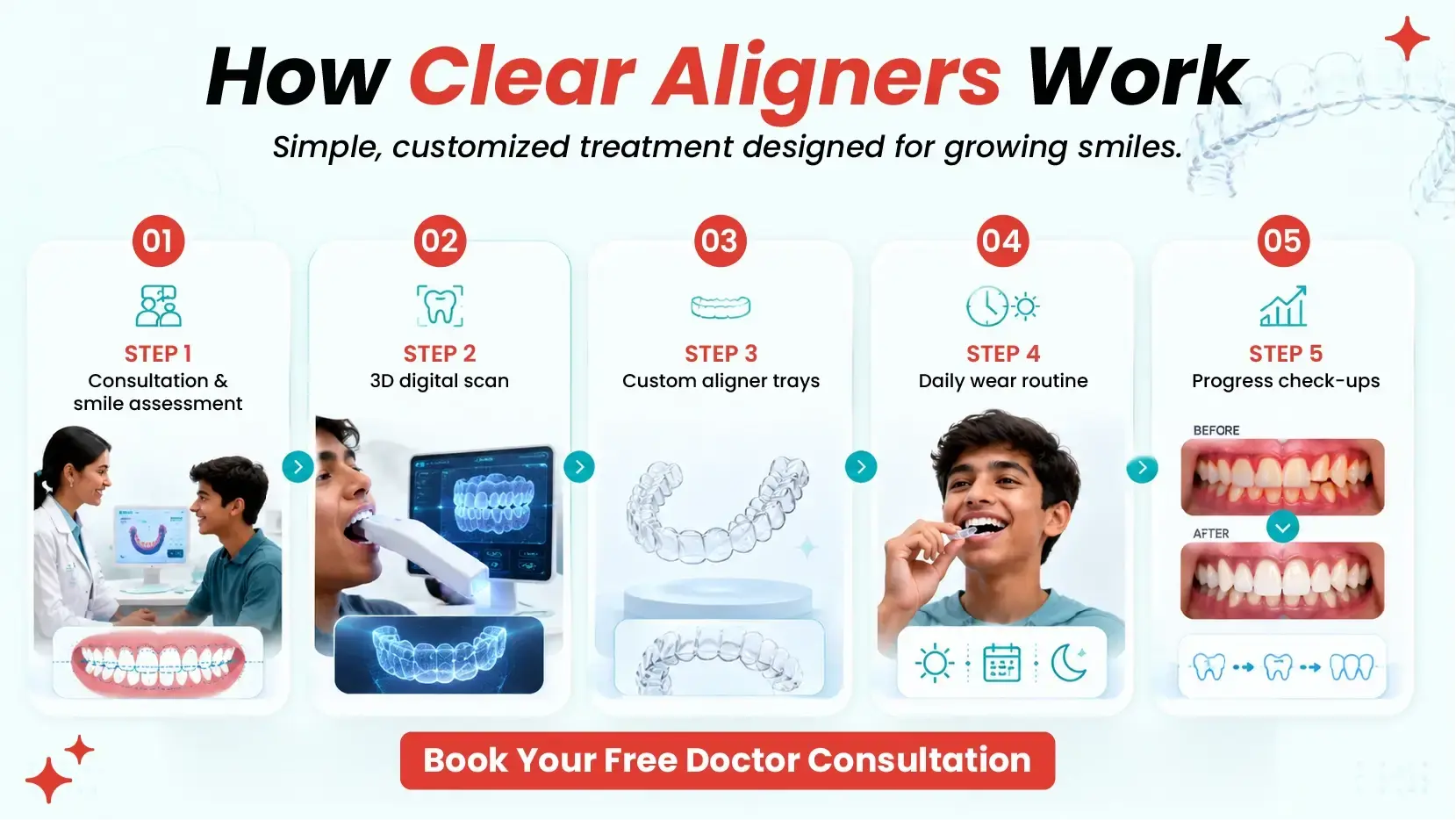
1. Consultation and Smile Assessment
During the dental consultation, our professional team of orthodontists examines the condition of the teeth to assess overall oral health. This step helps determine if clear aligners are the right treatment option for teenagers.
2. Digital Scan and Treatment Plan
A digital 3D scan of the teeth is taken to create a customized treatment plan. This scan helps map how the clear aligners will gradually move the teeth into position.
3. Custom Aligner Trays
Based on the treatment plan, a series of custom teeth aligners for teenagers is created. These clear aligners are designed to fit comfortably and discreetly over the teeth.
4. Wearing Each Set as Directed
After receiving the personalized clear aligner sets, your teen is ready to wear them. Wearing clear aligners consistently is important for effective results.
5. Regular Progress Checks
Routine check-ups help monitor progress and ensure the aligner treatment is moving as planned. These visits also allow the orthodontist to make adjustments if needed.
What is the Cost of Clear Aligners for Teenagers?

The cost of clear aligners for teenagers can vary depending on the complexity of the case, treatment duration, and type of correction required. At Toothsi, the clear aligners price for teens starts at ₹42,999 (student offer), (the original price for clear aligners starts from around ₹52,999) with flexible EMI options making it affordable without compromising the quality and safety of your child.
Visit your nearest dental clinic to learn more about teen aligners!
Watch the Complete Video on: Best Age to Start Early Orthodontic Treatment for Kids
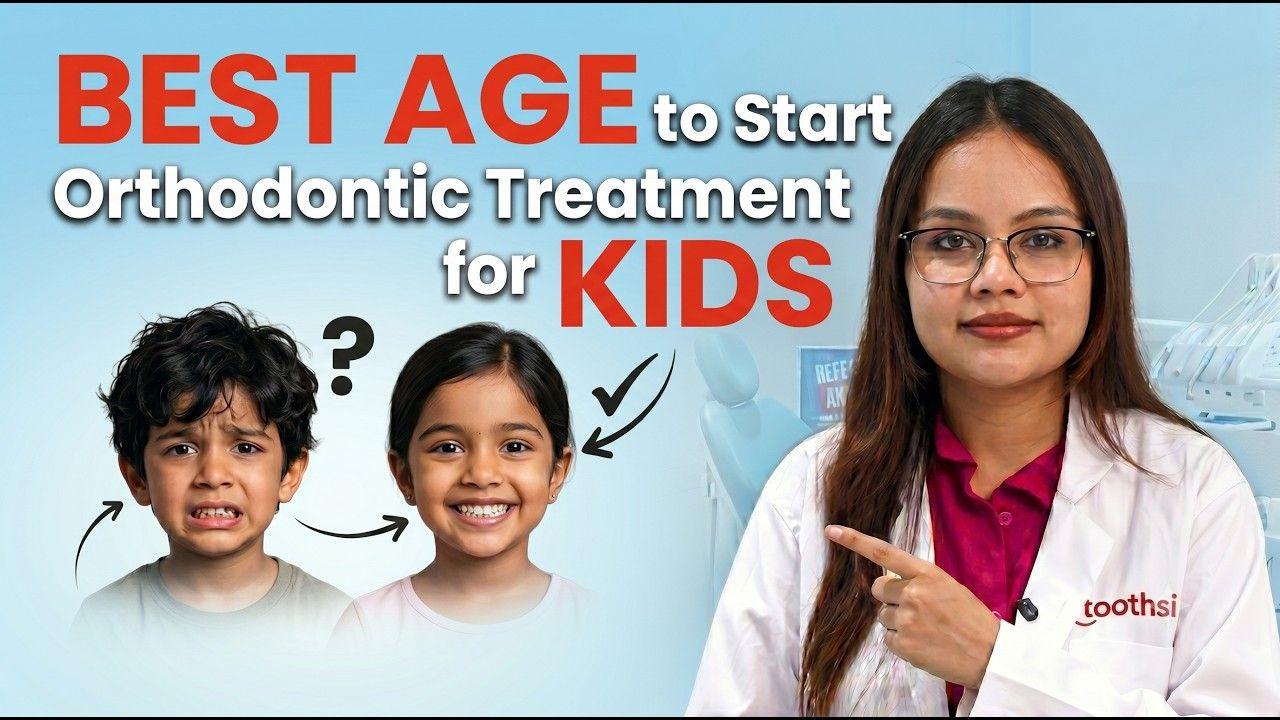
Hello and welcome to Toothsi by MakeO. In this video, we answer the important question: When should children start orthodontic treatment?
Many parents delay orthodontic treatment until their child is a teenager, often leading to longer, more expensive, and stressful procedures such as braces or extractions. Early orthodontic intervention can be faster, gentler, and more cost-effective.
FAQs
Are clear aligners painful for teenagers?
No, clear aligners for teenagers are considered more comfortable than traditional braces. However, teens may experience mild pressure or slight discomfort when switching to a new set of aligners, which is normal during aligner treatment.
How long does teeth aligner treatment take?
The duration of teeth aligner treatment for teens varies from case to case. For instance, a mild alignment issue may take a shorter time, while more complex corrections can take longer.
Can my teen eat with aligners on?
No, it is advised to remove clear aligners before eating or drinking anything other than water.
Do clear aligners work for crowded teeth?
Yes, clear aligners can correct mild to moderate crowding. Many parents choose clear aligners for teenagers as a discreet and convenient option for improving smile alignment.
Are clear aligners better than braces for teens?
Yes, clear aligners for teens can be effective. Many teenagers prefer aligners because they are less noticeable, removable, and easier to maintain. The right option depends on the teen’s dental condition and treatment requirements.
What happens if my teen forgets to wear them?
Since invisible aligners for teens are removable, wearing them consistently is important. Forgetting to wear aligners regularly may delay treatment progress and affect the final results. Parents can help teens stay consistent with their aligner routine.
Can teens play sports and eat normally with clear aligners?
Yes, one of the advantages of clear aligners for teenagers is flexibility. Teens can remove the aligners while eating, playing sports, or participating in special activities. This makes teen aligners a convenient option for active lifestyles and daily routines.
Can a 14 year old wear aligners?
Yes, a 14-year-old can usually wear clear aligners for teenagers if most or all of the permanent adult teeth have developed naturally. Orthodontists generally recommend clear aligners for teens once the milk teeth have fallen out and adult teeth are properly developed.
Can a 12-year-old get clear aligners?
Yes, a 12-year-old can get clear aligners for teens if most permanent adult teeth have developed naturally. Orthodontists usually recommend clear aligners for teenagers once the milk teeth have fallen out and the teen’s dental development is suitable for aligner treatment.
Are aligners good for teens?
Yes, clear aligners for teens are a popular orthodontic option because they are removable, nearly invisible, and more comfortable than traditional braces. They can help correct crowded teeth, teeth gaps, overbites, underbites, and mild alignment issues while fitting more easily into a teen’s school, sports, and social routine.