

Deep Bite: Causes And Treatment Options

MDS - Orthodontics, a senior dental specialist with 25 years of focused clinical expertise in orthodontics known for delivering high-precision results.
Updated on July 13, 2026
Are you suffering from jaw pain and frequent headaches? If over-the-counter medicine hasn’t helped, a deep bite may be the cause.
A Deep Bite isn’t always obvious. Sometimes cases look perfect until an orthodontist or dentist checks the bite. But you don’t have to worry. Deep bites are highly treatable with modern dental appliances like Teeth Aligners.
Not sure if you have a deep bite? We’ll cover the symptoms, causes, and treatment options. Let’s explore what a deep bite is.
What Is A Deep Bite?
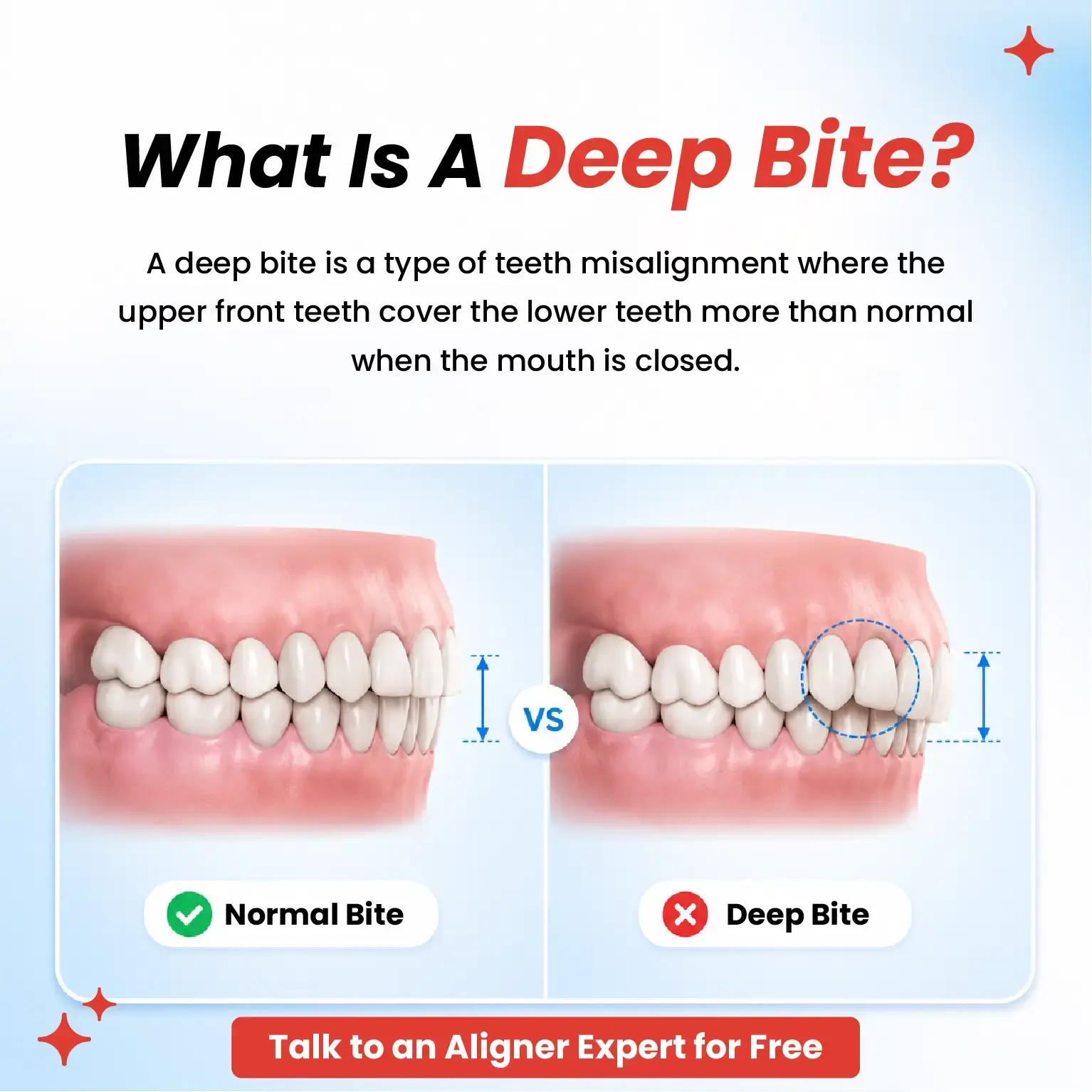
Deep Bite is a type of teeth misalignment (also called malocclusion) in which the upper teeth cover the lower teeth significantly when the molars are closed. Deep bite is also known as excessive overbite or severe overbite.
Deep Bites Vs. Overbites: The Difference
More often than not, a deep bite is used interchangeably with an overbite. Although these two conditions can be categorized as two common types of tooth misalignment, they are different.
An overbite is a condition in which your upper front teeth overlap your lower front teeth when your mouth is closed.
Learn More: Overbite vs Overjet: Key Differences And Treatment Options

Is A Deep Bite Harmful?
Yes, a deep bite is generally considered harmful. It can have a significant negative impact on your oral and overall health.
Some people correct deep bites for cosmetic reasons. But deep bites can lead to other complications like:
- The lower teeth can get eroded, compromising your tooth structure
- Ulcers and sores can develop on the roof of your mouth
- You may develop TMJ disorder (a condition that causes pain in your jaw joints and muscles)
- Problems when you eat or drink
- Gum disease
You may wonder, “How do I know if I have a deep bite?” The answer is simple yet crucial. You have to identify the symptoms of a deep bite.
What Are The Symptoms of Deep Bites?
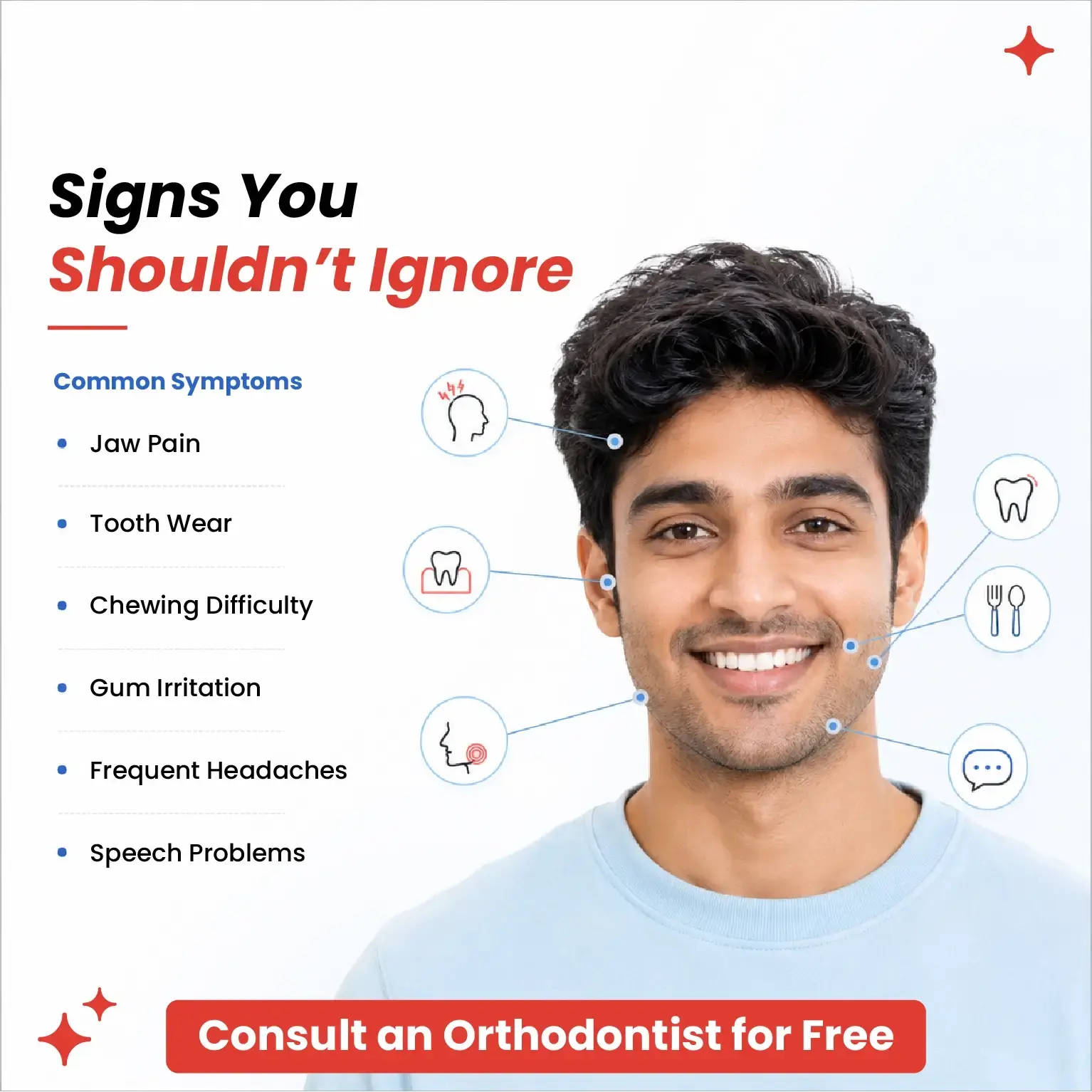
The symptoms of a deep bite can be excessive tooth erosion, jaw pain, and gum problems, among others.
Deep bite symptoms often go unnoticed. But your life will turn upside down once they escalate. So, it’s important to identify them at an early stage. Here are things to look out for.
- Excessive Tooth Erosion: If you notice that your lower front teeth are severely worn down, it is probably due to a deep bite.
- Jaw Pain: A severe overbite can sometimes lead to jaw clicking and pain when you open or close your mouth.
- Chewing Difficulty: A deep bite can lead to teeth misalignment, compromising your chewing capabilities. You may experience discomfort chewing certain foods.
- Gum Problems: When you have a severe overbite, the teeth may press on the gums. This can cause soreness and gum irritation.
- Headache: Deep bites can also cause frequent and severe headaches.
- Speech Problems: An excessive overbite can affect your speech, making it difficult to pronounce certain sounds.
Now that you know about the common symptoms associated with a deep bite, we have to know how rare deep bites are.
How Rare Is A Deep Bite?
The Indian Journal of Orthodontics and Dentofacial Research reports that 21% of the global population has deep bites. It is not at all rare; it is a common teeth alignment issue.
Another study suggests that nearly 76% of vertical orthodontic cases are due to a deep bite. Of these patients, 72% were female, and the remaining 28% were male.
If we talk about severe deep bites, research indicates they occur in about 13% of adults and 20% of children.
If deep bites are so prevalent, the next question is what causes them.
What Are The Causes Of A Deep Bite?
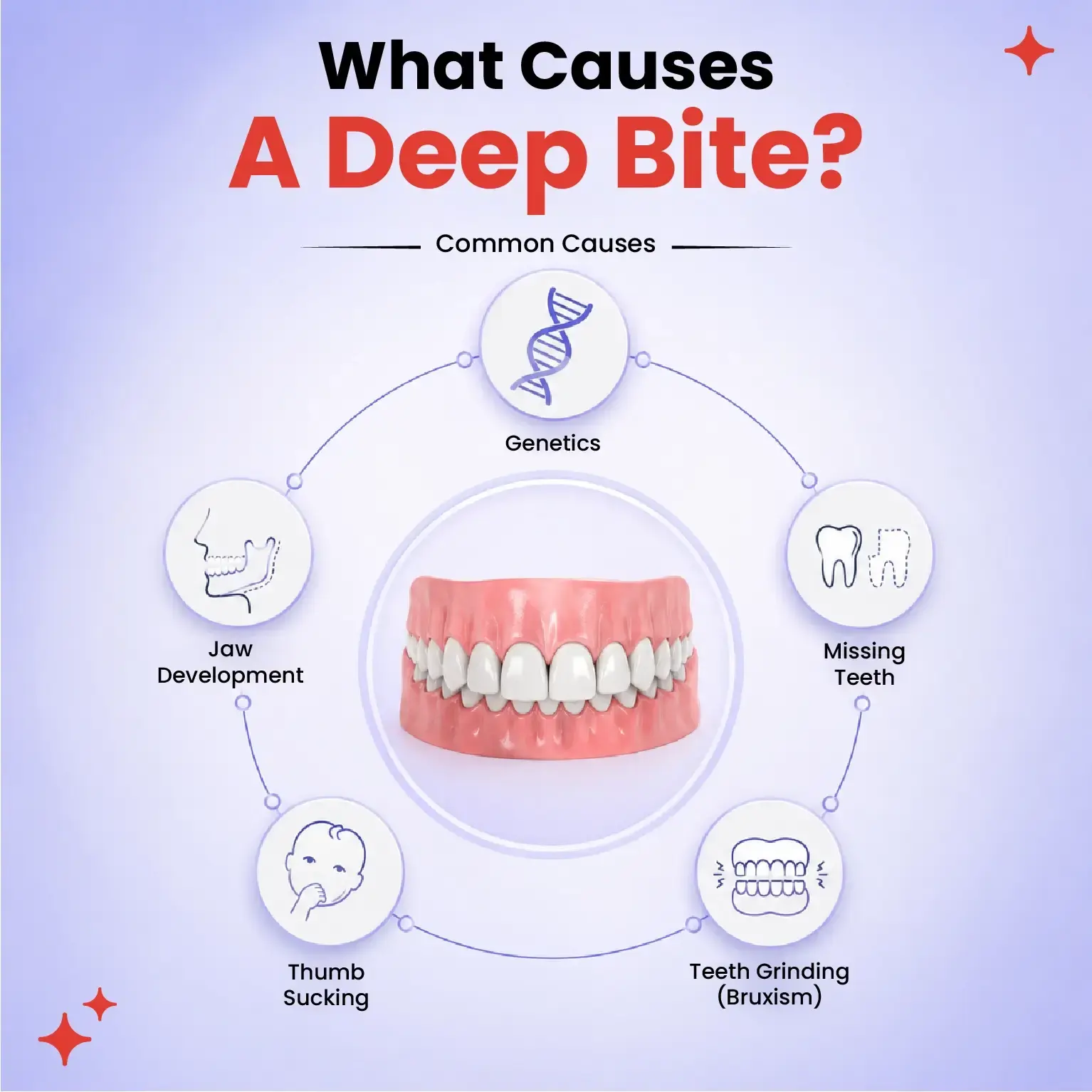
A deep bite (or severe overbite) can be caused by several factors, such as genetics, jaw growth issues, habits, and others. Here are the 5 leading causes of a deep bite.
- Genetics: If your parents or anyone else in your family has a deep bite, you are at high risk of developing one, too.
- Jaw Development Issues: Abnormal jaw development can lead to teeth misalignment and a severe overbite.
- Tooth Loss: If you have missing teeth, especially molars, your remaining teeth can shift, and you may develop a deep bite.
- Dental Habits: Prolonged bottle use or thumb sucking can lead to deep bites in children.
- Bruxism (Teeth Grinding): If you clench or grind your teeth frequently, a deep bite can form.
How Can A Deep Bite Be Corrected?
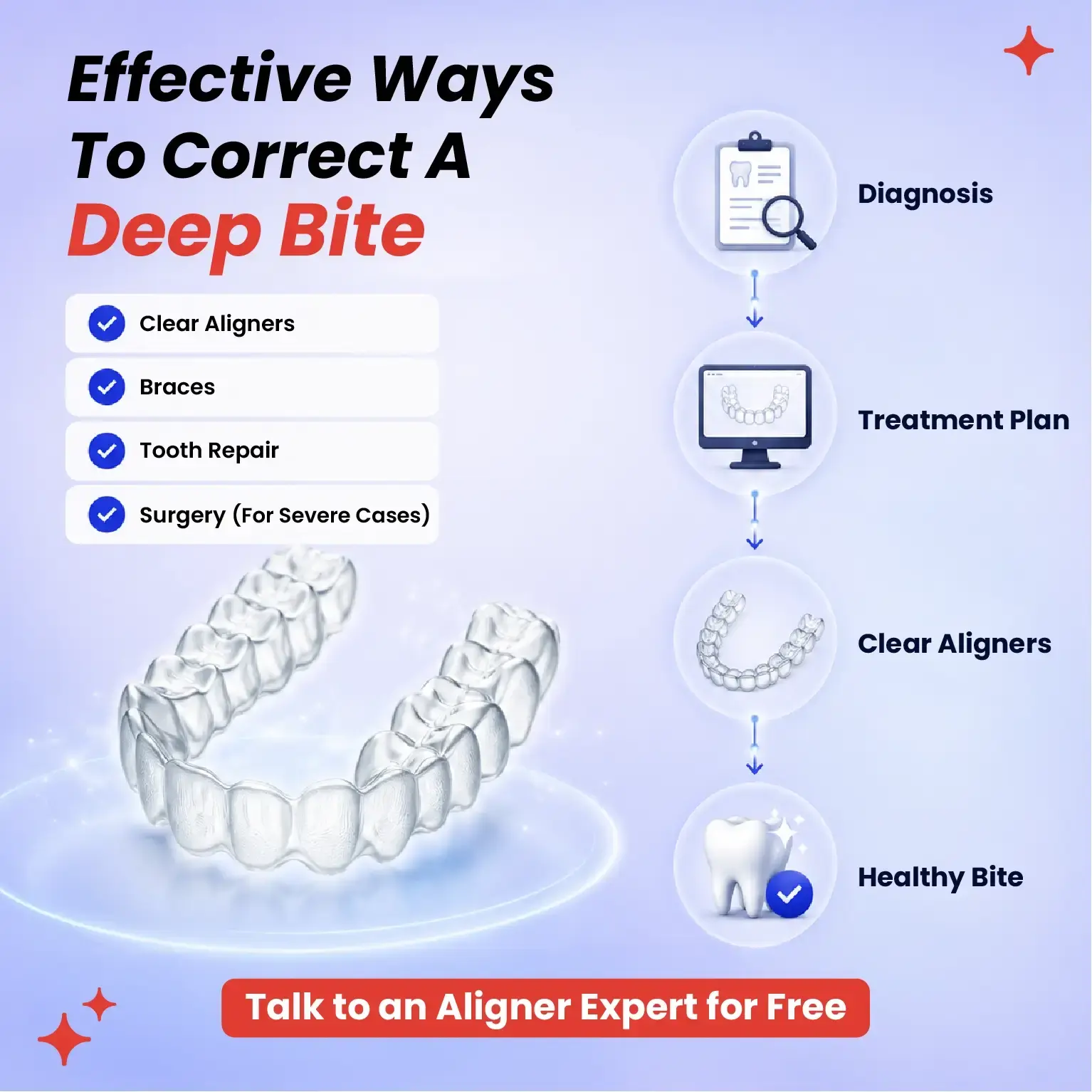
For a deep bite treatment, there are various options available. It can be categorized into segments such as dental appliances and orthodontics, surgical procedures, and other methods. Here, we present treatment options for a deep bite correction.
1. Tooth Removal And Repair
To treat a severe overbite, your dentist can recommend teeth removal. In this process, one or more teeth are removed to help with proper teeth alignment.
There can also be cases where repairing one or more teeth can improve your teeth alignment, leading to an effective deep bite correction. The process entails building up or repairing worn-down teeth using dental bonding.
2. Orthodontics Or Dental Appliances
Braces: Braces are the most common option for correcting a deep bite. These appliances apply consistent pressure to the teeth to help with proper teeth alignment. The orthodontist will have to periodically adjust the brackets to change the bite depth. Clear Aligners: Teeth aligners (also known as invisible aligners) can be used to treat deep bites effectively. These personalized, nearly invisible trays are removable and can be adjusted to fit your teeth with minimal discomfort. Just like braces, these teeth aligners apply consistent pressure to the teeth to align them into the desired position.
Explore More: How Much do Aligners Cost in India?
3. Surgery
The dental expert may also recommend surgery to correct a deep bite. Surgery is especially useful if the deep bite is due to your jaw bones. This process is appropriate for patients whose bones aren’t growing anymore.
So, the answer to the question “How do you fix a deep bite?” is that it depends on the severity and the root cause of the severe overbite.
In case your deep bite is due to jaw bone misalignment, surgery is a good option. On the other hand, if you’re suffering from a mild, moderate, or severe deep bite due to teeth misalignment, clear aligners can be your go-to choice.
Can You Naturally Fix A Deep Bite? Absolutely not!
While it’s intriguing to consider natural ways to correct a deep bite, there’s no clinical evidence that it can be corrected without mechanical intervention. That’s because dental appliances physically move your teeth to proper alignment.
Once your teeth and jaws are fully developed, you can’t fix deep bites without orthodontics or surgery. The most popular and appropriate deep bite treatment option is using a clear aligner.
Do you want to know more about clear aligner therapy? Book a free call with Toothsi experts to learn more. Be it a mild, moderate, or highly complex deep bite, Toothsi’s invisible aligners can handle it all. You can book a free home scan and embark on your journey to a perfect smile.