- ToothsiSmile CorrectionBrighter smilenewToothsi Productsnew
- Skin & HairLaser hair removalnewestAdvance skin treatmentfacials



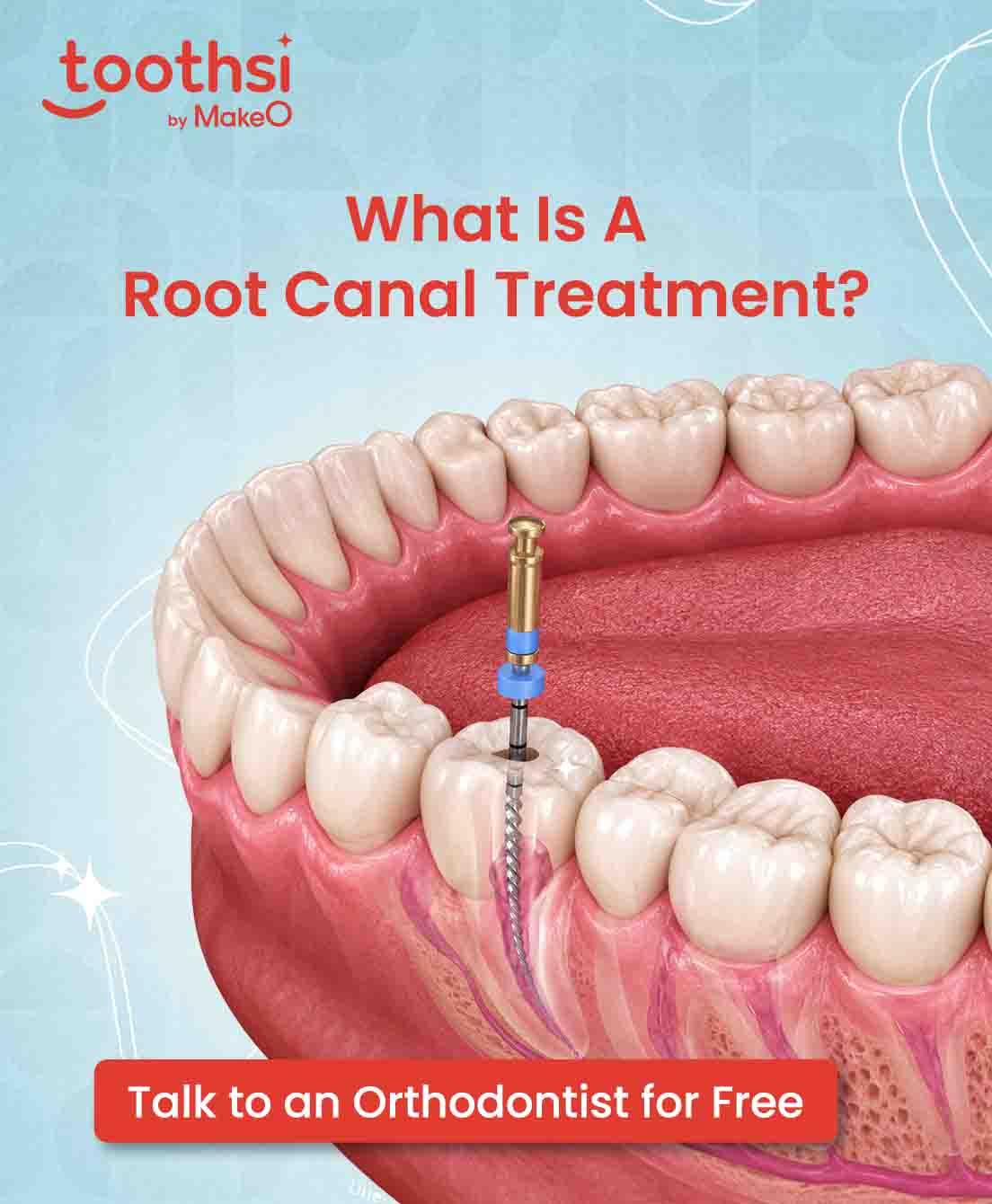
What Is A Root Canal Treatment?
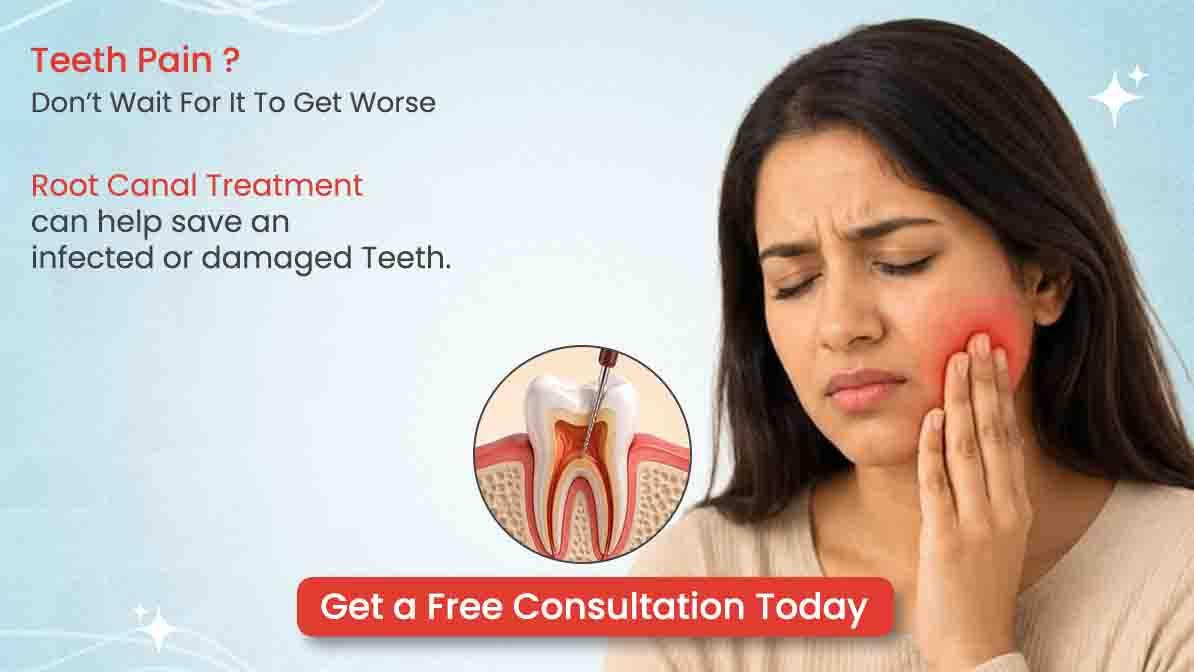
Root canal treatment is the procedure that removes infected or inflamed pulp located inside the tooth. The dentist then carefully cleans and disinfects the pulp, followed by filling and sealing.
Inside your tooth (beneath the enamel and another layer called dentin), there’s soft tissue called Pulp. Pulp contains nerves, connective tissue, and blood vessels. Sometimes, this pulp gets infected, inflamed, and painful.
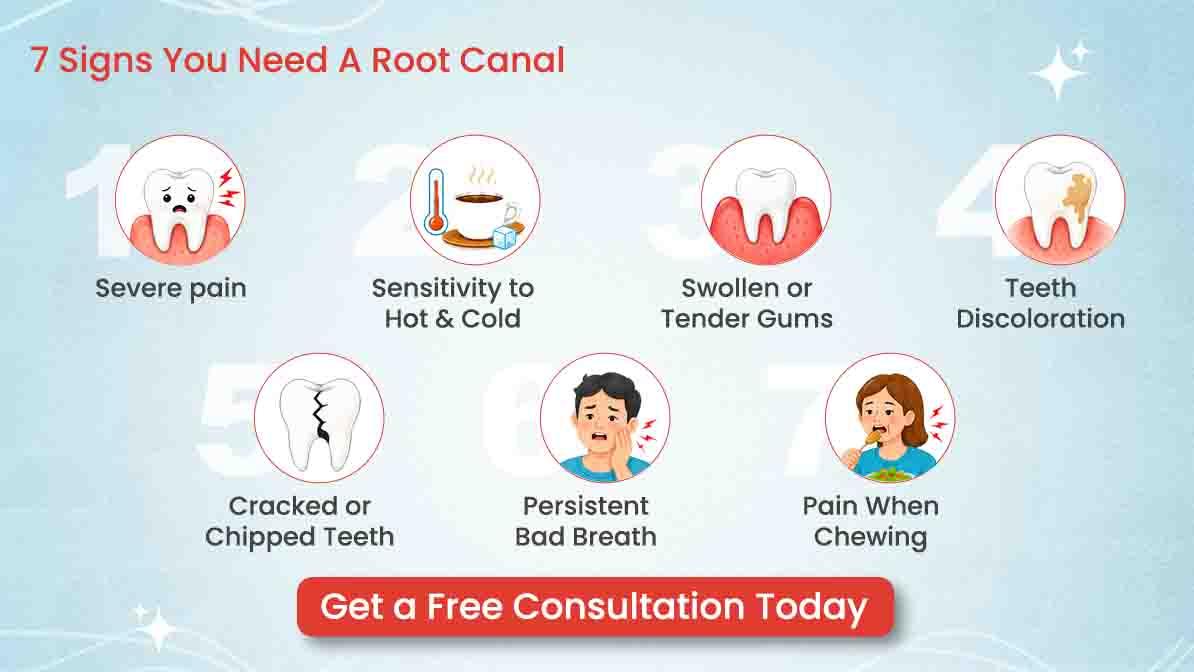
Here’s a list of symptoms that you shouldn’t ignore:
- Severe pain when biting or chewing
- Gum pimples or boils in the gums
- Cracked or chipped tooth
- Tooth sensitivity
- Swollen gums
- Visible tooth decay or gum darkening
Noticing any of these symptoms? You can visit Toothsi’s dental clinic near you to find out if you have to undergo root canal treatment.


Know What Happens in A Root Canal Treatment
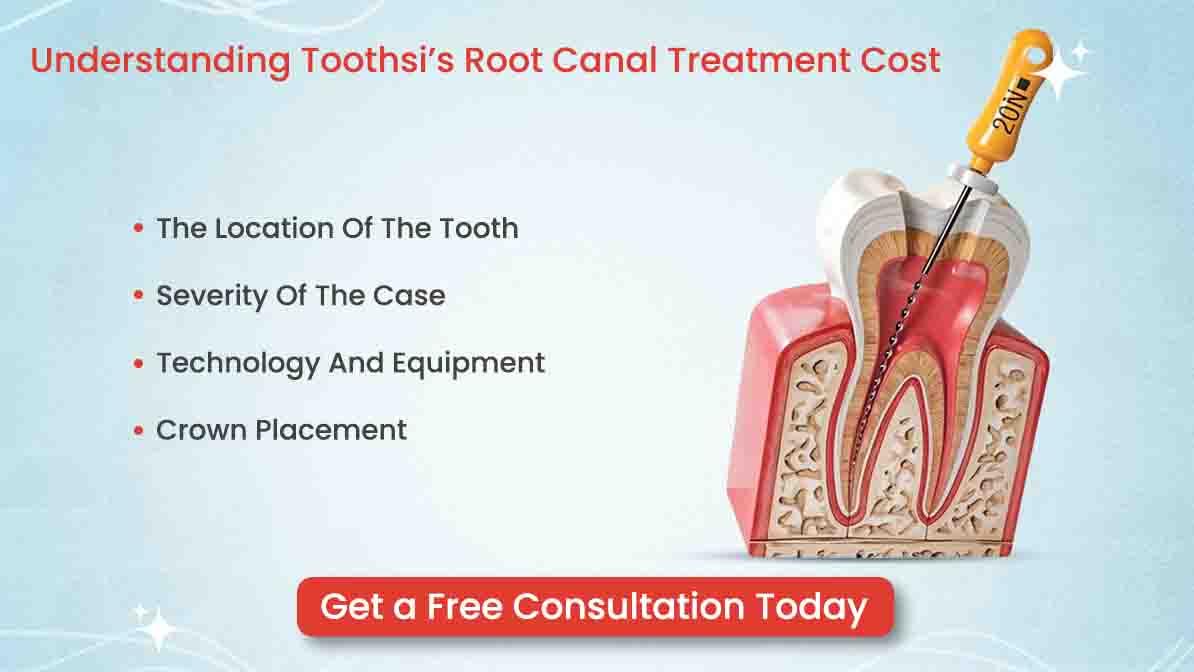
Understanding Toothsi’s Root Canal Treatment Cost:
Root canal treatment cost depends on the complexity of your case and the extent to which the tooth is damaged, infected, or inflamed. Molars are typically harder to treat; hence, the cost is usually higher.
The Location Of The Tooth:
Front teeth have just one canal. This makes treatment less expensive than for molars. That’s because molars have three to four canals, and the root canal treatment requires more time, cost, and effort.
Severity Of The Case:
- In case the inflammation is more severe or the infection is deep, you may need:
- More appointments and sessions
- Additional dressing or medication
- Use of advanced protocols for disinfection
All of these contribute to the total cost.
Technology And Equipment:
- Modern dental clinics, like those in Bangalore, use tools like:
- Apex locators
- Dental microscopes
- Digital X-rays
- Rotary endodontics
These technologies improve the precision of root canal treatment, increase success rates, and reduce pain. This may affect pricing.
However, Toothsi provides advanced root canal treatment at an affordable cost.
Crown Placement:
- After the root canal treatment (RCT), your tooth may become brittle. So, you need a dental crown. A metal crown can be a budget-friendly choice. PFM and Zirconia crowns are a bit more expensive.
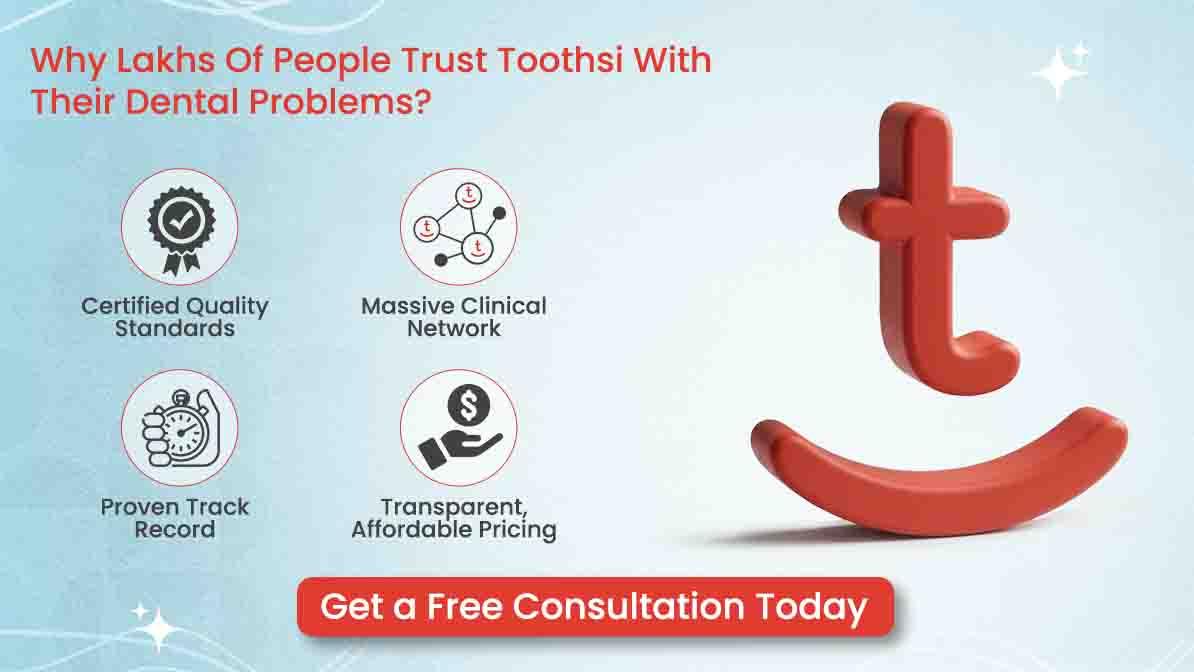
Why Lakhs Of People Trust Toothsi With Their Dental Problems?
Expert Dentist Network
- A network of 2,200+ dentists and orthodontists handles your root canal treatment, ensuring experienced dental professionals review and monitor every procedure.
Certified Quality Standards:
- Toothsi operates under US FDA 510(k) clearance and ISO 13485-certified processes, so every treatment meets internationally recognized medical device and quality standards.
Massive Clinical Network:
- With 110+ experience centers nationwide and 2,000+ dental clinics (partners) across India, expert dental care is always within reach, wherever you are.
Proven Track Record:
- Toothsi has designed and transformed 3,00,000+ smiles, backed by 12,000+ Google reviews with 4.5+ star ratings.
Transparent, Affordable Pricing:
- No hidden costs, no pressure, just clear pricing with flexible EMI options available to make treatment accessible.
Our experienced dentists will first remove the infected or inflamed pulp. Next, they thoroughly shape and clean your root canal. Then the dentist fills and seals the space. Finally, the dentist will place a dental crown (or other restorative appliances) to protect the tooth.
01. Scans And Consultations:
- The root canal treatment starts with a 3D scan and X-rays to assess the condition of your infected tooth. This is the most important phase of the treatment, as we get to know you and the issue that’s troubling you.
02. The Initial Root Canal Treatment Procedure:
- The dentist will then administer local anesthesia to numb the tooth. After it is numb, our expert will place a small dental dam (protective sheet) over the area. This isolates the tooth and keeps it free of saliva.
03. The Cleaning Process:
- Once the tooth is secured, the dentist will make an incision at the crown of the tooth. The dentist will use small dental tools to clean the pulp from the root canals and pulp chamber. This creates space for filling the canal.
04. The Insertion During the Root Canal Treatment:
- After the dentist shapes and cleans the space, they insert a biocompatible material into the root canal. The material is secured using a cement-like adhesive to seal it to the root canal. Typically, a temporary filling closes the opening and is removed before tooth restoration.
05. Tooth Restoration:
Frequently Asked Questions On Root Canal Treatment
Can a root canal go bad after 10 years?
Yes, a root canal can fail even after 10-15 years due to new decay, a cracked tooth, a loose or damaged crown, or reinfection from bacteria entering through a compromised seal. Regular dental check-ups help catch these issues early.
Can a root canal be done twice?
Yes, this is called retreatment, and it's a common procedure when the first root canal doesn't heal properly or gets reinfected. The dentist reopens the tooth, removes old filling material, cleans the canals again, and reseals it.
How many root canals can you have?
There's no fixed limit. You can have a root canal on any tooth that needs it, and multiple teeth can be treated over a lifetime. Each tooth is treated independently based on its own root canal system.
What are the signs that a root canal has failed?
Common signs include persistent or recurring pain, swelling or a pimple-like bump on the gums, tenderness when chewing, and sensitivity that doesn't go away. An X-ray is needed to confirm infection or reinfection at the root tip.
What's the most painful part of a root canal?
With modern local anesthesia, the procedure itself is typically painless. Most discomfort actually happens before treatment, from the underlying infection or inflammation. Some mild soreness or sensitivity for a few days after the procedure is normal and manageable with painkillers.
What is the downside of a root canal?
The treated tooth can become slightly more brittle over time and usually needs a crown for protection, which adds to the cost. There's also a small risk of reinfection or failure, and complex cases may require multiple sittings.
Is it painful to have a root canal?
A root canal is generally performed under local anaesthesia, so you should not feel significant pain during the procedure. You may experience mild soreness or sensitivity afterward, which typically improves as the tooth heals. Toothsi provides professional dental care to help make the treatment as comfortable as possible.
What exactly does a root canal do?
A root canal treats a tooth when its inner pulp becomes infected or inflamed. During the procedure, the dentist removes the affected pulp, cleans and disinfects the inside of the tooth, and seals it to prevent further infection. Toothsi's dental professionals can assess your tooth and recommend the appropriate treatment based on your condition.
Is a root canal a serious surgery?
No. A root canal is a common dental procedure rather than major surgery. It is performed to save a damaged or infected tooth and usually allows you to return to your normal routine shortly after treatment. Toothsi's dental care team can guide you through the procedure and aftercare.