alopecia areata treatment

- ToothsiSmile CorrectionBrighter smilenewToothsi Productsnew
- Skin & HairLaser hair removalnewestAdvance skin treatmentfacials



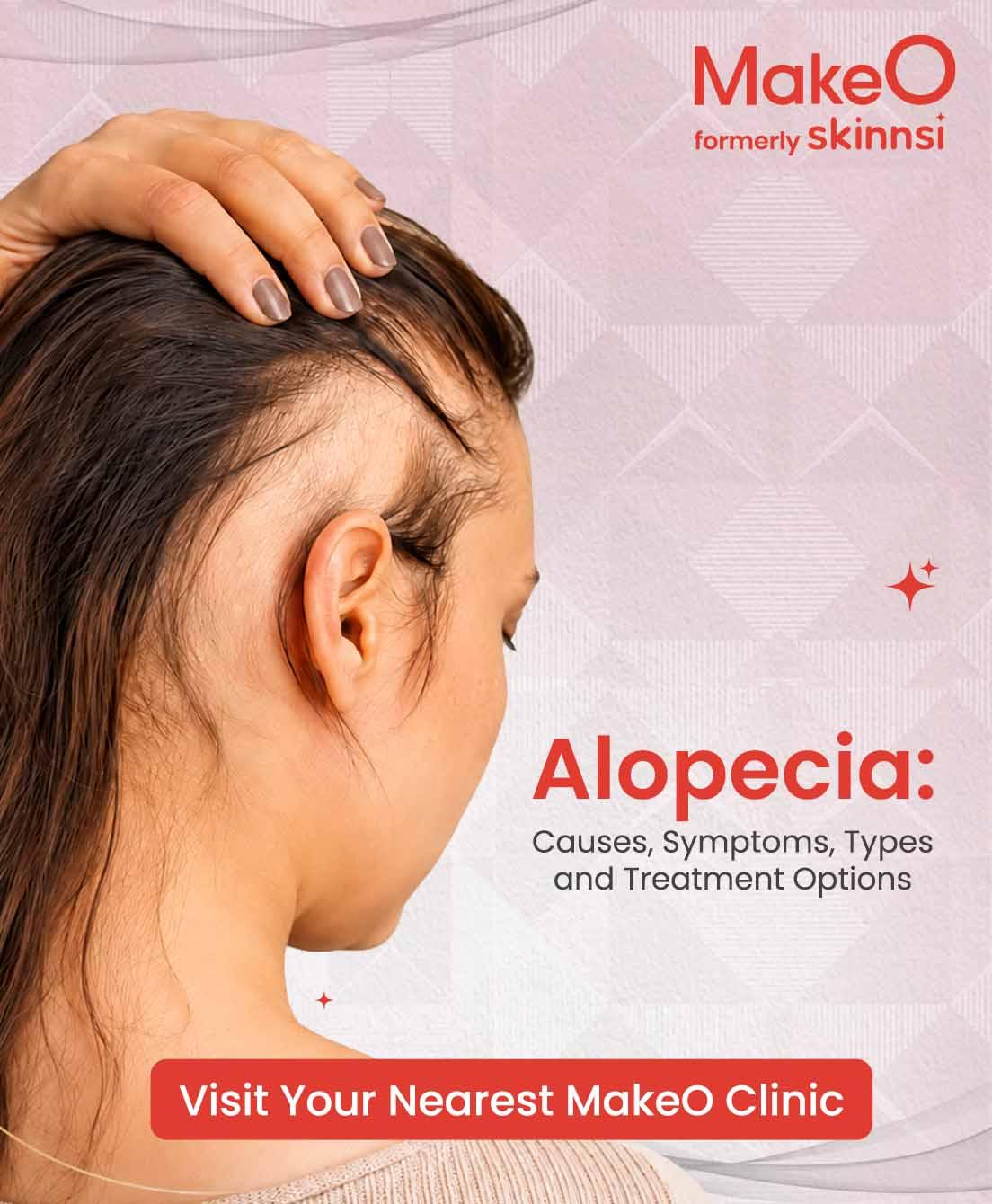
Alopecia: Causes, Symptoms, Types and Treatment Options
Alopecia is a term used for hair loss that can affect the scalp, eyebrows, eyelashes, beard, or other areas of the body. It can appear as sudden bald patches, gradual thinning, or more extensive hair loss, depending on the underlying condition. Alopecia areata and androgenic alopecia have different causes and require different hair treatment approaches.
At MakeO Skin & Hair Clinic, alopecia treatment begins with understanding the cause and pattern of your hair loss. Our dermatologists assess your scalp and hair, identify the type of hair loss, and recommend a personalized treatment plan suited to your condition. With the right treatment, consistency, and proper aftercare, you can work towards managing hair loss and supporting healthier hair growth.
Book a FREE consultation with MakeO Skin & Hair Clinic to get your hair loss assessed by a dermatologist.
What Is Alopecia?
Alopecia is a medical term for hair loss; it mainly occurs when your hair follicles stop working or are damaged. Alopecia can affect the scalp, eyebrows, eyelashes, beard, or other areas of the body.
What Are the Different Types of Alopecia?
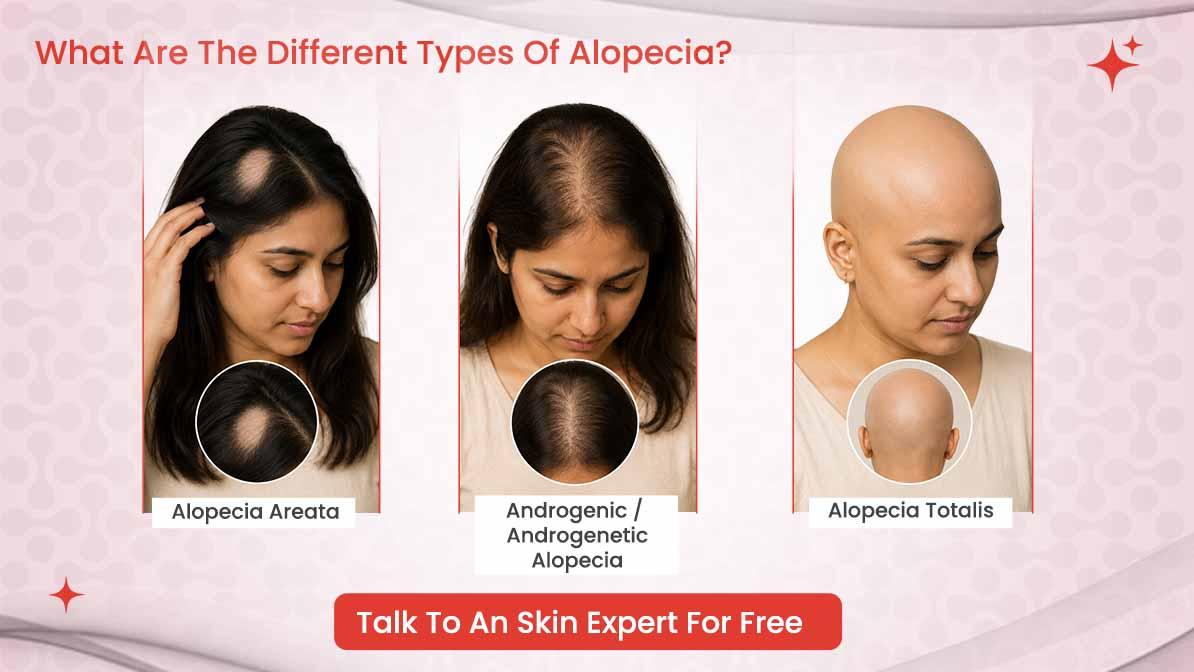
The pattern, the extent, and the underlying causes of hair loss can vary from person to person. Understanding different types of alopecia can help identify the pattern of hair loss and bring forth proper alopecia hair treatment.
Alopecia Areata
Alopecia areata is an autoimmune condition in which the immune system mistakenly attacks healthy hair follicles, which leads to hair loss. A common symptom of alopecia areata is the sudden appearance of smooth, round, or oval patches of hair loss on the scalp; however, it can also affect the eyebrows, beard, and other areas of the body.
Androgenic / Androgenetic Alopecia
Androgenic alopecia is a common form of hereditary hair loss, whereas alopecia areata presents as sudden, patchy hair loss; androgenetic alopecia develops gradually.
Androgenic alopecia is different in men and women. In men, hair loss begins with a receding hairline or thinning around the crown, and in women it more commonly starts as gradual thinning around the parting, with the part becoming wider over time.
Alopecia Totalis
Alopecia totalis is a more extensive form of alopecia that involves the loss of all or nearly all hair on the scalp. Instead of being limited to one or a few patches, hair loss affects the scalp more extensively. Like alopecia areata, alopecia totalis involves an abnormal immune response that affects the hair follicles. The course can vary from person to person, and hair may or may not regrow over time.
What Are the Symptoms of Alopecia?
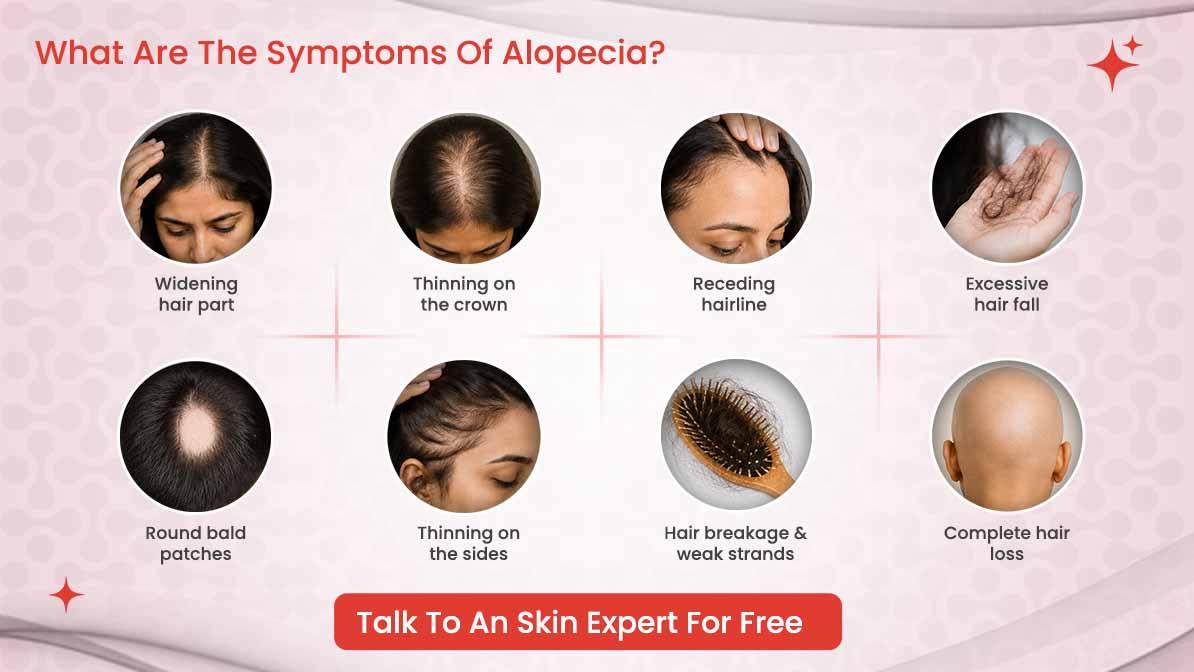
The symptoms of alopecia may vary depending on the type of hair loss and its cause. Some may notice sudden hair loss in small, clearly defined areas, whereas others may experience gradual thinning with time.
Some of the common alopecia symptoms are
- Patchy hair loss: Smooth, round or oval bald patches may appear suddenly, particularly with alopecia areata.
- Sudden hair loss: Hair may fall out quickly, sometimes in noticeable clumps or patches.
- Gradual thinning: Some forms of alopecia, such as androgenetic alopecia, usually cause slow and progressive thinning rather than distinct bald patches.
- Hair loss beyond the scalp: Alopecia can affect the eyebrows, eyelashes, beard and body hair. Alopecia on arms or other body areas may also occur in certain types.
- Nail changes: People with alopecia areata may develop nail changes, such as small pits or dents on the nail surface.
- Itching, tingling, or burning: Some people may notice itching, tingling, or a burning sensation in areas where hair loss occurs, although these symptoms are not present in everyone.
If you notice unexplained hair loss, especially when it appears suddenly or continues to increase, it is best to consult a professional hair doctor who can help in managing your hair loss. Book your free appointment at MakeO Skin & Hair Clinic and get your alopecia treated.
What Causes Alopecia?
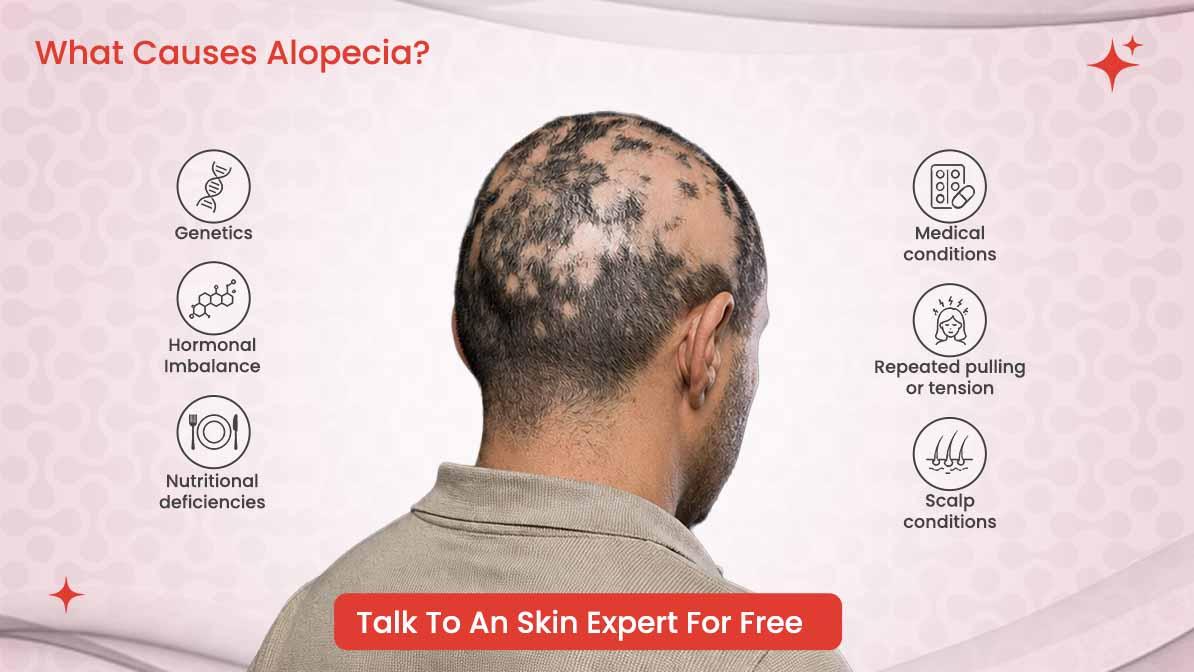
Alopecia means hair loss, but the reason behind it can be different for everyone. So if you are wondering why alopecia happens, it is important to look beyond the visible hair loss. Different types of alopecia affect the hair follicles in different ways, so identifying the underlying cause is an important part of choosing the right treatment.
Cause of Alopecia
Some of the common causes of alopecia are
- Genetics: family history of alopecia or hereditary hair loss, specifically androgenic or androgenetic alopecia
- Autoimmune response: This is when the immune system mistakenly attacks the healthy hair follicles, which can cause sudden patchy hair loss
- Hormonal changes: Changes in the body due to pregnancy, menopause, thyroid issues, or hormonal imbalances can lead to alopecia
- Nutritional deficiencies: Low levels of certain nutrients, including iron or protein, may contribute to hair shedding.
- Medications and medical conditions: Certain medicines and underlying health conditions can affect the normal hair growth cycle.
- Repeated pulling or tension: Tight hairstyles such as braids, buns, and ponytails can repeatedly stress hair follicles and contribute to traction alopecia.
- Scalp conditions: Some infections and inflammatory scalp conditions can damage the follicles and lead to hair loss.
Is Alopecia Areata Contagious?
No, alopecia areata is not contagious. It cannot be passed from one person to another through skin-to-skin contact, sharing personal items such as combs or hats, or simply being around someone with the condition. Alopecia areata is an autoimmune condition in which the body's immune system mistakenly targets healthy hair follicles, leading to hair loss. Because an infection does not cause it, it cannot spread between people.
How Is Alopecia Treated?
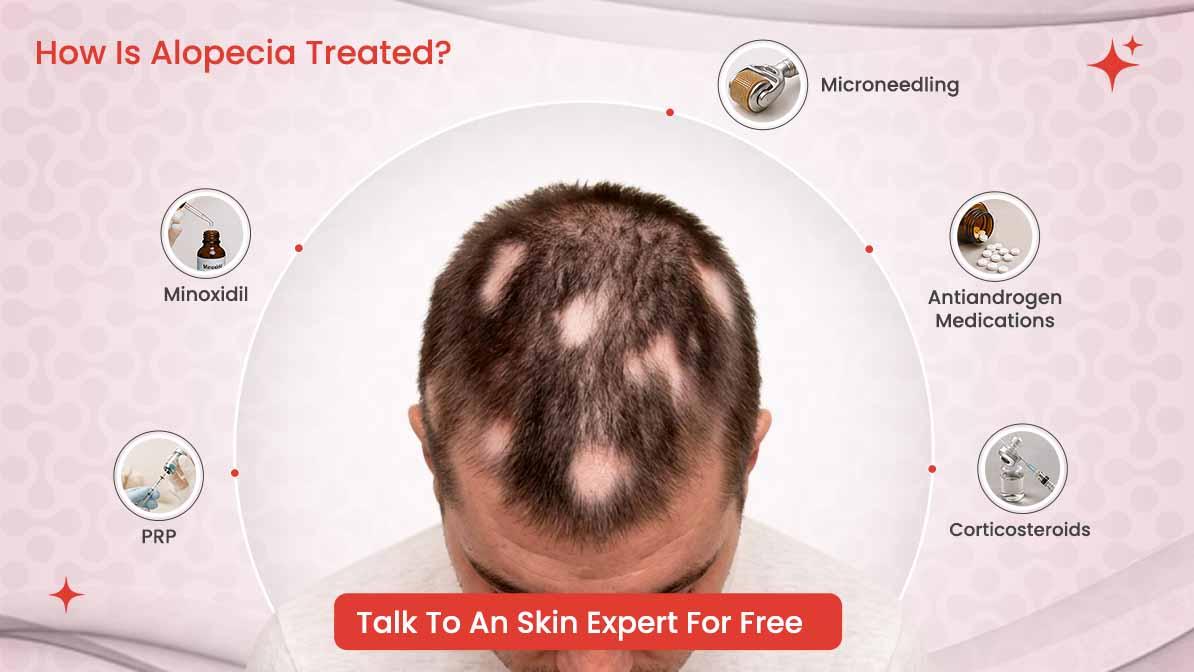
The right alopecia treatment depends on the type of hair loss you have and how much it affects you. No single treatment works the same way for every hair loss pattern. In some cases, especially with limited alopecia areata, hair may grow back without treatment. A dermatologist can assess your hair-loss pattern and recommend the most appropriate approach.
The right alopecia treatment depends on the type, pattern, and extent of hair loss. Alopecia areata, androgenetic alopecia, and other forms of hair loss may require different treatment approaches. While some alopecia areata hair fall cases may show natural regrowth, a dermatologist should be consulted for proper guidance on hair fall treatment.
Depending on the diagnosis, a personalized hair loss treatment plan may include medicines, procedures, or a combination of treatments. The aim is to address the underlying cause, reduce further hair fall where possible, and support healthy hair growth.
PRP
Platelet-rich plasma (PRP) uses a concentrated portion of your own blood that contains platelets and growth factors. During the alopecia hair loss treatment, PRP is injected into areas of the scalp affected by hair thinning. These growth factors may support hair follicle activity and create a more favorable environment for hair growth. Dermatologists generally consider Hair PRP Treatment for certain types of hair thinning after evaluating the cause and extent of hair loss.
Minoxidil
Minoxidil is a commonly used medicine for certain forms of hair loss. It supports the hair-growth cycle by keeping hair follicles in the active growth phase longer and may improve hair density with regular use. It can be used as part of a hair loss treatment plan when recommended by a dermatologist. Continued use is generally needed to maintain the benefits.
Antiandrogen Medications
Antiandrogen medicines are mainly used when androgen-related factors contribute to androgenic alopecia. They work by reducing the effect of certain hormones on susceptible hair follicles, which can help slow progressive hair thinning. Depending on the individual's condition, these medicines may help preserve existing hair and support better hair density. They require medical supervision because the choice of medication depends on the person's individual circumstances.
Microneedling
Microneedling uses very fine needles to create controlled micro-injuries in the scalp. This triggers the body's natural repair response and may increase the release of growth factors around the treated area. It can be used as part of a combination hair treatment plan for certain types of alopecia. A dermatologist can determine whether microneedling is appropriate and whether it should be combined with another treatment.
Corticosteroids
Corticosteroids are particularly useful for managing alopecia areata, which occurs when the immune system mistakenly attacks hair follicles. Corticosteroids help reduce this inflammatory immune response around the follicles, which may allow hair growth to resume. Depending on the extent and location of hair loss, they may be applied to the affected areas or administered through injections. The treatment approach is selected by a dermatologist based on the severity of the alopecia areata.
How Do These Hair Treatments Help Manage Alopecia?
Different hair treatments work in different ways. Some support hair follicle activity and growth, while others reduce inflammation or the hormonal effects that contribute to hair loss. That is why there is no single [best hair fall treatment](https://makeo.app/skinnsi/hair-fall-treatment) for everyone.
For alopecia areata, treatment may focus on controlling the immune response affecting the follicles. For androgenic alopecia, treatment may focus on slowing follicle miniaturisation and supporting hair density. At MakeO Skin & Hair Clinic, dermatologists assess the cause, pattern, and extent of hair loss before recommending a personalized alopecia treatment plan.
Early assessment, an appropriate treatment plan, and consistent aftercare can help manage hair loss and support the best possible treatment outcome.
What to Expect From Alopecia Hair Loss Treatment?
With the right diagnosis, treatment, and consistent care, you can effectively treat and manage alopecia hair loss. At MakeO Skin & Hair Clinic, experienced doctors assess the type and extent of hair loss and recommend a personalized treatment plan based on your condition.
If you are wondering how to treat alopecia areata, the first step is a professional assessment. At MakeO Skin & Hair Clinic, dermatologists evaluate your hair-loss pattern, understand your specific condition, and recommend suitable alopecia areata treatment options. Your progress can also be monitored over time, with treatment or aftercare adjusted as needed to support lasting results. With expert care, consistency, and proper aftercare, MakeO helps you take a structured approach to treating alopecia and working towards healthier hair.
Can you Stop Alopecia Areata From Spreading?
Yes, you can stop alopecia areata from spreading. If you notice new or enlarging bald patches, it is natural to wonder how to stop alopecia areata from spreading. Alopecia areata is unpredictable, and no method can guarantee it won't develop new patches. However, early assessment and appropriate treatment can help manage the condition.
At MakeO Skin & Hair Clinic, we start with a professional assessment of your hair and scalp. Our dermatologist can evaluate the pattern and extent of hair loss, help determine whether it is alopecia areata, and recommend an appropriate treatment based on your condition. So book your appointment now.
Is Androgenic Alopecia Reversible?
Androgenic alopecia is a common form of hereditary hair loss that develops gradually. Whether it can be completely reversed depends on factors such as how advanced the hair loss is, how early you start treatment, and how well you respond. If you're wondering how to stop androgenetic alopecia, consulting a dermatologist early can help you understand your options. MakeO Skin & Hair Clinic can assess your hair-loss pattern and guide you toward suitable treatment and ongoing care based on your individual needs.
When Should You See a Dermatologist for Alopecia?
Not all hair loss means you have alopecia, but sudden or unexplained changes in your hair condition are something worth getting checked. A dermatologist can help you manage hair loss and diagnose it by determining whether the pattern is related to alopecia. They can examine your scalp, assess the pattern of hair loss, and help determine what may be causing it.
Getting an early alopecia diagnosis can also help you understand your treatment options. Book your FREE Doctor Consultation for hairfall treatment.
Times when you need to visit the doctor for alopecia
- When your hair starts coming out in noticeable clumps or much more than usual when washing, brushing, or combing.
- You notice round or oval bald spots on the scalp, beard, eyebrows, or eyelashes.
- If your hair loss is accompanied by persistent itching, burning, redness, pain, or tenderness.
- The skin becomes unusually smooth, shiny, inflamed, or scaly or appears to have fewer visible hair follicles.
- If you experience hair loss alongside unexplained fatigue, weight changes, fever, or noticeable hormonal changes.
- Episodes of hair loss improve and then come back, or the thinning continues despite your usual hair care routine.
You don't need to wait until hair loss becomes extensive before seeking help. Early evaluation can also help rule out other causes of hair loss and prevent you from trying treatments that may not be right for you.
Why Choose MakeO for Alopecia Treatment?
Hair loss looks different for everyone, so the right treatment starts with understanding the cause. At MakeO Skin & Hair Clinic, our focus is on assessing the underlying cause of your hair and scalp concerns before recommending a treatment plan. This approach helps ensure that your hair loss treatment is based on your individual needs. Here’s why booking a free consultation with MakeO helps you
- Expert-Led Care: At MakeO, you can consult with experienced dermatologists who assess your hair and scalp before recommending a suitable treatment approach.
- Advanced Technology: We ensure we use clinically backed techniques and technologies as part of our hair treatments, where appropriate to your condition.
- Personalized Treatment Plans: Your treatment plan is based on your individual hair-loss pattern, scalp condition, and desired outcomes rather than a standard approach.
- Holistic Hair Care: Along with treatment, experts can guide you on scalp care and other factors that may support healthier hair over time.
- Ongoing Support: Your dermatologist can review your progress during follow-up visits, assess your response to treatment, and make adjustments as needed.
- Convenient Follow : Ups: Stay connected with your care team through follow-up consultations and progress monitoring, making it easier to stay consistent with your treatment.
- Pan-India Presence: With MakeO clinics across India, professional hair fall treatment is accessible at multiple locations, making it easier to continue your care.
- Transparent Pricing: Get clear information about recommended treatments and their costs so you can make informed decisions about your hair care.
- Hair Fall Treatment Options: At MakeO Skin & Hair Clinic, apart from alopecia hair treatment, you can also explore other hair fall treatment options like Hair PRP, GFC, mesotherapy, etc.
[Book your FREE hair loss consultation](https://makeo.app/skinnsi/consultation/select-concern) with MakeO Skin & Hair Clinic and speak with a dermatologist about your treatment options.
Where can I get Alopecia hair treatment near me?
Looking to book a free consultation for alopecia treatment near you? Come to MakeO. The first step is to book a consultation with a qualified dermatologist, who will help you get professional hair treatment by understanding your hair fall and which treatment options may suit you.
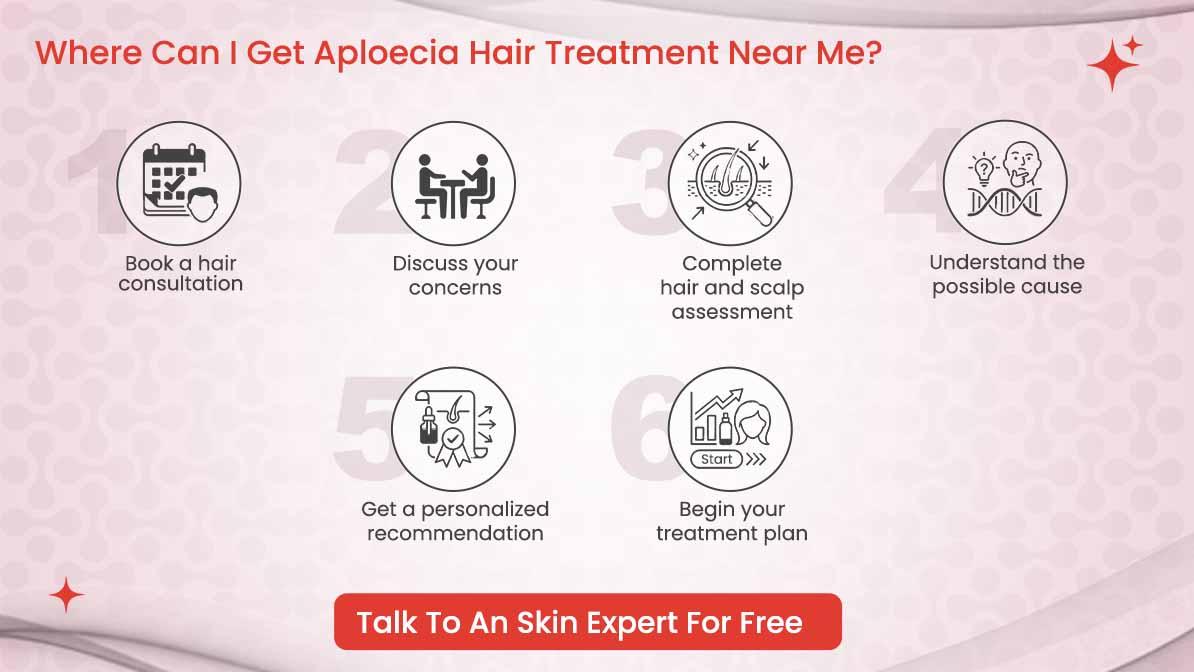
At MakeO, your hair loss consultation can follow a simple process:
- Book a hair consultation: Schedule a dermatologist consultation at a convenient MakeO clinic.
- Discuss your concerns: Share details about your hair fall, how long you have noticed it, and any changes in your scalp or hair.
- Complete a hair and scalp assessment: A dermatologist evaluates your hair-loss pattern and scalp condition.
- Understand the possible cause: Your dermatologist can identify the likely cause of your hair loss or recommend further medical evaluation if required.
- Get a personalized recommendation: Based on your assessment, you may receive recommendations for alopecia treatment, hair loss treatment, or another suitable hair treatment.
- Begin your treatment plan: Once you understand the recommended approach, you can start your treatment and follow the advised schedule for consultations and follow-ups.
If persistent hair fall or patchy hair loss is concerning you, don't rely on guesswork. Book a free hair consultation with a dermatologist to understand your condition and explore the right treatment options for your hair.
**[Book your FREE consultation](https://makeo.app/skinnsi/consultation/select-concern) with MakeO Skin & Hair Clinic today!**
Faqs
What is alopecia?
Alopecia is a general term for hair loss. Alopecia can affect the scalp, eyebrows, eyelashes, beard, or other areas of the body. There are several types of alopecia, and the causes can range from autoimmune conditions and genetics to hormonal changes, medical conditions,s or repeated tension on the hair. The right treatment depends on the type and underlying cause of the hair loss.
What is alopecia areata?
Alopecia areata is an autoimmune condition that causes hair loss when the immune system mistakenly attacks healthy hair follicles. It commonly appears as sudden, smooth, round or oval patches of hair loss on the scalp. It can also affect the eyebrows, eyelashes, beard and other body hair. The extent and pattern of hair loss can vary from person to person.
What causes alopecia areata?
The main causes of alopecia areata involve an abnormal immune response. The immune system mistakenly targets hair follicles, causing hair to stop growing and fall out. Genetics may increase the risk, while certain environmental factors may also play a role. However, no single clear trigger always explains why alopecia areata develops in a particular person.
Is alopecia areata contagious?
No, alopecia areata is not contagious. It is a type of hair loss and an autoimmune condition, not an infection, so it cannot be passed from one person to another through physical contact, sharing personal items, or being around someone who has the condition.
Can alopecia be cured?
Yes, alopecia can be cured. Whether alopecia can be cured depends on the type and cause of the hair loss. Some people with alopecia areata may experience natural hair regrowth, while others may need treatment to manage the condition and encourage regrowth. Conditions such as androgenetic alopecia generally require ongoing management rather than a permanent cure. A dermatologist can assess the type of hair loss and discuss realistic treatment options.
Is alopecia areata permanent?
No. Alopecia areata is not necessarily permanent. Its course can be unpredictable. Some people experience complete hair regrowth, while others may have recurring episodes of hair loss. In some cases, the condition can become more extensive. Regular evaluation can help monitor changes and determine whether treatment may be appropriate.
Can alopecia be treated at home?
No. At-home alopecia treatment cannot replace professional care when an autoimmune condition causes hair loss or another medical problem causes hair loss. Gentle scalp and hair care, avoiding tight hairstyles and maintaining a balanced diet can support overall hair health, but home remedies should not be considered a cure. If hair loss is sudden, unexplained, or getting worse, a dermatologist can identify the likely cause and recommend appropriate treatment.
Does alopecia areata spread?
No. Alopecia areata can develop in new areas, but its progression is difficult to predict. Some people may have one or two small patches that regrow, while others may develop additional patches over time. In some cases, existing patches can begin to regrow while new areas of hair loss appear. If you notice new patches, a dermatologist can assess the condition and discuss suitable treatment options.
Is androgenic alopecia reversible?
Yes. Androgenic alopecia, also known as androgenetic or hereditary hair loss, usually causes gradual thinning rather than the sudden patches associated with alopecia areata. It may not be completely reversible, but early assessment and appropriate treatment can help slow further hair loss and, in some people, support regrowth. Treatment response varies, so a dermatologist can help determine the best approach.
When should I see a dermatologist for alopecia?
Consider seeing a dermatologist if you experience sudden or unexplained hair loss, rapidly increasing bald patches, eyebrow or eyelash loss, extensive thinning, or recurring episodes of hair loss. A dermatologist for hair loss can examine your scalp and hair, identify the possible cause, and recommend appropriate alopecia treatment where needed. Early evaluation can also help rule out other conditions that may cause similar hair-loss symptoms.