

Best Age for Teeth Braces: Signs, Treatment Options & Costs

MDS - Orthodontics, the Co-Founder & CEO of MakeO Toothsi. A certified lingual orthodontist with 15 years overall experience.
Updated on June 9, 2026
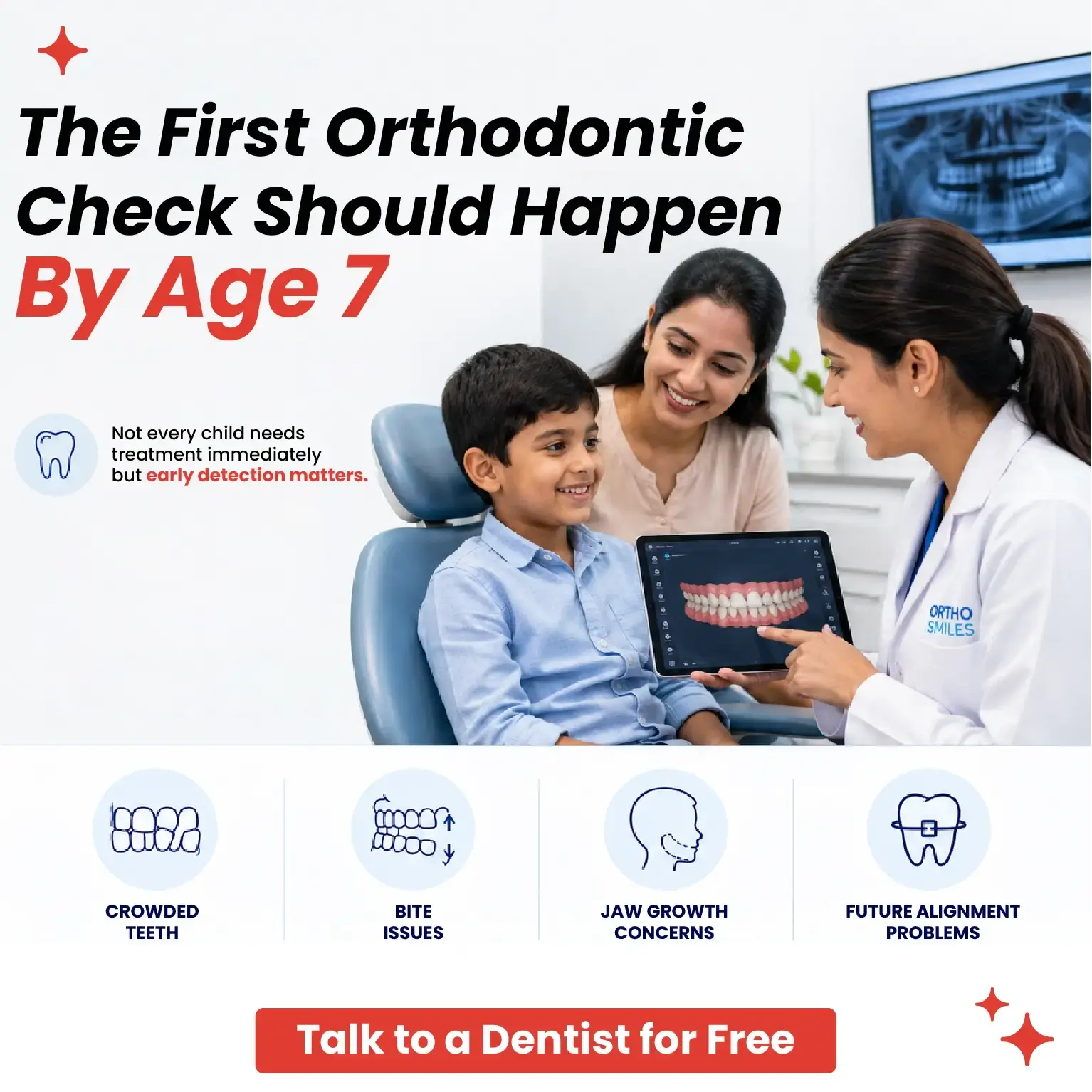
The American Association of Orthodontists recommends that a child’s first orthodontic visit happen by the age of seven. At this stage, the teeth and jaw are still developing, which can help to identify certain concerns, such as crowded teeth, underbites, or bite problems, more easily and manage them early.
While not every child will need immediate treatment, an early check-up will help determine whether dental braces or other orthodontic care may be needed now or in the future.
Whether it is for children or teens, we provide you with the chance to explore the right teeth-braces solution with trusted guidance, modern care, and a treatment experience designed around comfort and convenience.
Talk to an Orthdontist for Free and Start Your Child’s Smile Journey!
What is the Right Age to Get Braces?
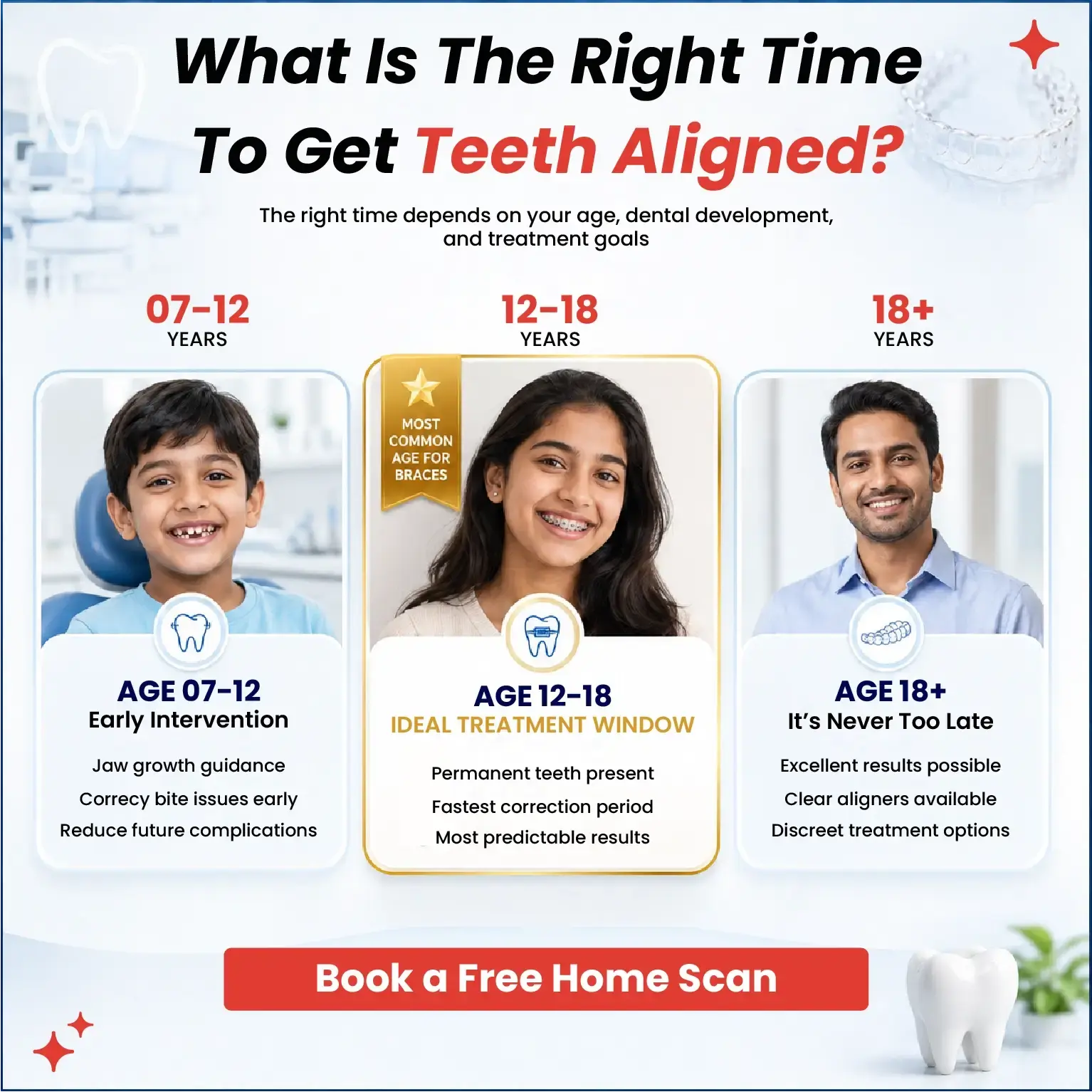
There is no “right” or "wrong" or "perfect" age for teeth braces. If you are facing orthodontic issues, that is exactly when you should visit an orthodontist for dental braces treatment.
The most effective age is during the teenage years, when most permanent teeth have erupted and the jaw is still developing.
Signs You or Your Child May Need Teeth Braces
Teeth Braces are needed when the teeth or jaw are misaligned. In children, these signs can show up as the mouth and jaw continue to grow. In adults, they often become more noticeable when chewing feels uncomfortable, teeth look uneven, or crowding affects oral hygiene. Here are some common signs that you or your child may need teeth braces:
- Crowded teeth: An orthodontic condition in which teeth overlap or sit too close together, making brushing and flossing harder. Crowded teeth is one of the most common reasons people need braces, especially adult braces, to improve alignment and oral hygiene.
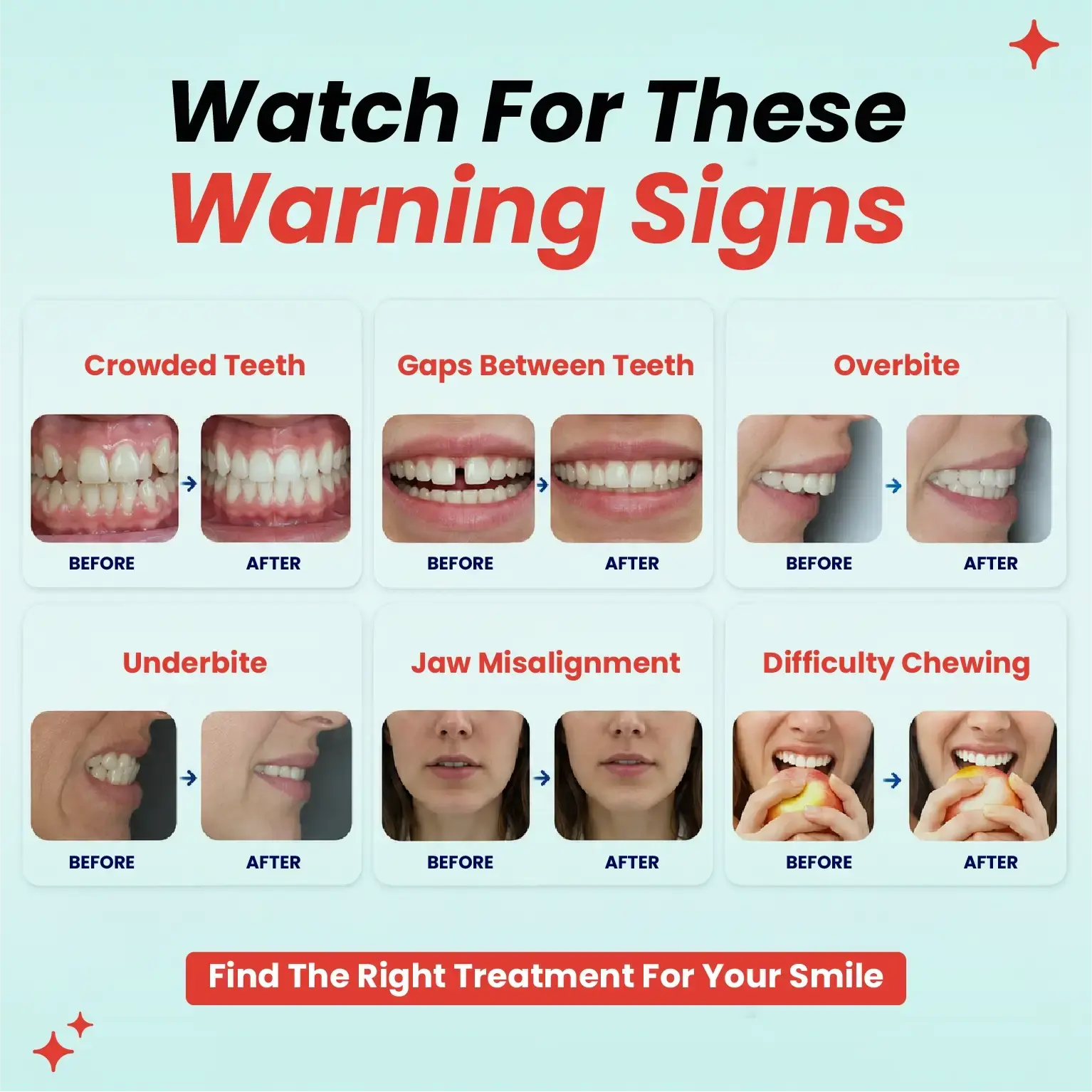
- Gaps between teeth: Visible spaces between teeth may affect both appearance and bite. In some cases, gaps can also cause food to get stuck more easily, which may increase the risk of plaque buildup.
- Overbite: An overbite teeth happens when the upper front teeth cover too much of the lower front teeth. Mild overbites are common, but a deeper overbite may lead to uneven wear, jaw strain, or speech concerns.
- Underbite: An underbite teeth occurs when the lower teeth sit in front of the upper teeth. This can affect chewing, speech, and facial balance. Teeth braces may help correct the alignment and improve function over time.
- Jaw misalignment: If the upper and lower jaws do not align properly, it can lead to discomfort, uneven bite pressure, and even headaches. Jaw misalignment is often a sign that orthodontic treatment may be needed.
- Difficulty chewing: If biting or chewing feels uneven, painful, or awkward, it may point to a bite issue. This symptom is one of the functional signs that teeth braces may be necessary, not just for appearance but for better everyday comfort.
Best Age for Teeth Braces By Age Group
While there is no perfect age for teeth braces, treatment outcomes, duration, and challenges can vary depending on when treatment begins.
The teenage years are often considered the ideal time for braces because, by this age, most permanent teeth have erupted and the jaw is still developing. However, children, teenagers, and adults can all achieve successful results with the right orthodontic treatment plan.
Age | When braces are recommended | Success rate | Treatment duration | Common challenges |
|---|---|---|---|---|
Children (7 to 12 years) | An initial orthodontic evaluation is often recommended around age 7, when both milk and permanent teeth are present. | High, as the jaw is still growing and can be guided more easily. Early treatment may help prevent complex orthodontic issues later. | Early treatment may last 6 to 18 months, followed by monitoring until all permanent teeth erupt. | Maintaining oral hygiene and attending regular appointments. |
Teenagers (12 - 18) | It is considered the most effective age for teeth braces treatment, as permanent teeth have already developed, and the jaw is still developing. | The success rate is very high because teeth and supporting bone structures respond well to orthodontic movement. | 12 to 24 months, depending on the severity of crowding, spacing, or bite issues. | Food restrictions, temporary discomfort after adjustments, and consistent retainer wear after treatment |
Adults 18+ years | Braces can be started at any age to correct crowded teeth, gaps, overbites, underbites, and other alignment concerns. | High, although tooth movement may occur slightly slower than in younger patients. | 18 to 36 months, depending on the case's complexity and the patient's overall dental health. | Fully developed jaws, existing dental concerns, and the preference for discreet treatment options such as clear aligners. |
Are Teeth Clips and Braces The Same Thing?
Yes, teeth clips and braces are the same thing. In India, many people use the term "teeth clips" to refer to traditional braces, which straighten teeth and correct bite problems.
What Are Teeth Clips?
Teeth clips are orthodontic appliances made of brackets and wires that apply gentle pressure to move the teeth into correct positions. Teeth clips treat crowded teeth, gaps, overbites, etc.
Difference between Teeth Clips, Braces, And Aligners
Treatment Option | Appearance | Removability | Best for |
|---|---|---|---|
Teeth clips or braces | Metal or ceramic brackets and wires | Cannot be removed | Severe to complex alignment and bite issues |
Clear Aligners | Transparent trays | Yes, it can be removed | Severe to complex cases: alignment and bite concerns |
Which Is Worth Considering: Clear Aligners Or Braces?
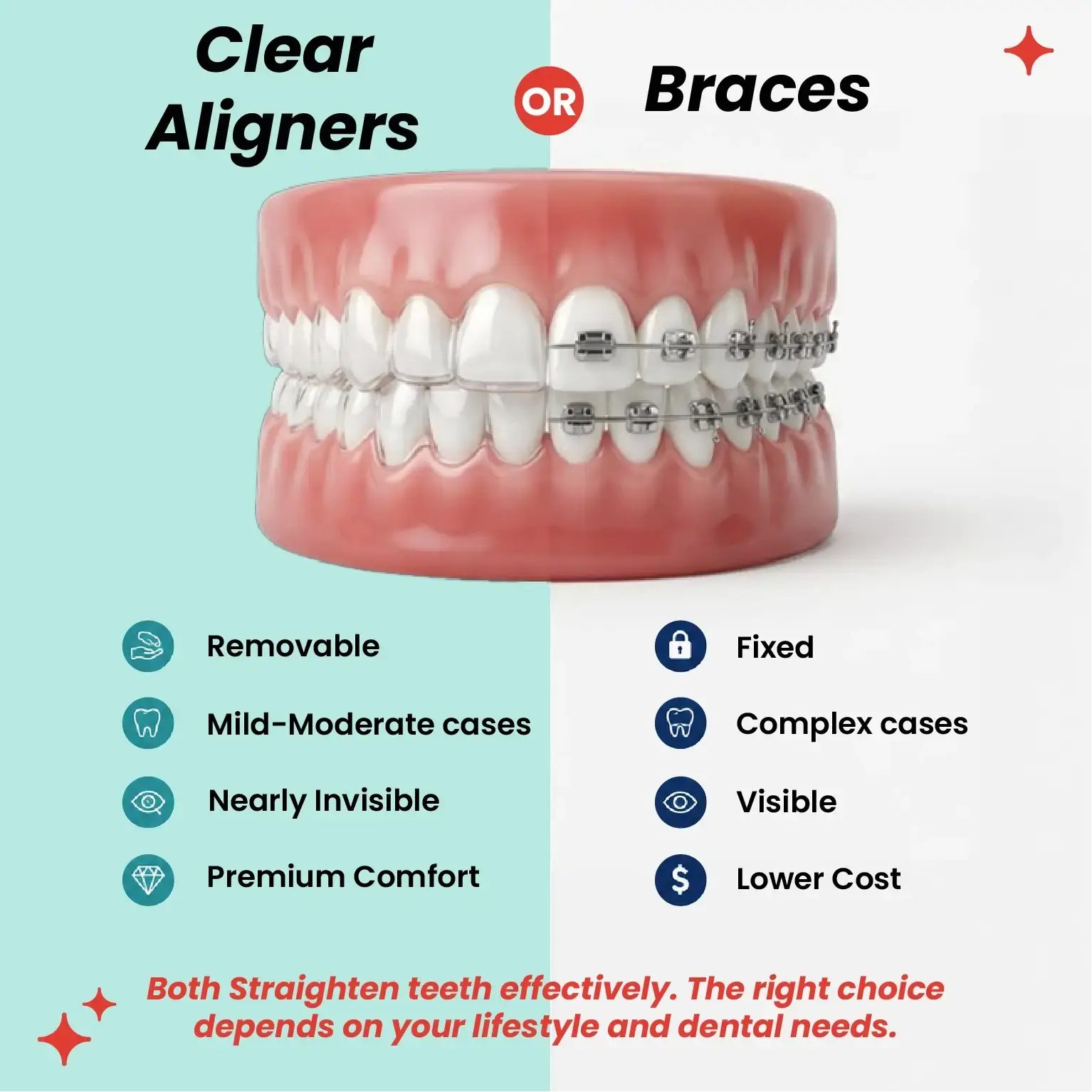
Both Braces and Clear Aligners are designed to straighten misaligned teeth effectively, but the right choice depends on your needs.
For most children and teenagers, clear aligners are often worth considering because they are nearly invisible, removable, and more convenient for eating, brushing, and flossing. They can effectively treat many common concerns, including crowded teeth, gaps, crooked teeth, and even severe or complex issues, while fitting seamlessly into everyday life.
For your child, if you're looking for a discreet, comfortable, and flexible way to straighten smile, then aligners for teeth are often the preferred choice.
Types Of Braces Available For Different Ages
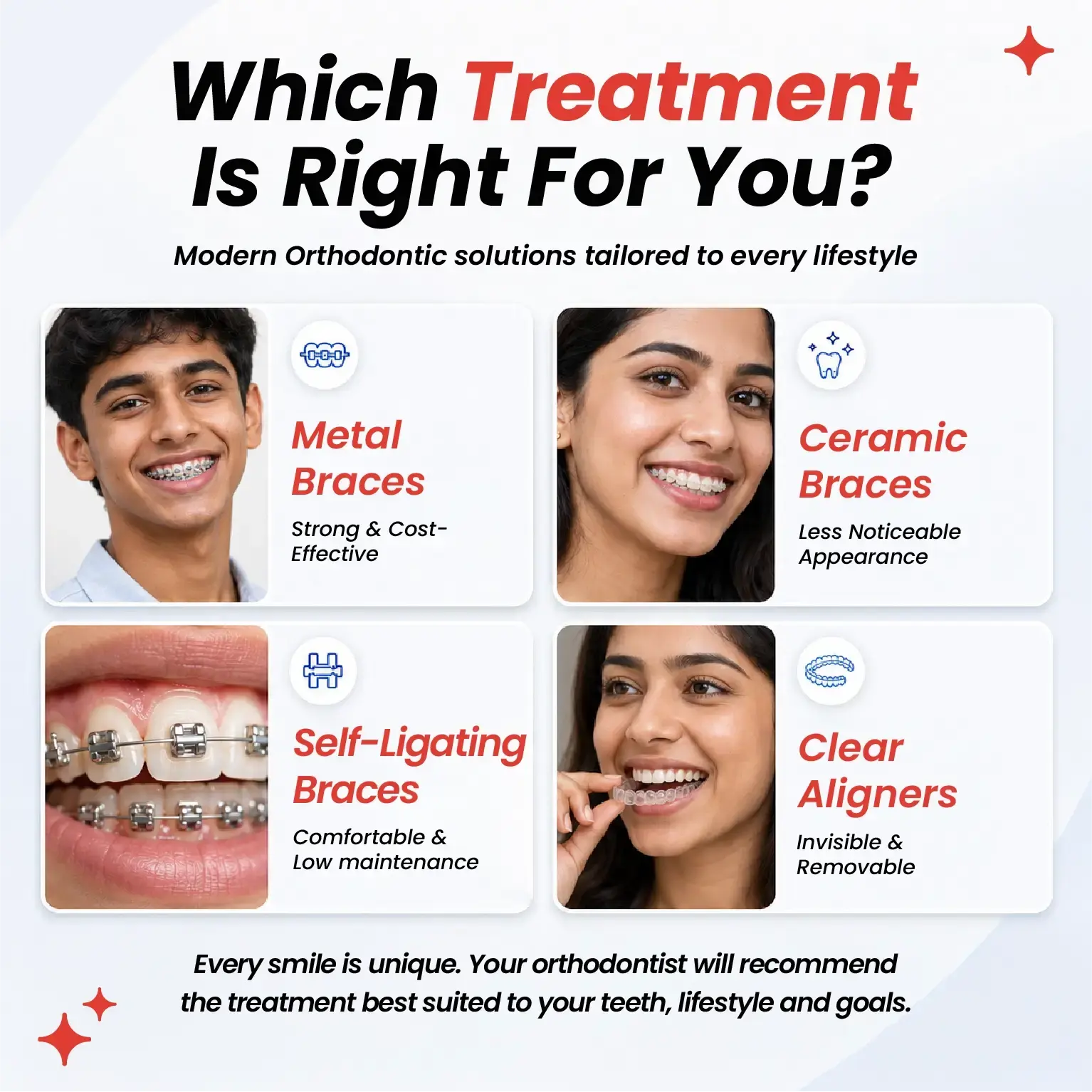
The right orthodontic treatment mainly depends on the condition of the case and the age. Understanding which braces or orthodontic options are appropriate for you at each stage of development helps parents and patients make informed decisions to achieve the best long-term outcomes.
Ages 7 to 10: An Early Orthodontic Care
Ages 7 to 10 are when most children still have a mix of baby and permanent teeth. Braces are not always required immediately, but an orthodontic evaluation can help identify developing issues such as severe crowding, crossbites, or jaw alignment problems.
Common concerns addressed:
- Crossbites
- Severe crowding
- Jaw alignment issues
- Spacing problems
Suitable options:
- Metal braces
Ages 11 to 14: An Ideal Age for Braces
For most children, ages 11 to 14 are considered the best time to start brace treatment. By this stage, most permanent teeth have erupted, and the jaw is still growing, making tooth movement more predictable and efficient. Metal braces remain the most common option, while ceramic braces may be suitable for older children who prefer a less noticeable appearance.
Common concerns addressed:
- Crooked or crowded teeth
- Gaps between teeth
- Overbites and underbites
- General teeth misalignment
Ages 15 to 19: Teen Braces Treatment
This is the stage of actual teen braces treatment, which is considered to be highly effective, as the teeth and jaw can still respond well to orthodontic correction. Many teenagers begin treatment during high school, when they have all their permanent teeth.
Suitable options:
- Metal braces
- Ceramic braces
- Clear aligners (for suitable cases and responsible teens)
Benefits of braces during the teen years:
- Effective correction of bite and alignment issues
- Improved smile aesthetics and confidence
- Multiple treatment options to suit individual needs
Choosing The Right Braces At The Right Age
There is no single type of braces that works best for everyone. The ideal treatment depends on age, dental development, and the specific orthodontic concern. An early orthodontic evaluation can help determine the right time to begin treatment and ensure the best possible outcome for a healthy, well-aligned smile.
Different Types of Teeth Braces Options Available For Orthodontic Treatment
Self-Ligating Braces
Self-ligating braces use a specialized clip or sliding mechanism to hold the archwire in place instead of traditional elastic bands.
Best for: Teenagers seeking a more comfortable experience with braces.
Benefits of Self-Ligating Braces:
- Reduced friction during tooth movement.
- Easier cleaning due to fewer components.
- May require fewer adjustment appointments.
- It can improve patient comfort during treatment.
Invisible Braces (Clear Aligners)
Invisible braces, commonly known as clear aligners or teeth aligners, are transparent, removable trays that are custom-made to gradually move the teeth into alignment. Clear aligners have become one of the most popular choices for adults and teenagers seeking a modern, discreet option.
Best for: Teenagers who want to manage severe to complex alignment issues.
Benefits of Invisible Braces:
- Nearly invisible when worn.
- It can be removed during eating, brushing, and flossing.
- There are no major food restrictions during treatment.
- It is comfortable as it does not have any brackets or wires.
- They are popular among adults who want a discreet alternative to traditional dental braces.
The best type of teeth braces depends on factors such as age, dental condition, treatment goals, and lifestyle preferences. A professional orthodontic evaluation can help determine whether traditional dental braces or modern clear aligners are the most suitable option for achieving long-lasting results.
What Happens If You Delay Braces Treatment?
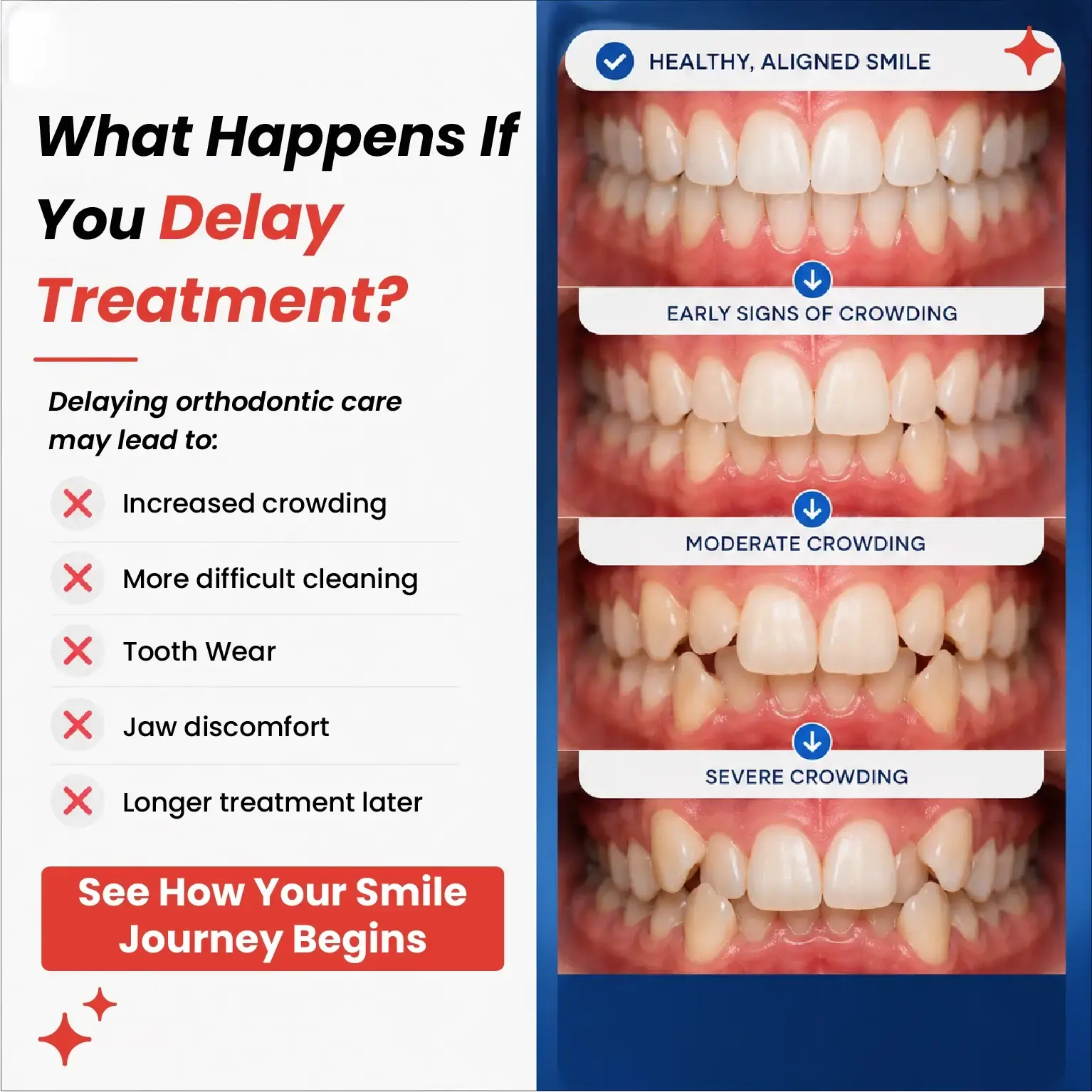
Delaying braces treatment can allow alignment and bite problems to worsen over time. What may begin as minor crowding, spacing, or a bite issue can gradually become more difficult to correct, potentially increasing treatment complexity and duration.
Some possible consequences of delaying dental braces include:
- Increased crowding as teeth continue to shift over time.
- Greater difficulty cleaning between overlapping teeth can increase the risk of plaque buildup and cavities.
- Uneven wear on teeth caused by improper bite alignment.
- Jaw discomfort or strain due to bite problems.
- More extensive orthodontic treatment in the future.
For children and teenagers, early assessment can help identify developing orthodontic issues while the jaw is still growing. Addressing concerns at the right stage may make treatment more predictable and help prevent complications later.
Cost of Teeth Braces & Invisible Braces in India
- Metal braces cost: The cost of braces starts from ₹25,000 to ₹50,000
- Ceramic braces cost: The cost of ceramic braces starts from ₹40,000 to ₹90,000
- Invisible braces cost: the cost of invisible braces starts from ₹40,000 to ₹350,000
Why Choose Toothsi for Invisible Braces?

Choosing the right orthodontic treatment care is the most important thing. At Toothsi, we make smile transformations more convenient, accessible, and comfortable with technology-driven orthodontic care designed for modern lifestyles.
- Free at-home smile scan: Getting started with invisible braces is simple with Toothsi's free at-home smile scan. So now, instead of visiting a clinic for an initial assessment, you can simply get your smile evaluated from the comfort of your home. This convenient first step helps you understand your alignment concerns and explore suitable treatment options without disrupting your schedule.
- Expert orthodontists: Every smile is unique, which is why your treatment plan is designed and supervised by experienced orthodontists. From your initial assessment to your final aligner stage, our team of 100+ orthodontists will carefully evaluate your teeth and bite alignment to create a personalized treatment journey that delivers predictable results.
- Flexible payment plans: With affordable plans and convenient EMI options, achieving your dream smile can be more manageable than ever.
- Remote monitoring support: With remote tracking and support, your progress can be tracked regularly, reducing the need for frequent in-clinic visits while ensuring your treatment stays on track.
Book your FREE at-home smile scan today and get your invisible braces to achieve your smile goals!
Best Age to Start Early Orthodontic Treatment for Kids
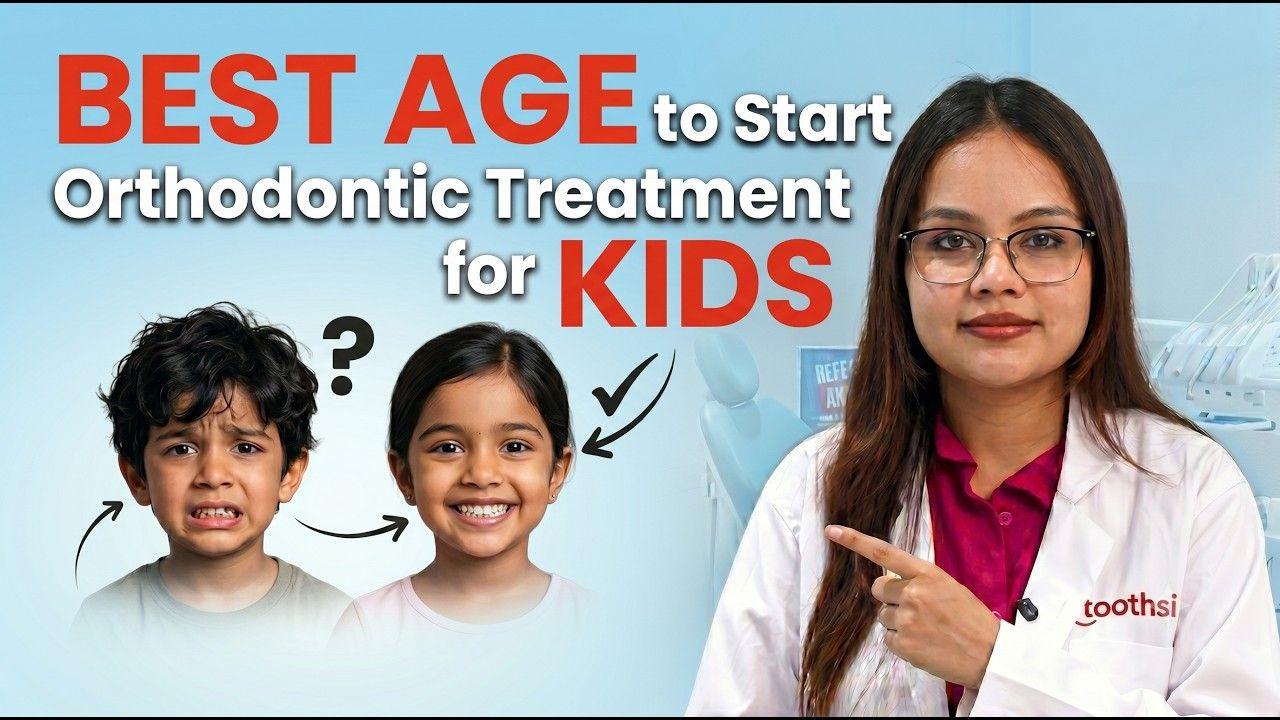
Hello and welcome to Toothsi by MakeO. In this video, we answer the important question: When should children start orthodontic treatment?
Many parents delay orthodontic treatment until their child is a teenager, often leading to longer, more expensive, and stressful procedures such as braces or extractions. Early orthodontic intervention can be faster, gentler, and more cost-effective.