

Teeth Braces 101: A Comprehensive Guide For Every Age, Every Smile

MDS - Orthodontics, 20+ years of experience. Co-Founder of MakeO Toothsi, consultant lingual Orthodontist, inventor of India's 1st CAD/CAM lingual bracket system, and aligners specialist.
Updated on August 19, 2026
Teeth braces are for kids. They are painful. They take forever to fix your smile. These are the thoughts that come rushing in the moment your orthodontist says: “You need braces.”
Here’s the truth: these are just myths. This blog is here to set the record straight. Whether you are a teen gearing up for your first appointment, a parent weighing the cost and care involved, or an adult finally taking your first step on the smile journey, we’ve got every question covered, all in one place.
Ready to know everything about teeth braces? Let’s get started.
Why People Choose Teeth Braces?
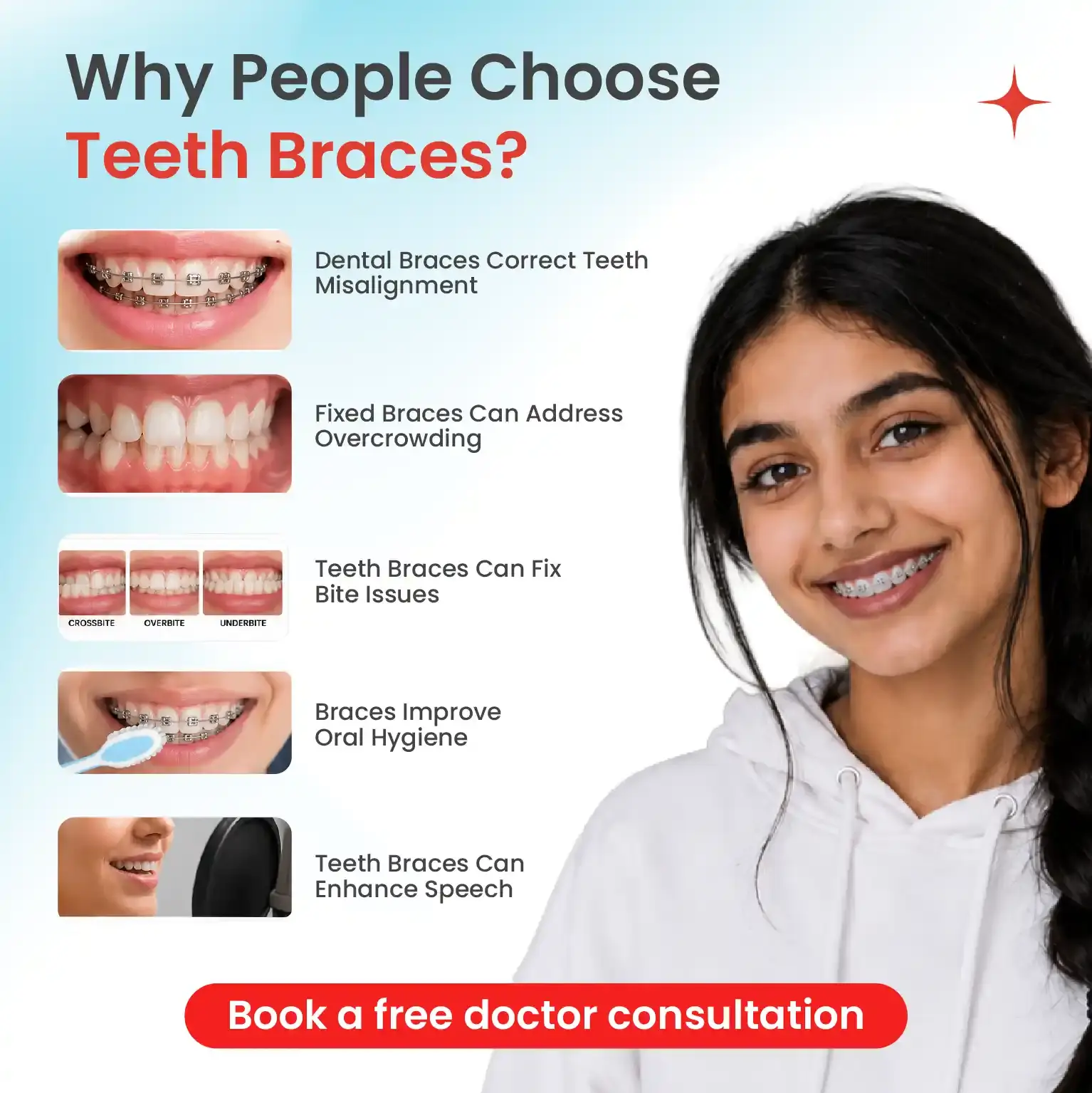
People often choose teeth braces (also called dental braces or fixed braces) to correct alignment issues related to the jaw or teeth. Braces serve many purposes.
Dental Braces Correct Teeth Misalignment
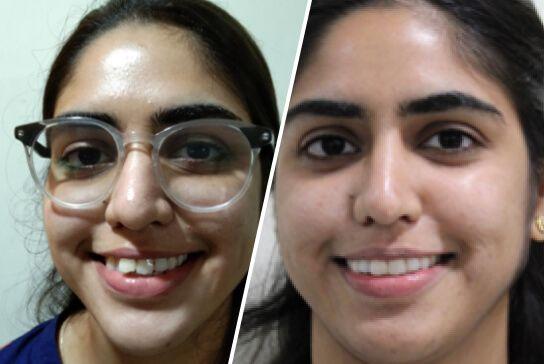
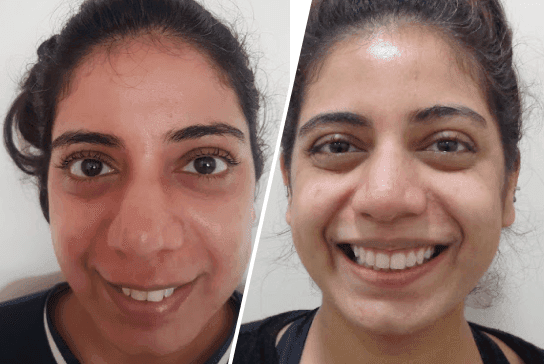
If you have teeth alignment issues, teeth braces can be your go-to option. These orthodontic devices straighten your teeth by shifting them into proper positions. This not only improves your aesthetics but also improves oral hygiene and other underlying issues.
Fixed Braces Can Address Overcrowding
Overcrowding is an orthodontic issue that arises when your teeth lack sufficient space inside your oral cavity. It can be because of your jaw structure or the structure of your teeth. Fixed braces can align them properly over time.
Teeth Braces Can Fix Bite Issues
Teeth braces also fix bite issues like cross bites, overbites, or underbites. This improves your chewing efficiency and resolves jaw discomfort. Braces can treat bite issues that are mild, moderate, or highly complex.
H3: Braces Improve Oral Hygiene
Once your teeth alignment issues are treated, you can floss and brush properly. This contributes to better oral health. This is indeed an indirect effect of using braces but an important one.
Teeth Braces Can Enhance Speech
Dental issues can sometimes lead to speech difficulties such as lisps. Fixed braces can fix these issues and effectively enhance your speech.
These are some of the many reasons why more and more people choose teeth braces. This is the reason why the global orthodontic market is expected to reach USD 65.13 billion by 2034, with a CAGR (Compound Annual Growth Rate) of 11.9%.
Not only that, in India, many orthodontists believe that orthodontic treatment can help the majority of Indians with dental problems.
“More than 80% of the Indian population can benefit from orthodontic treatments in some form or the other,” says Arpi Mehta, MDS Orthodontics. “However, less than 9% of the patients actually visit a clinic or consult an orthodontist for their dental issues, and that needs to change,” she further adds.
Before proceeding further, let’s take a step back and understand what teeth braces are.
Teeth Braces Meaning
Teeth braces are orthodontic devices that correct teeth misalignment and position them properly. In a way, they correct teeth misalignments, bite issues, and teeth positioning.
Teeth braces do this by applying consistent, mild pressure to misaligned teeth, guiding them into position. These devices consist of three primary components:
- Brackets: These are small ceramic or metal pieces that are adjusted in front of each tooth. They act as anchors that hold the archwire.
- Archwires: These are thin wires that run through the brackets. This is the component that applies constant pressure.
- Elastics/Ligatures: Elastics are the other common component. These bands apply additional pressure (in a specific direction) for correcting issues related to bad bites.
However, teeth braces are more than just these components; they are precise systems that exert pressure that allows fibers and ligaments to respond. This is followed by a process known as bone remodeling. During this process, the teeth being pushed start to shrink away or reabsorb. At the same time, the ligaments respond; the bone follows.
What Are The Common Dental Issues Fixed By Teeth Braces?
There is a wide range of issues that Teeth braces can fix, such as overcrowding, jaw misalignment, bad bites, speech issues, and so on. Let’s discuss some of them briefly here.
Read More: Why Do Teeth Gaps Happen?
Overcrowding And Teeth Gaps
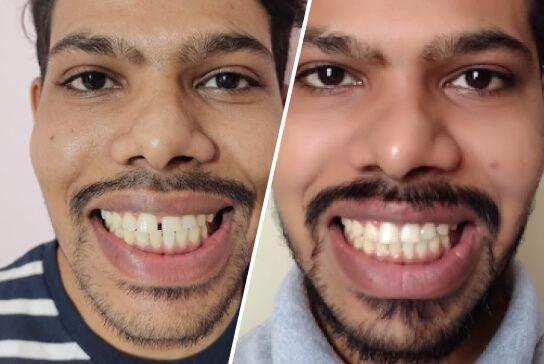
These are quite common dental issues that fixed braces can fix. A majority of people have gaps between their teeth. This problem is commonly called Teeth Gaps, and clinically called Diastema. This is something that teeth braces can effectively treat.
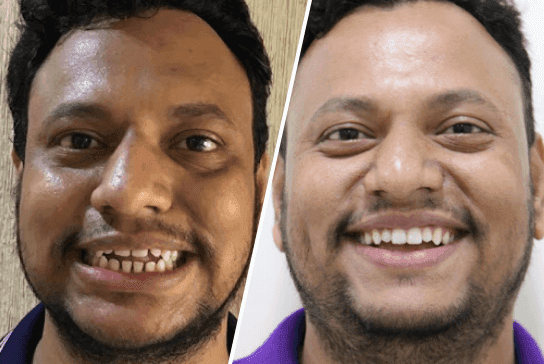
Moreover, they can also fix crooked or overcrowded teeth. In this condition, the teeth don’t get enough space in your oral cavity, leading to misalignment. Braces can treat overcrowding of any complexity.
Jaw Misalignment
Fixed braces can also help you fix misaligned jaws. Jaw misalignment generally happens when you have a bad bite (excessive overbite or underbite). Overcrowding can also lead to jaw pain and discomfort. All these can lead to more complex problems like TMJ (Temporal Mandibular Joint) disorders. Braces can align your teeth properly, improving jaw alignment.
Overbites, Underbites, And Open Bites
Overbites, overjets, and underbites can all be classified under bad bites. Teeth braces can help treat bad bites by applying mild, consistent pressure on the teeth and aligning them into the ideal positions.
Learn More: Overbite vs Overjet: Key Differences And Treatment Options
Open bites happen when there is too much space between your lower and upper front teeth. While open bites are more common in children due to certain harmful habits like thumb-sucking and excessive use of pacifiers, most people outgrow them. However, a few adults can face this problem, which can be easily fixed by dental braces.
Are you suffering from any of these? Book Toothsi’s free home scan now and find out what’s right for you.
What Are The Different Types of Braces?
H2: What Are The Different Types of Braces? Different types of teeth braces can fix your teeth alignment issues, including metal braces, ceramic braces, lingual braces, self-ligating braces, and invisible braces (also called teeth aligners).
Metal Braces
Metal braces use stainless steel brackets, wires, and bands to align your teeth safely. These teeth braces are visible when you smile or open your mouth. However, if you use tooth-coloured metal braces, they will be less noticeable. You can even go for bright-coloured ligatures if you're feeling festive.
Ceramic Braces
Ceramic braces are more discreet than metal braces. The only difference between metal braces and ceramic braces is that the ceramic ones have tooth-coloured wires, ligatures, and brackets. However, ceramic braces are more brittle than the metallic ones. So, they are more fragile, and that’s something you have to consider if you want to choose ceramic braces.
Lingual Braces
Lingual braces work the same as any other traditional braces. But they go on the back of teeth instead of the front surface. People choose lingual braces for their highly discreet nature.
Self-Ligating Braces
The only difference between self-ligating braces and metal braces is that ligatures (elastic bands that hold the archwire together) are missing. These teeth braces have an in-built system to hold the complete structure.
Teeth Aligners
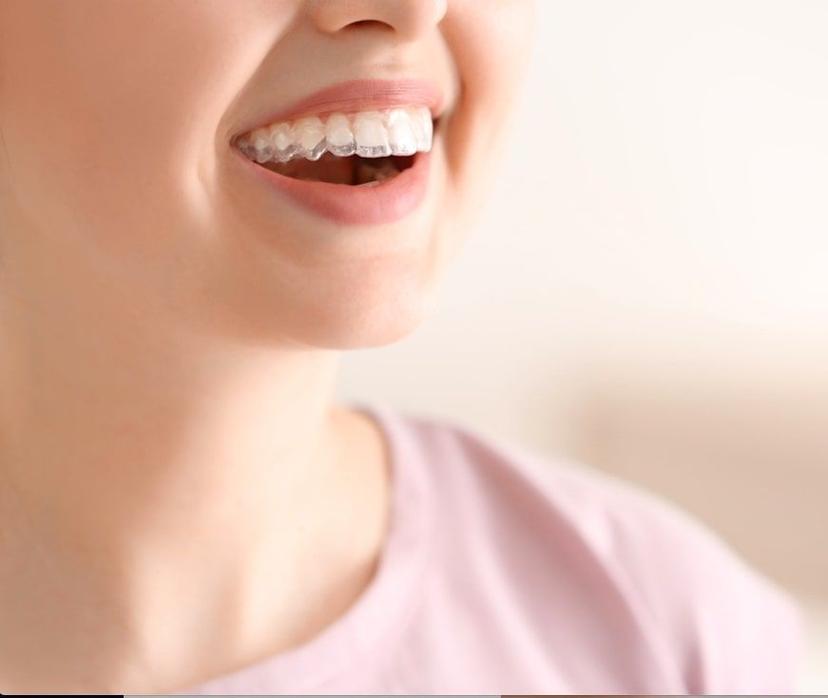
Teeth aligners (also called clear aligners or invisible braces) are just like braces but don’t use wires, brackets, or ligatures. They are custom trays that effectively straighten your teeth over time.
Features | Metal Braces | Ceramic Braces | Lingual Braces | Self-Ligating Braces |
|---|---|---|---|---|
Appearance | Metal wires and brackets | Tooth-coloured brackets | Discreet as it is placed on the back side | Somewhat discreet |
Comfort | Possible initial irritation | More comfortable than metal braces | Moderately comfortable | Comfortable |
Visibility | Highly visible | Partially visible | Discreet | Discreet |
Oral Hygiene | Requires high maintenance | Requires moderate maintenance | Requires moderate maintenance | Requires minimal maintenance |
Dietary Restrictions | Several restrictions | Moderate restrictions | Moderate restrictions | Moderate restrictions |
Removable | No | No | No | No |
Price | Affordable | Moderate | Moderate | High |
Suitable For | Mild to severe cases | Moderate to severe cases | Mild to severe cases | Mild to severe cases |
What Is The Right Age To Get Teeth Braces?
There is no right age to get teeth braces. Many people believe that braces are only for children and teens, and not for adults. But that’s not entirely the case.
While it’s true that during the growth phase, it takes less effort to position the teeth into proper alignment, teeth braces work great for adults, too. In fact, today one in three orthodontic patients is an adult.
Fixed Braces For Kids
While there are teeth alignment issues that don’t need extensive orthodontic devices for treatment, few of them need proper care. Some of the signs that your kid needs teeth braces are:
- Overlapping or crooked teeth
- Chewing difficulty
- Late loss of baby teeth
- Too much overbite or overjet
- Jaw shifting and clicking
- Frequent biting and mouth ulcers
Types of Dental Braces For Kids
Metal Braces
For kids, metal braces are the most popular and reliable option for kids. They are reliable because of their durability, efficiency, cost-friendliness, and capability for customization.
Ceramic Braces
As ceramic braces use tooth-coloured ligatures (also called clear brackets), they are less noticeable and blend seamlessly with the smile. However, ceramic braces are delicate and need proper care.
Self-Ligating Braces
These braces have special internal mechanisms that eliminate the need for elastic bands (or ligatures). These special components hold the wire in proper position. They are easier to maintain compared to other teeth braces.
Teeth Braces For Teens
For teens, the selection of braces depends on a wide range of factors. On one hand, they shouldn’t compromise aesthetics. On the other hand, the teeth braces should match their fast-paced lifestyle.
Types of Teeth Braces For Teens
Metal Braces
For teens, metal braces hold the top position when it comes to popularity. They are strong, effective, and most affordable. While most people consider metal braces to be aesthetically unpleasing, you can customize them with fun color options that can help you stand out from the crowd. However, during sports and other activities (which is a major part of teens’ lives), one has to wear a mouthguard.
Ceramic Braces
Ceramic braces work the same way as metal braces. The only difference is they need more care and are discreet. They can easily blend with your teeth. This is one of the best options for people who don’t want noticeable braces but want their braces to be fixed. One of the biggest disadvantages of ceramic braces is that they are slightly more fragile than the metal ones.
Teeth Aligners (Invisible Braces)
Teeth aligners are the most discreet option for teens. They are removable, which lets you eat, brush, and floss without any hassle. However, the trade-off here is that you need real commitment to achieve the desired outcome. Teeth aligners have to be worn 20 to 22 hours a day.
Dental Braces Treatment: What Happens From Start to Finish
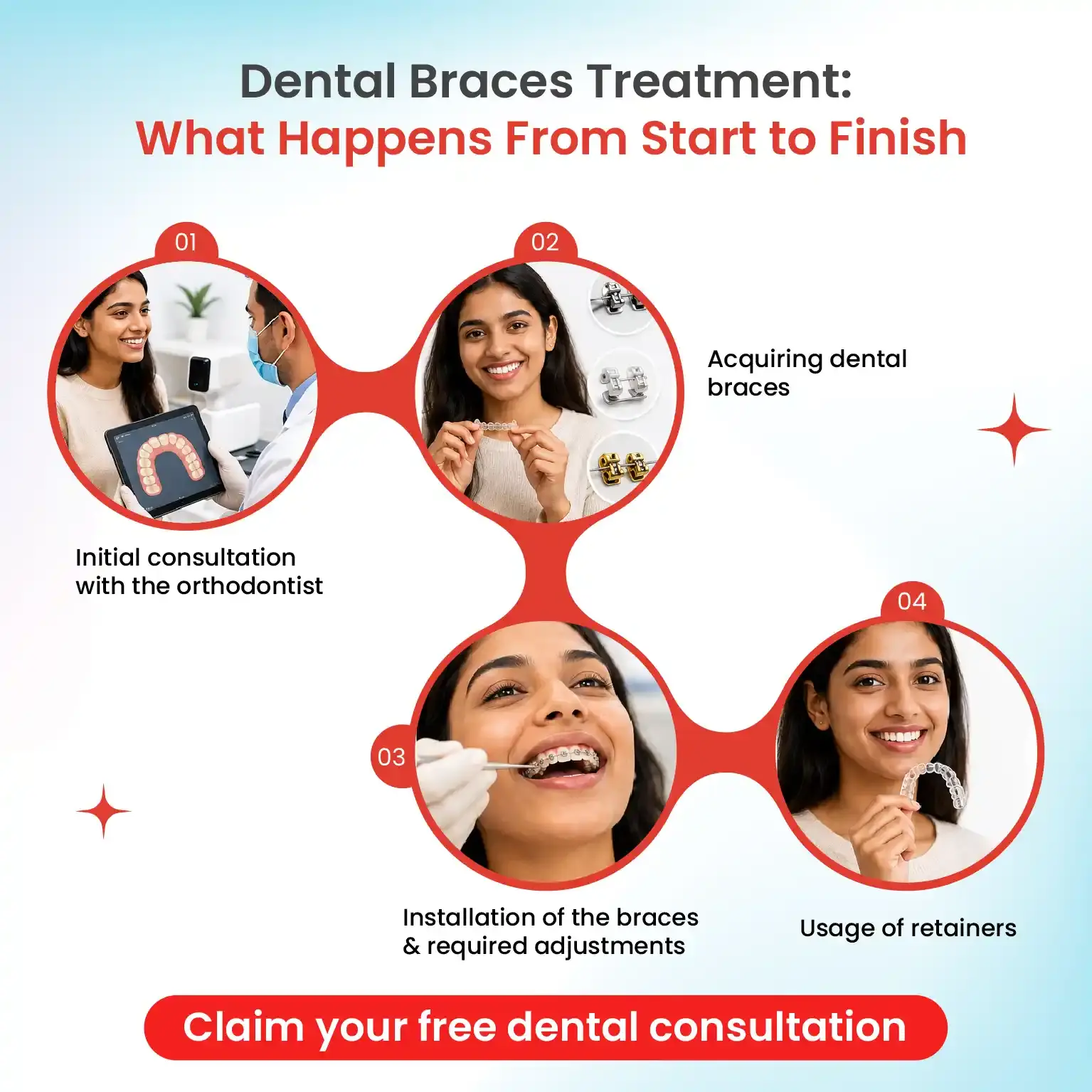
Teeth braces treatment includes well-defined phases:
- Initial consultation with the orthodontist
- Acquiring dental braces
- Installation of the braces and required adjustments
- Usage of retainers
Initial Consultation And Diagnosis
This includes contacting or consulting an orthodontist when you start noticing the symptoms of teeth alignment issues. You can either visit a dental clinic or book a free home scan. This will allow the orthodontists to correctly diagnose your issue and suggest a way to fix it. As different teeth braces can be used for different situations, an effective diagnosis is important for the correct treatment.
Want to know which teeth braces work best for you? Book Toothsi’s free home scan now and find out.
Getting Your Teeth Braces
Once the orthodontist diagnoses your teeth alignment issue, the professional may provide you with a range of options depending upon the complexity of the issue and your lifestyle. You can even customize your fixed braces based on what you need. Then, the teeth braces are manufactured as per your requirement.
Installation And Adjustments
Then comes one of the most important parts of the braces treatment. This is the phase when an orthodontist installs the fixed braces on your teeth. Although you may feel initial discomfort after the installation, sustained usage will minimize the pain.
It is also worth noting that you will need periodic adjustments of these braces for teeth. However, some teeth braces, like the self-ligating ones, require fewer adjustments than ceramic or metal braces.
The Importance Of Retainers
Are you wondering if retainers are important after braces? Yes, they are important because your teeth might shift after treatment with teeth braces. According to the American Association of Orthodontics:
- Retainers will restrict teeth movement after treatment
- In case of severe teeth misalignment, you may have to wear retainers for the majority of the time
- You might also be required to keep your braces on for a considerable number of years after treatment
- Retainers after orthodontic treatment also allow the soft tissue and the bone to hold their ground after bone remodeling
Teeth Braces Price: What Affects the Cost and What to Expect
The cost of teeth braces in India depends on the type of dental braces you’re opting for and the complexity of the orthodontic issue. It may range between ₹30,000 and ₹1,08,900 depending on the type and treatment.
How Much Do Braces Cost In India?
The teeth braces price in India varies significantly between different brands, material quality, and the above-mentioned factors like complexity and type of braces. Here’s an average cost of teeth braces available in India.
Teeth Braces Type | Teeth Braces Cost |
|---|---|
Metal Braces | ₹30,000-₹50,000 |
Ceramic Braces | ₹50,000-₹70,000 |
Self-Ligating Braces | ₹70,000-₹1,00,000 |
Invisible Braces | ₹60,000-₹4,00,000 |
However, Toothsi offers its superior teeth braces at an affordable rate. But why is that? It’s because of Toothsi’s customer-centric business model and self-reliance. The brand manufactures its teeth braces in its largest manufacturing unit (which is also India’s largest).
Toothsi Teeth Braces Type | Price |
|---|---|
Metal Braces | ₹35,000 |
Ceramic Braces | ₹40,000 |
Self-Ligating Metal Braces | ₹60,000 |
Self-Ligating Ceramic Braces | ₹65,000 |
Toothsi Invisible Braces (Clear Aligners) | ₹52,999 |
Explore More: Toothsi Teeth Braces Price
Now that we know how much teeth braces cost in India, let’s look at the factors affecting the price.
What Affects The Price Of Braces For Teeth?
The factors that determine teeth braces cost are:
- Teeth Braces Type: The price of teeth braces depends on the material and technology used. For instance, metal braces cost less than self-ligating braces because of the way they’re engineered.
- Complexity of the Orthodontic Issue: Braces are highly effective in treating mild to highly complex teeth alignment issues. If your teeth misalignment is severe, the treatment time can be longer. This will raise the overall cost.
- Additional Procedures: Different processes like professional cleaning, tooth extractions, and retainers can increase the braces treatment price substantially.
How Do You Take Care of Yourself While Living With Fixed Braces?
Your treatment doesn’t end with getting the fixed braces. There are certain rules that you have to follow for the braces to work. Otherwise, it may lead to cavities, gum disease, and other dental issues.
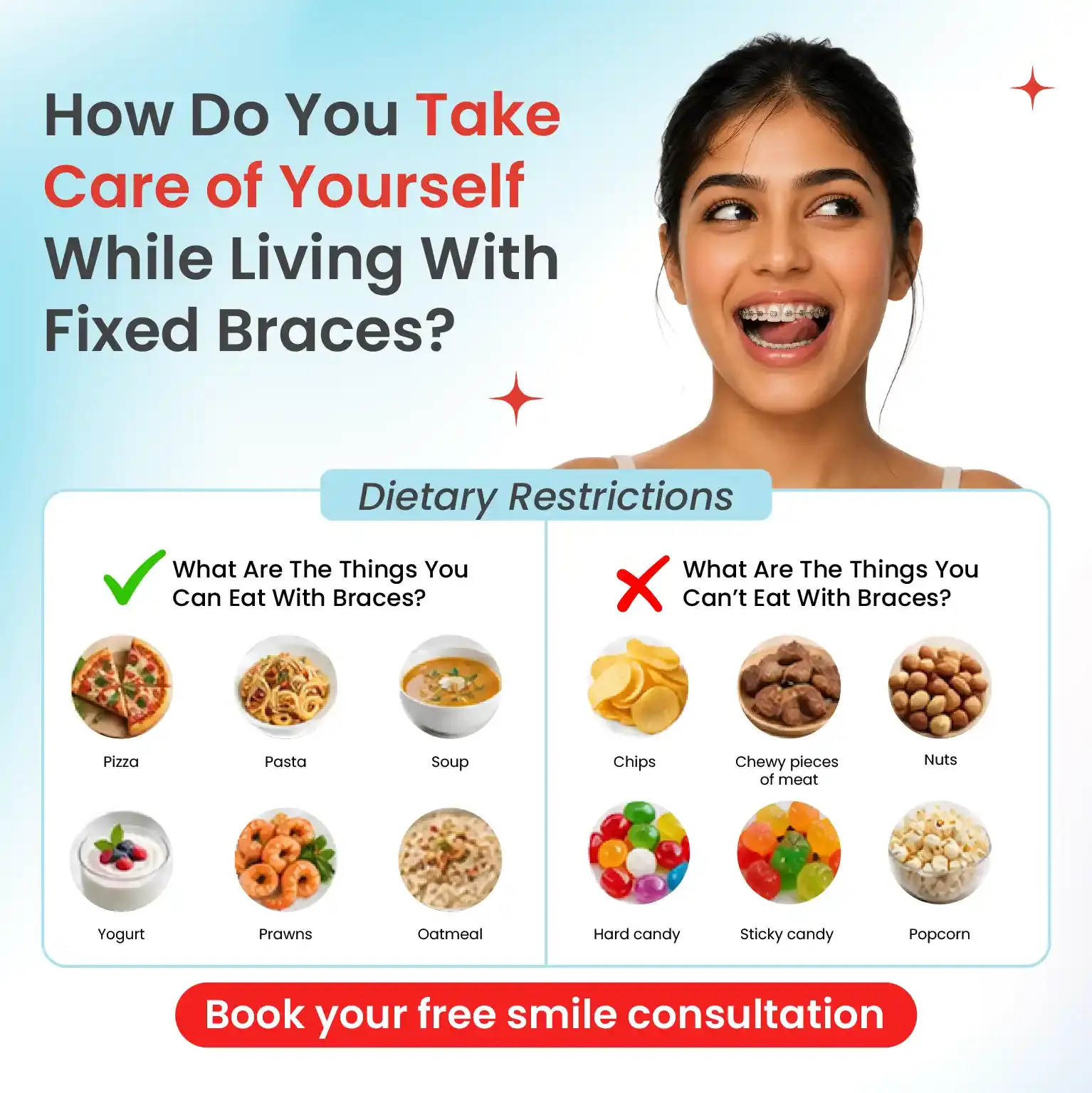
Dietary Restrictions
Teeth braces have delicate components. Although braces are engineered to withstand wear, some foods may damage or compromise their structural integrity. Each time fixed braces get damaged, the treatment time is pushed back.
Moreover, certain foods can also pose the risk of oral health issues. That’s because fixed braces add small pockets (that aren’t there naturally) in which food particles get accumulated over time.
What Are The Things You Can Eat With Braces?
The American Association of Orthodontists suggests certain foods that you can enjoy while undergoing a braces treatment. These include:
- Scrambled eggs
- Soups
- Seafood
- Pasta
- Pizza
- Oatmeal
- Soft cheese
- Mashed potatoes and soft vegetables
- Yogurt
What Are The Things You Can’t Eat With Braces?
On the other hand, there are some things that you must avoid while wearing teeth braces. Sticky or hard foods can pose a significant threat to your oral hygiene and damage your fixed braces.
- Hard candy (risk to teeth and braces)
- Sticky candy (loosen the bracket)
- Popcorn (accumulation)
- Nuts (damage to teeth and braces)
- Chewy pieces of meat (accumulation risk)
- Chips (damage to the wires)
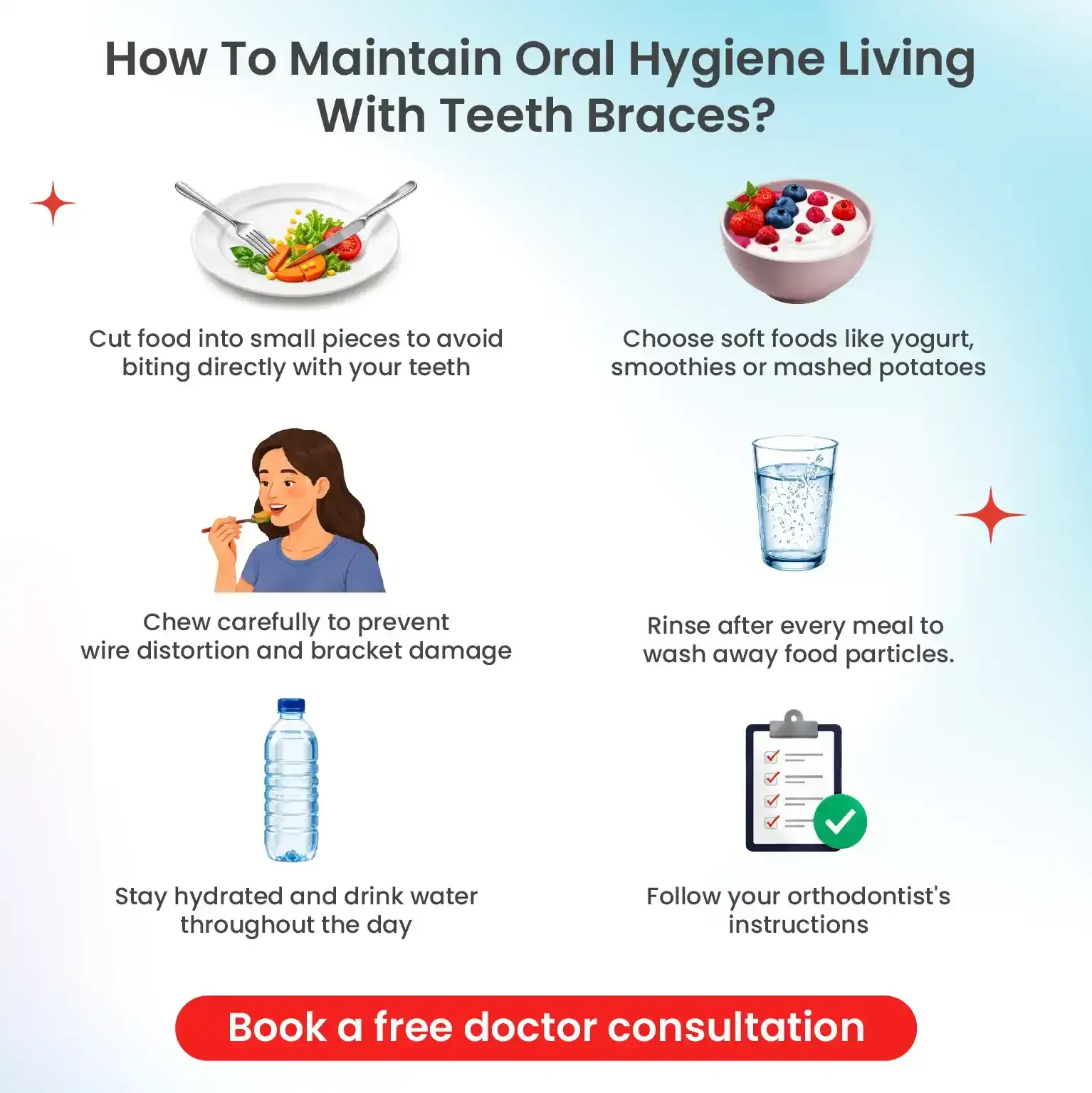
How To Maintain Oral Hygiene Living With Teeth Braces?
There are some steps that you can take that can ensure oral hygiene while you undergo teeth braces. These are some of the orthodontist-recommended steps that you can take.
- Starting small can help you minimize the need to bite directly with your teeth. So, you should always cut the food into small pieces.
- You should also go for softer foods. It may include yogurts, smoothies, or mashed potatoes.
- Chewing carefully is another important habit that is prescribed by most orthodontists. Teeth braces can be quite delicate, and hence aggressive chewing can lead to wire distortion and other damage.
- As fixed braces are orthodontic devices that can’t be removed, after meals you have to swish and rinse to maintain good oral hygiene.
- Staying hydrated is another step most orthodontists prescribe. Drinking water throughout the day helps in keeping the mouth clean by rinsing away residual food particles.
- One of the most important things to do is adhere to the treatment as prescribed by the orthodontist. Patient compliance plays a pivotal role in achieving the desired treatment outcome.
Toothsi offers ongoing support through the Toothsi App if you face any difficulty during the treatment. This helps you stay in touch with an orthodontist anytime you need.
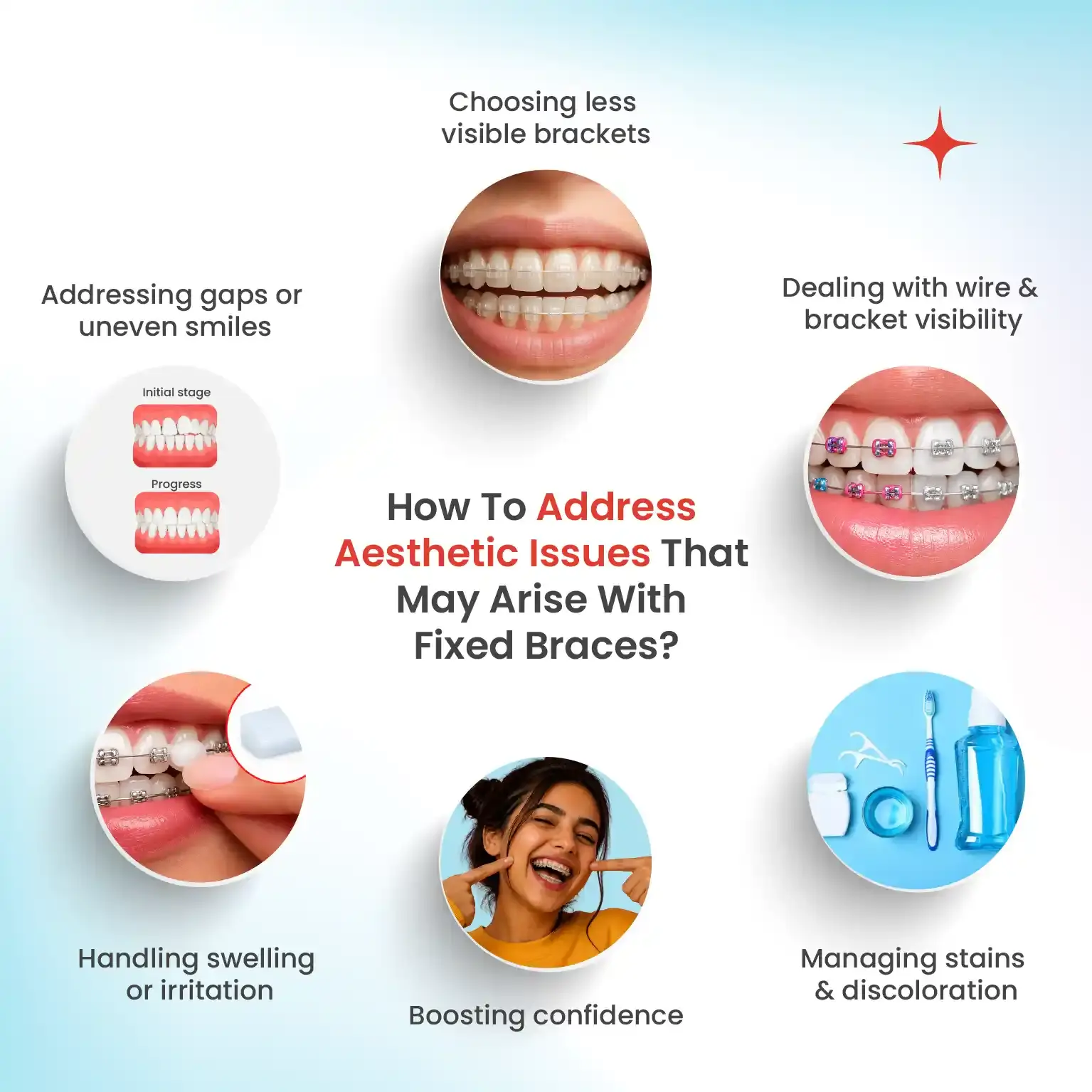
How To Address Aesthetic Issues That May Arise With Fixed Braces?
Choosing less visible brackets
Traditional metal braces are the most noticeable option. Ceramic braces use tooth coloured or clear brackets that blend in much better with natural teeth. Lingual braces go a step further and sit behind the teeth, so they are hidden from view entirely, making them a good option for people who want their treatment to stay discreet.
Dealing with wire and bracket visibility
Clear or tooth-colored elastic ties (the small rubber bands that hold the wire to the bracket) make the whole setup look less obvious than the bright colored ones. Some patients also choose white or silver coated wires instead of the standard metal ones, which reduces glare and visibility in photos.
Managing stains and discoloration
Braces can trap food and plaque around the brackets if not maintained properly, leading to white spots or yellowing once they come off. Brushing after every meal, using a fluoride mouthwash, and flossing with a floss threader or water flosser helps prevent this. Regular dental cleanings during treatment also reduce the risk of visible staining later.
Handling swelling or irritation
Braces can rub against the cheeks and lips, causing minor swelling or sores, especially in the first few weeks. Orthodontic wax applied over the brackets reduces friction and protects the soft tissue while the mouth adjusts.
Addressing gaps or uneven smiles during treatment
It is normal for teeth to look uneven or gappy partway through treatment as they shift into place. This is temporary and part of the process. Orthodontists usually explain the expected timeline so patients know what changes to anticipate at each stage.
Boosting confidence in the meantime
Some people feel self-conscious about visible braces at work or in social settings. Simple things like practicing a closed-lip smile in photos, or choosing colored ties in shades that complement skin tone rather than clashing with it, can help people feel more comfortable during treatment.
What Are Some Common Issues With Dental Braces And How To Mitigate Them?
Some of the most common issues that you may face when undergoing treatment with dental braces are developing mouth ulcers and gum irritation. You can easily mitigate them by being compliant with the treatment plan and consulting the orthodontist at periodic intervals.
How To Tackle Mouth Sores And Irritation?
Braces can rub against the inside of the cheeks, lips, and gums, especially during the first few weeks or right after an adjustment visit. An NLM (National Library of Medicine) report states that around 51%-63% of patients develop mouth sores during orthodontic treatments. Here is how to manage it.
Use Orthodontic Wax
This is the simplest and most effective fix. A small ball of wax pressed over the bracket or wire that is causing friction creates a smooth barrier between the metal and soft tissue. It stays in place through eating and talking and can be reapplied as needed.
Rinse With Warm Salt Water
Swishing with warm salt water, about half a teaspoon of salt in a cup of warm water, several times a day helps soothe irritated tissue and keeps the area clean while it heals.
Try Numbing Gels
Over-the-counter oral numbing gels or pastes made for mouth sores can reduce pain at the irritation site. These are especially helpful before meals if chewing feels uncomfortable.
Watch For A Poking Wire
Sometimes irritation is caused by a wire end that has shifted and is poking into the cheek or gum. If wax does not fully solve the discomfort, this is usually the reason, and it is worth calling the orthodontist rather than waiting, since a quick clip of the wire fixes it.
Eat Orthodontist-Recommended Foods
Sticking to softer foods after braces are placed or tightened reduces the strain on already irritated areas and gives the mouth time to adjust.
Keep The Area Clean
Sores heal faster and feel less irritated when the mouth is kept clean, so gentle brushing around the sensitive spot and rinsing after meals helps prevent further irritation or infection.
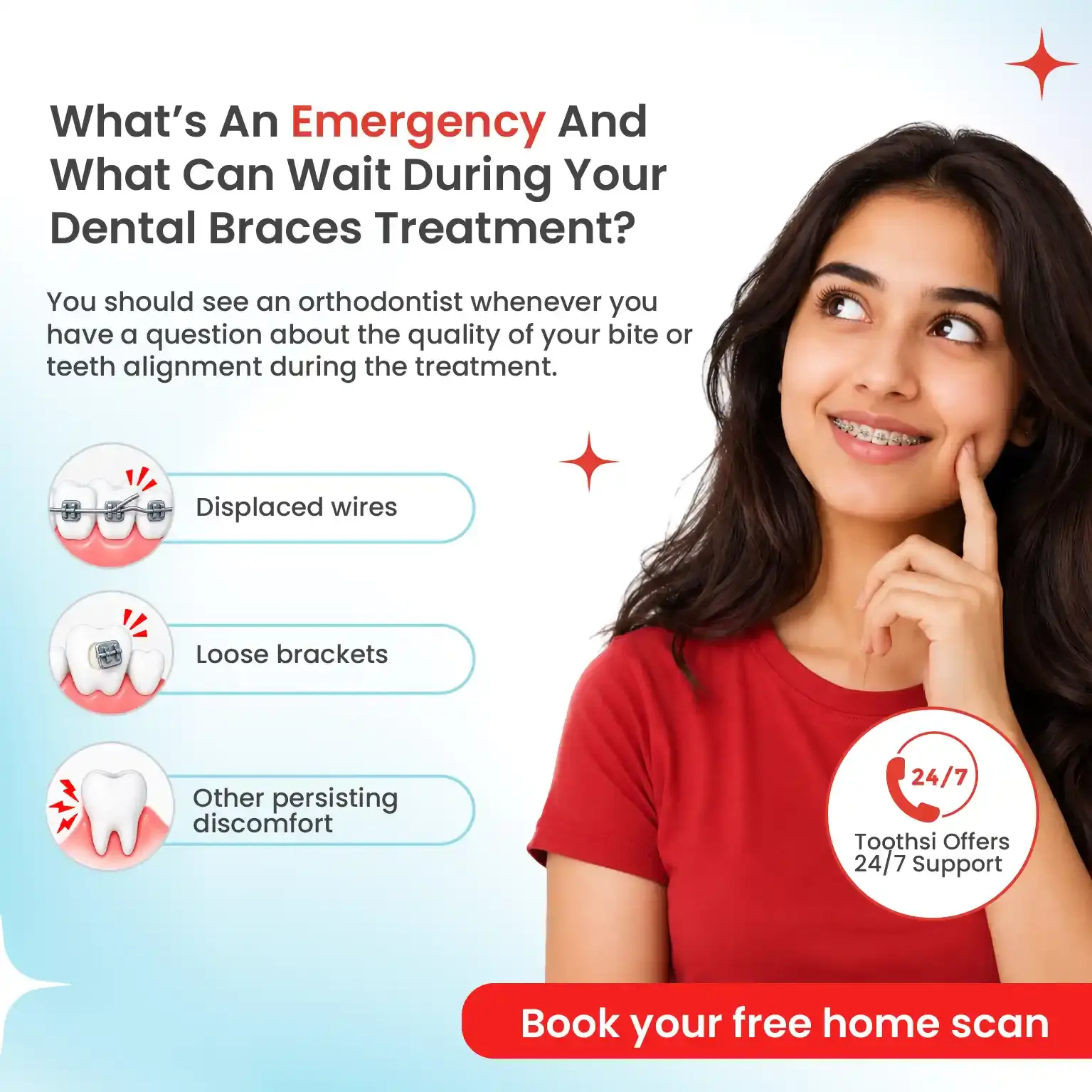
What’s An Emergency And What Can Wait During Your Dental Braces Treatment?
You should see an orthodontist whenever you have a question about the quality of your bite or teeth alignment during the treatment. While it’s true that braces treatment has attained significant advancements, consultations and in-clinic visits are still required.
Even the most advanced and predictable treatment needs to be monitored periodically to ensure the treatment stays on track. Also, during the teeth braces treatment, you can face problems like:
- Displaced wires
- Loose brackets
- Other persisting discomfort
All these need to be monitored and solved as soon as they arise. Without an orthodontist’s intervention in these situations, your treatment can come to a standstill. There’s nothing as an emergency in fixed braces treatment. If you feel something is wrong, you should consult an orthodontist immediately.
For this, Toothsi offers 24x7 support for any problems you face during the treatment. You can contact the experts anytime. They have their specialized app for remote consultation and monitoring.
And if you want an in-person visit, Toothsi is present in 210+ cities. You can visit one of Toothsi’s dental centers to fix any issue that you’re facing.
What To Expect After Dental Braces Treatment?
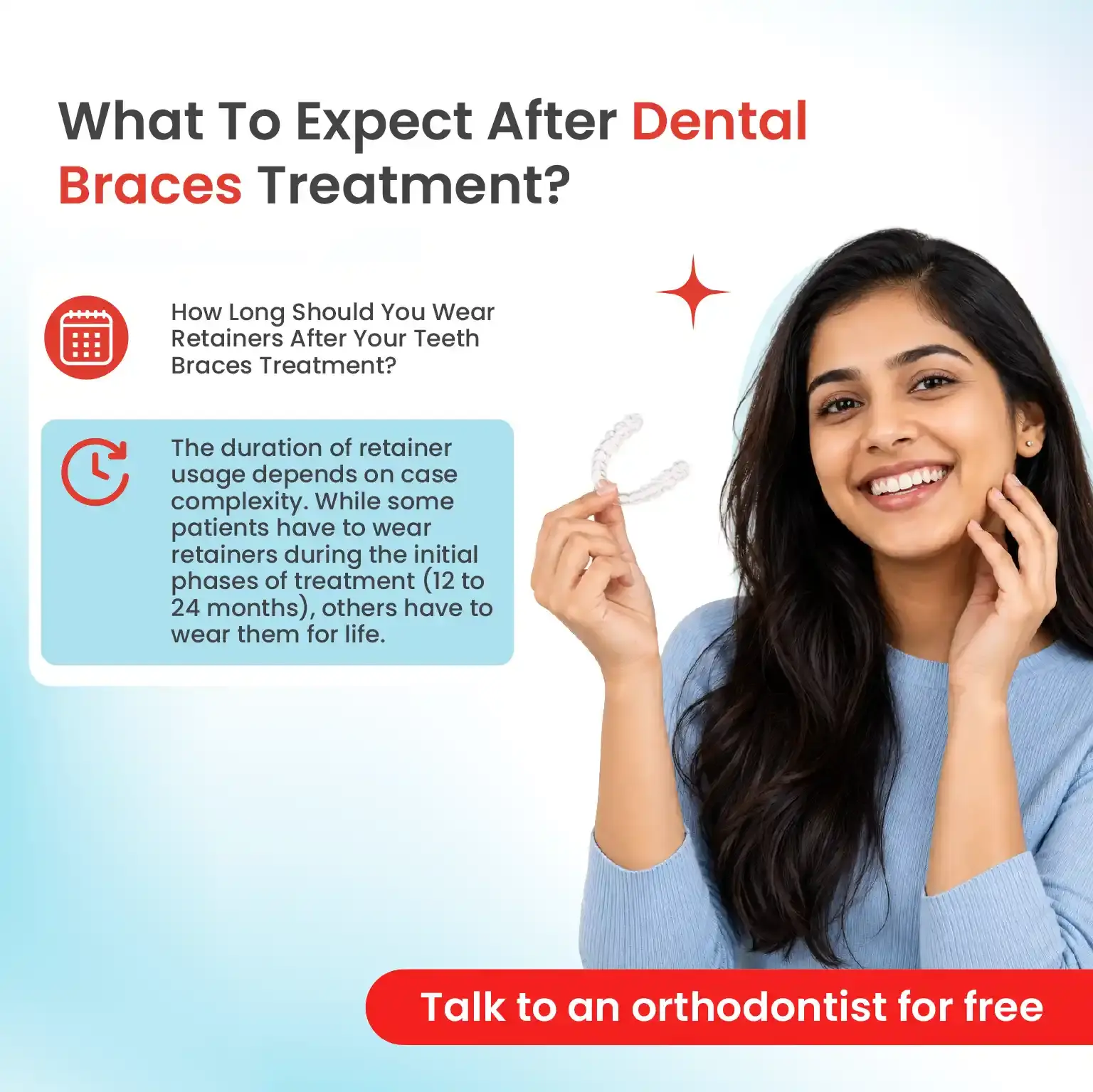
Your treatment doesn’t end with dental braces. As your body changes, teeth change, too. Teeth tend to return to their original position, even after the treatment. So, wearing retainers is paramount to keep your teeth aligned. Also, you have to take certain steps that will help you prevent an orthodontic relapse.
How Long Should You Wear Retainers After Your Teeth Braces Treatment?
Retainers are usually prescribed by orthodontists right after the teeth braces treatment ends. The duration of retainer usage depends on case complexity. While some patients have to wear retainers during the initial phases of treatment (12 to 24 months), others have to wear them for life.
Further Reading: Retainer wear and compliance in the first 2 years after active orthodontic treatment
Do you have other questions about retainers? You can check out: Answering All The FAQs on Dental Retainers
How To Prevent An Orthodontic Relapse?
After completing your fixed braces treatment, you can prevent a relapse by wearing retainers (as prescribed by the orthodontist), attending periodic checkups, and addressing post-treatment issues as soon as possible (if they arise).
Studies have shown that:
- Orthodontic relapse happens due to teeth regressing towards their original position.
- Even with fixed retainers, unwanted movement can occur due to the quality of the material used and ignored dental visits after the teeth brace treatment.
- Relapse can also happen if the retainers aren’t adjusted in time (during the first 6 months).
Thus, along with periodic orthodontist appointments, you also have to check the materials used in your retainers. Toothsi offers retainers made of superior-quality, medical-grade materials to help you prevent relapse without much hassle.
Check Out: Toothsi Removable Retainers
How To Choose The Right Brand For Your Teeth Braces?
To choose the right brand for your teeth braces, ask certain questions and know the importance of a second opinion before opting for the treatment. Let’s explore them.
What Are The Questions You Must Ask Before Choosing A Brand For Fixed Braces?
How many years of experience does the brand have in treating teeth misalignment with braces?
This will give you a clear idea about their expertise and how efficient their teeth braces treatment is. If they lack the required experience, it’s best not to go for the treatment.
How long will the teeth braces treatment take?
The answer to this question depends on the complexity of your orthodontic issue and what type of braces you are choosing for the treatment. But an expert teeth braces brand can clarify this with professional insights.
How much will the teeth braces cost?
Teeth braces price is one of the primary questions that you need to ask. However, it’s not always wise to go for a cheaper one because it can affect the treatment outcome. On the contrary, it is also not wise to go for the most expensive one without checking the materials they use.
Toothsi offers affordable teeth braces that cost 3x less than other brands. Want to check out Toothsi’s teeth braces pricing? Explore Toothsi’s teeth braces price for more information.
Do they provide post-treatment support or other benefits?
Fixing teeth misalignment doesn’t end with treatment; it’s just one part of it. So, the teeth braces provider must offer post-treatment support.
Want to know how Toothsi outdoes other major brands providing teeth braces in India? Talk to an orthodontist now!
Is It Important To Get A Second Opinion?
Yes, it is extremely important to get a second opinion when going for fixed braces treatment. That’s because:
- It ensures the diagnosis is accurate
- You can explore a wide range of treatment options (and what suits you best)
- It helps you determine the teeth braces cost in India so that you don’t overspend
- You can have clarity about the underlying conditions of your teeth misalignment
Wrapping Up
And, here we are. We know that choosing teeth braces to fix your teeth misalignment is a complex task. You need to know about the types of teeth braces to choose from, what to expect from the treatment, how to maintain oral hygiene with braces, and so on.
But with Toothsi, it doesn’t have to be that complicated. We will guide you through your entire smile journey. Not only that, we will be there after the treatment to fix any issue that you might face. All you have to do is book a free home scan, and leave the rest to us.
Key Takeaways
- Teeth braces are for everyone, at any age. Contrary to popular belief, there is no "right age" for braces. From kids to adults, one in three orthodontic patients today is an adult, and treatment works effectively across all age groups.
- There's a braces option for every need and budget. From traditional metal braces to discreet lingual braces and clear aligners, each type varies in visibility, comfort, maintenance, and cost, so patients can choose based on their lifestyle and priorities.
- Teeth braces cost depends on multiple factors, not just type. In India, teeth braces prices range widely (roughly ₹30,000 to ₹1,08,900 or more) depending on the type of braces, complexity of the orthodontic issue, and any additional procedures required.
- Treatment doesn't end when braces come off. Wearing retainers and following post-treatment care is essential to prevent orthodontic relapse, since teeth can shift back to their original position without proper maintenance.