Clear Aligners for Teens: 5 Questions Every Parent Should Ask

Updated on October 27, 2026
Between school selfies, birthday parties, and first-day jitters, the teenage years come with enough reasons to smile and worry about how that smile looks.
For teens who feel self-conscious about crooked teeth or wearing metal braces, clear aligners offer a discreet way to straighten their teeth without putting their smile centre stage.
But as a parent, you’re probably wondering: Are clear aligners right for my teen? Will they remember to wear them? And how do they compare with traditional braces?
Choosing teen clear aligners involves more than appearance. You also need to consider your child’s dental development, oral hygiene habits, willingness to wear the trays for 20 to 22 hours a day, and the importance of professional orthodontic supervision.
Before you decide between clear aligners and braces for teens, ask these five questions to understand the treatment, set realistic expectations, and choose confidently for your teenager’s smile.
Are Clear Aligners a Good Choice for Teenagers?
Clear aligners for teens can be an effective way to straighten teeth and address certain bite concerns without the appearance of traditional braces. The right choice depends on your teen’s dental development, orthodontic needs, and ability to follow the prescribed treatment routine.
What Orthodontic Cases Does Aligners Treat?
Toothsi teeth aligners address a range of teeth alignment concerns. From closing unwanted gaps to correcting certain bite issues, the treatment is personalised to each teen’s dental needs such as,
- Teeth Gaps: Close unwanted spaces between teeth for a more even smile.
- Crowded Teeth: Help align overlapping teeth when there isn’t enough room for them to sit properly.
- Overbite: Help correct certain cases where the upper front teeth overlap the lower teeth excessively.
- Underbite: Address suitable cases where the lower teeth sit ahead of the upper teeth.
- Deep Bite: Help improve certain cases where the upper front teeth cover too much of the lower teeth.
- Crossbite: Correct suitable cases where some upper teeth sit inside the lower teeth when biting.
- Open Bite: Help address certain cases where the upper and lower teeth do not meet when the mouth is closed.
- Forwardly Placed Teeth: Help reposition protruding teeth as part of a personalised orthodontic treatment plan.
When Teens are Suitable for Clear Aligners?
Clear aligners may be a good option for teenagers who:
- Have severe to complex tooth crowding, gaps, or certain alignment concerns.
- Can wear their aligners for the recommended 20 to 22 hours a day and keep them clean and safe.
- Have dental development and bite conditions that are suitable for aligner treatment, as confirmed by an orthodontist.
When Might Braces Be a Better Option?
An orthodontist may recommend braces or another treatment approach if a teenager has:
- Complex tooth alignment or bite problems that require more controlled tooth movement.
- Difficulty following the daily wearing routine required for removable aligners.
The takeaway for parents: The best treatment is not necessarily the least visible one. An orthodontic assessment helps determine whether clear aligners, braces or a combination of treatments is most appropriate for your teen.
5 Questions Parents Ask About Clear Aligners for Teens
Here’s what you need to know ask before considering clear aligners for teens,
1. Are Clear Aligners Safe for Teenagers?
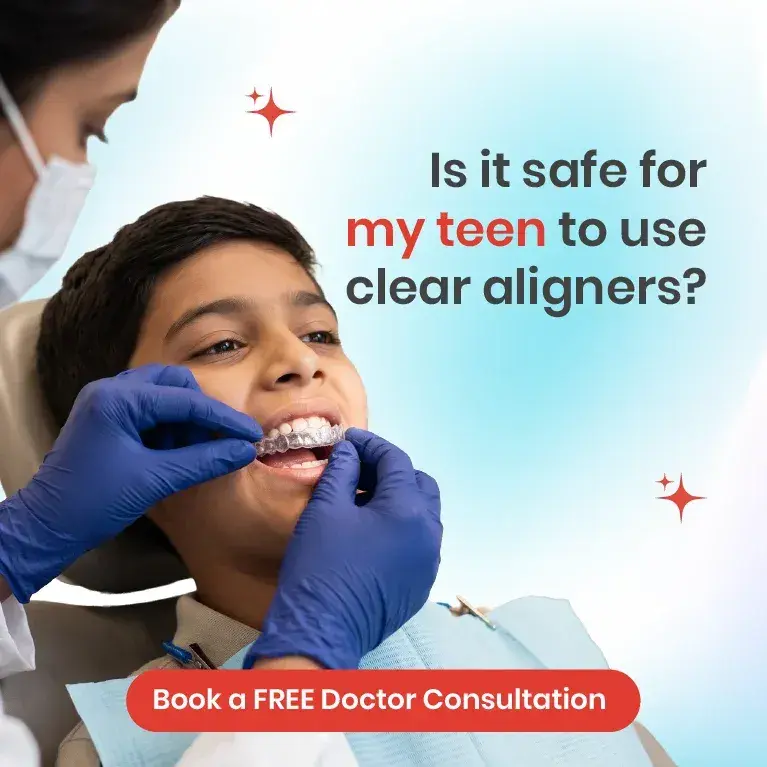
Yes, aligners are one of the safest teeth-straightening options for teens when a qualified orthodontist plans and monitors treatment.
Teens' aligners are custom-made to fit the teeth, without the brackets and wires used in traditional braces. However, good oral hygiene and consistent wear for 20 to 22 hours is essential to prevent dental problems and keep treatment on track.
When starting clear aligner treatment, your teen may experience mild tooth soreness when switching to a new tray, slight gum or tongue irritation, or a temporary lisp. These effects often improve as they adjust to the aligners.
As a parent, pay particular attention to oral hygiene, as their food particles and plaque trapped between the aligners and teeth can increase the risk of tooth decay and gum problems.
Encourage your teen to brush twice a day, floss daily, and clean their aligners as instructed. The Indian Dental Association's oral hygiene guidelines also emphasise regular brushing and cleaning between teeth.
2. How Do Clear Aligners Straighten a Teen's Teeth?
Clear aligners for teenagers work by applying gentle, controlled pressure to gradually move teeth into their planned positions. Each set of custom-made trays is designed to make specific tooth movements, helping your teen achieve a straighter smile over the course of treatment.
The process begins with a digital scan or other required dental assessments, which help the orthodontist evaluate your teen's teeth and create a personalised treatment plan.
A series of teen clear aligners is then designed to guide the teeth through small, planned movements. The number of trays and overall treatment time depend on factors such as the complexity of the alignment concerns and how consistently the aligners are worn. Your orthodontist will explain the expected timeline and monitor progress throughout treatment.
3. Are Clear Aligners More Expensive Than Braces for Teens?
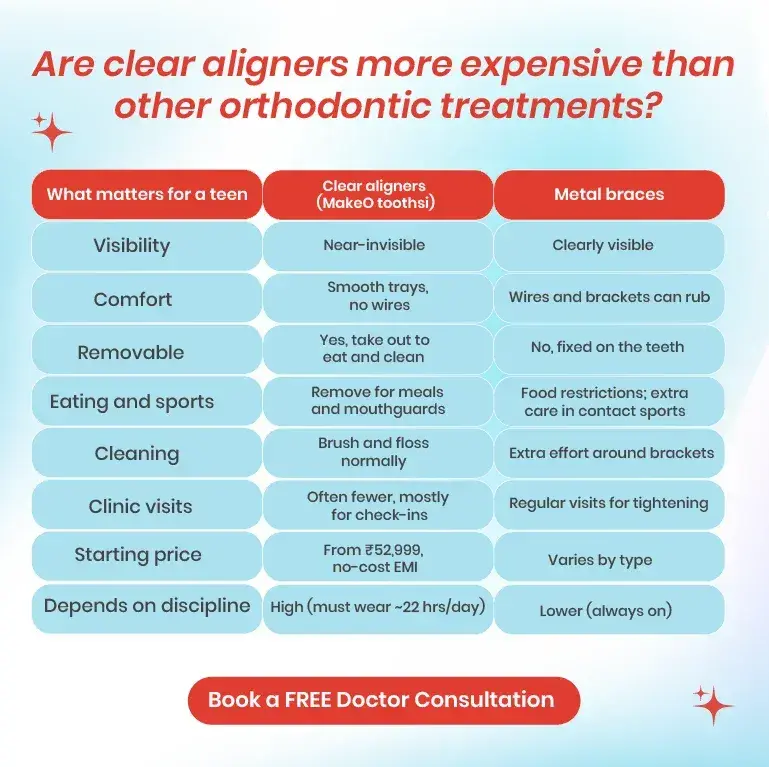
The cost of clear aligners for teens at Toothsi starts at ₹42,999 and ₹52,999 for adults, with flexible EMI options. The final price depends on the complexity of your teen's dental concerns, treatment duration, and personalised treatment plan.
While traditional braces are more suitable for certain cases, but clear aligners for teen offer a discreet, removable alternative for eligible teenagers. As a parent, consider your child's orthodontic needs, budget, and ability to follow the prescribed wear routine before choosing between the two options.
Here's how clear aligners compare with traditional braces:
Factor | Clear Aligners for Teens | Traditional Braces |
|---|---|---|
Appearance | Transparent trays that are less noticeable | Visible brackets and wires |
Removability | Can be removed | Cannot be removed |
Oral hygiene | Remove trays to brush and floss normally | Requires extra care when cleaning around brackets and wires |
Daily commitment | Must be worn for the prescribed hours each day | Remain in place without requiring daily insertion |
Cost | Starts at ₹42,999 for teens and ₹52,999 for adults with easy EMI options starting from ₹1,499/- onwards | Starts from ₹35,000 onwards for metal brace. |
As a parent, consider more than the initial price. Look at the treatment requirements, follow-up care, convenience, and your teen's ability to wear the aligners consistently. An orthodontist can help you determine whether invisible aligners for teens or traditional braces are appropriate for your child's needs.
Explore Toothsi clear aligner pricing to review available plans and payment options.
4 Clear Aligners vs Braces for Teens: Which Is Better for Your Child?
As a parent, you want your teens to have a healthy, confident smile without orthodontic treatment becoming difficult to manage alongside school, sports, and social activities. So, when comparing clear aligners vs. braces for teens, which option should you choose?
The answer depends on your teen’s dental concerns, treatment requirements, and daily habits. Clear aligners offer a discreet, removable option, while braces provide a fixed solution that works continuously.
Both can help correct crooked teeth, gaps, crowding, and bite issues when recommended for the right case. An orthodontist can assess your teen’s teeth and recommend the most suitable treatment.
Read more about between aligners vs braces
What Should Parents Consider When Choosing Between Teen Aligners and Braces?
- Comfort and convenience: Clear aligners have smooth surfaces and can be removed for meals and brushing. Braces stay fixed to the teeth and may irritate the mouth with brackets or wires, especially after adjustments.
- Daily responsibility: Aligners generally need to be worn for around 20 to 22 hours a day. Teens must remember to wear them, clean them, and store them safely when removed. Braces stay in place, making them a practical option for teens who may struggle to follow an aligner-wearing schedule.
- Eating and oral hygiene: Aligners are removed before meals, allowing teens to eat without the trays in and brush their teeth normally. With braces, some hard or sticky foods need to be avoided, and cleaning around brackets and wires requires extra care.
5. What Should You Do If Your Teen Loses or Breaks an Aligner?
If your teen loses or damages one of their clear aligners, contact the treating orthodontist or treatment team promptly for guidance. They will advise whether your teen should continue wearing the current tray, use a replacement, or move to the next set. Avoid skipping trays or changing the treatment schedule without their approval, as this may affect treatment progress.
For parents choosing clear aligners for teenagers, a simple storage routine can help prevent these situations. Encourage your teen to:
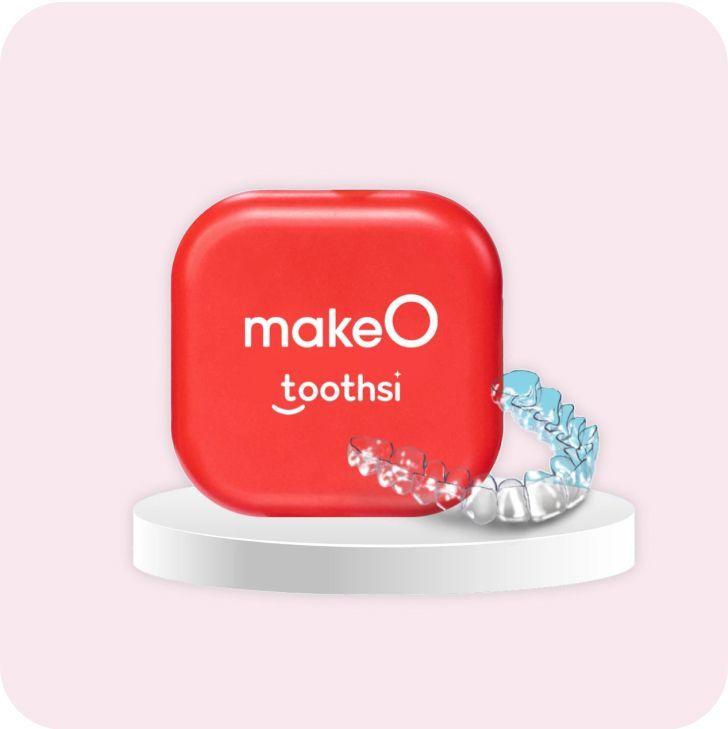
- Use the aligner case: Store invisible aligners for teens in their case whenever they remove them for meals or brushing.
- Avoid wrapping trays in tissues: They can easily be mistaken for rubbish and thrown away.
- Keep aligners away from heat: Hot water and other heat sources can warp the trays and affect their fit.
- Follow the treatment team's advice: If a tray is lost or broken, follow the recommended next steps rather than trying to fix it yourself.
Unlike fixed braces, teen clear aligners need to be removed and stored carefully throughout the day. Building this habit early can help reduce the risk of lost trays and unnecessary treatment interruptions.
Read More: Mistakes to Avoid with Aligners
What Parents Should Know Before Their Teen Starts Aligners
Before choosing clear aligners for teens, parents should understand whether their child is ready for treatment, how to maintain consistent wear, and why professional orthodontic supervision matters. The right approach depends on your teen's dental development, orthodontic needs, and ability to follow the prescribed treatment routine.
Is There a Right Age to Start Clear Aligners?
No single age applies to every teenager for starting clear aligner treatment. The right time depends on dental development, the alignment concerns being treated, and an orthodontist's assessment. It also depends on when teens' permanent teeth have developed fully.
How Can Parents Help Teens Stay Consistent?
Clear aligners work as planned only when teenagers wear them for the prescribed number of hours each day. Since they can be removed for meals and oral hygiene, parents can help teens build simple habits that keep treatment on track.
Here are three practical ways to support your teen:
- Set daily reminders: Encourage your teen to put their aligners back in after meals and brushing to avoid unnecessarily long breaks.
- Build a cleaning and storage routine: Make aligner cleaning part of their daily oral hygiene habits and encourage them to use a protective case whenever the trays are removed.
- Keep up with follow-ups: Ensure your teen attends scheduled appointments or completes prescribed remote check-ins. Contact the treatment team if an aligner feels unusual, gets damaged, or is lost.
These small habits can make clear aligner treatment easier to manage alongside school, sports, and social activities.
Why Does Orthodontist Supervision Matter?
Orthodontist supervision helps ensure that clear aligner treatment is appropriate for your teen's dental needs and progresses according to a personalised plan. Before treatment begins, the orthodontist evaluates the teeth and bite, reviews the required diagnostic information, and determines the appropriate course of action.
At Toothsi, the process includes a scan or assessment, orthodontist review, a personalised treatment plan, and progress monitoring through prescribed visits or remote check-ins, as applicable. This allows the treatment team to review progress and guide your teen through the process.
As a parent, make sure you understand who will assess your teen, how the treatment plan will be developed, and how progress will be monitored. Whether you choose clear aligners or braces, professional guidance is essential to making an informed decision about your teenager's orthodontic care.
Explore Toothsi clear aligners for teens and book a FREE consultation
Oral Hygiene Tips for Teens Wearing Clear Aligners
Good oral hygiene is essential when teens use clear aligners. Food particles and plaque can become trapped between the aligners and teeth, increasing the risk of cavities and gum problems if oral care is neglected.
Here are some simple habits teenagers should follow during aligner treatment:
- Brush before wearing aligners: Brush your teeth after meals before putting your trays back in to minimise trapped food particles.
- Clean your aligners regularly: Follow your orthodontist’s instructions to clean the trays and prevent plaque and odour build-up.
- Drink water while wearing aligners: Remove your aligners for meals and avoid sugary or acidic drinks while wearing them.
- Floss daily: Clean between your teeth to remove plaque and food debris that brushing may miss.
- Follow the prescribed wear schedule: Wear your aligners for the recommended number of hours each day and remove them only as instructed.
- Attend regular dental reviews: Keep up with scheduled appointments so your orthodontist can monitor your progress and address any concerns.
Following these habits can help teenagers maintain healthy teeth and gums throughout treatment.