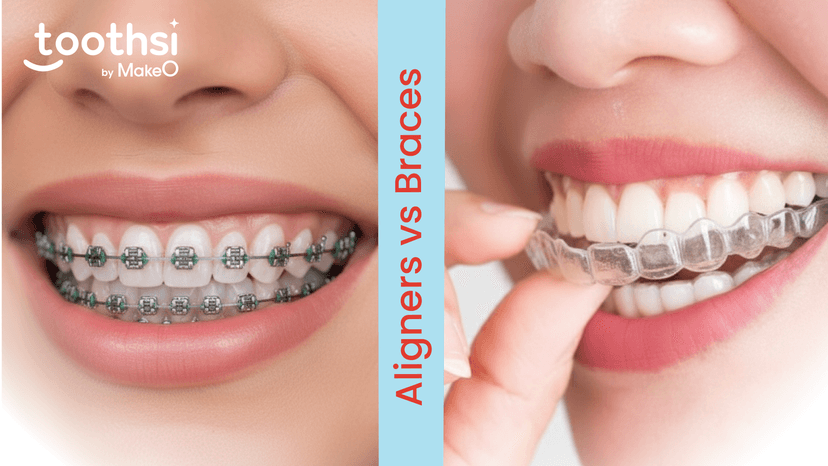


Aligners vs Braces – Which Works Faster for Common Teeth Problems?
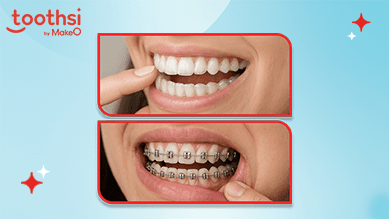
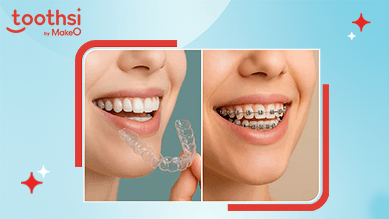
When it comes to achieving a straight, confident smile, modern orthodontics gives you two highly effective options: traditional braces and clear Aligners.

MDS - Orthodontics, 20+ years of experience. Co-Founder of MakeO Toothsi, consultant lingual Orthodontist, inventor of India's 1st CAD/CAM lingual bracket system, and aligners specialist.
Updated on December 21, 2025

With expert insights and a clear comparison of Braces or Aligners, you’ll get a complete picture of how teeth Aligners vs Braces perform in real treatment scenarios, making your decision easier and more informed.
When you are comparing between Aligners and Braces, the first thing you need to understand between these two is which one straightens the teeth faster? The truth is, both can deliver great results, but the treatment speed depends on the specific dental issue you’re trying to fix.
See the full aligners vs braces comparison — cost, comfort and results
Aligner VS Braces For Different Teeth Conditions Explained
Below is a clear, easy-to-understand comparison of Dental Braces vs Clear Aligners for different orthodontic concerns.
Crowding Teeth
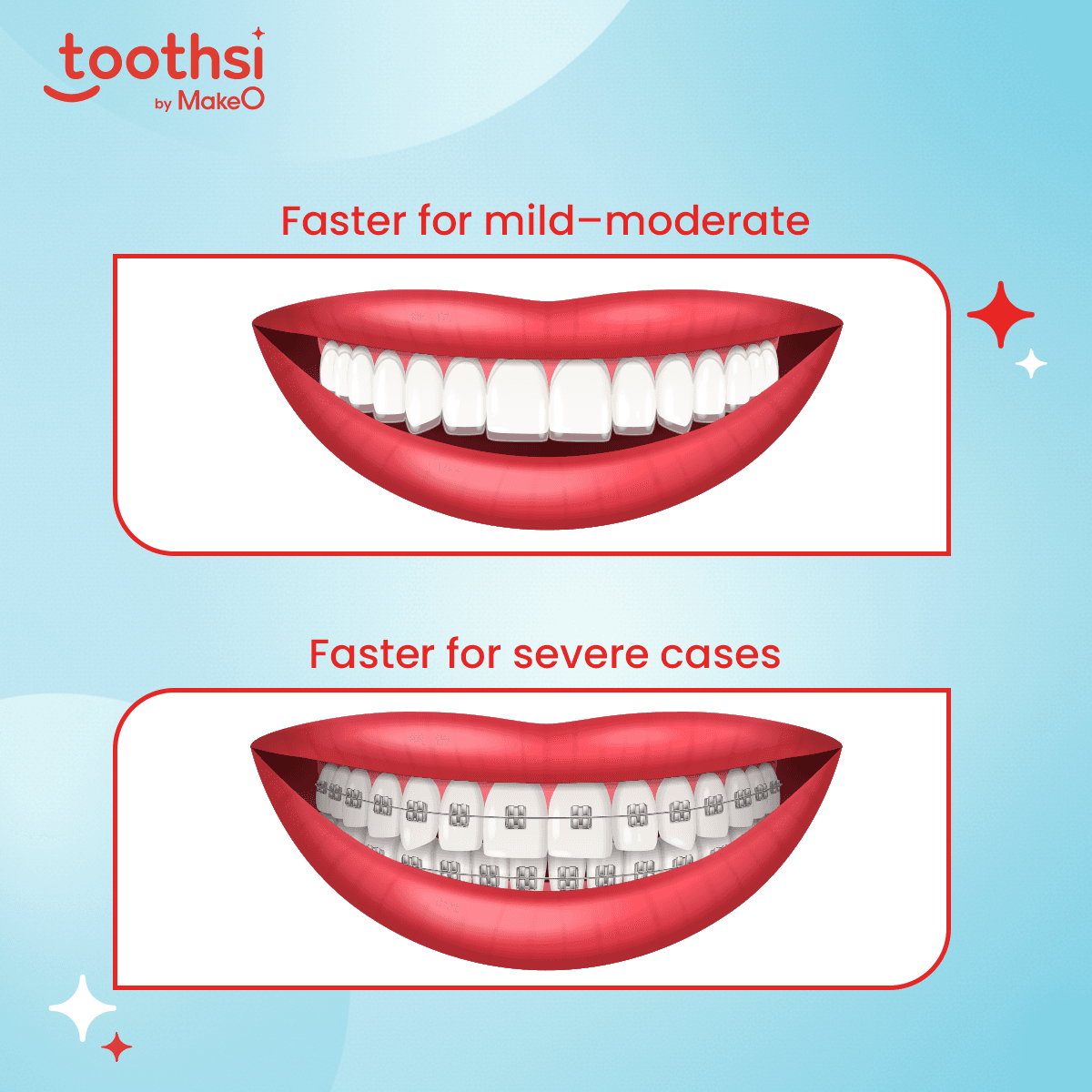
Crowded Teeth are one of the most common orthodontic issues. Crowded teeth are caused because of jaw size and tooth placement. Here’s how Aligners vs braces deal with the crowding teeth issue.
Aligners: For mild, moderate to complex crowding, Clear Aligners are proven to work faster because they use controlled and targeted force to gradually create a space that helps in making the teeth straight.
Braces: For severe or complex crowding issues where teeth need major rotation or root-level movement, Teeth Braces tend to work faster due to stronger, continuous force.
Gaps (Spacing)
Spacing issues can vary from small cosmetic gaps to wide spaces between teeth.
Aligners: Clear Aligners are designed to close all types of gaps be it small or big gaps, because of their customized placement, as they are designed with proper digital treatment planning.
Braces: If the gaps are significantly large or there are multiple spacing issues together, then Braces may deliver faster and stronger correction.
Overbite

Overbites involve the upper teeth overlapping the lower teeth.
Aligners: When it comes to issues of overbites, Aligners are great for correcting mild, moderate and complex overbites and often give quicker results when bite correction is not too complex.
Braces: For deep overbites where the jaws need repositioning or significant vertical adjustments, braces work faster and more effectively.
Underbite
Underbites occur when the lower teeth sit ahead of the upper teeth.
Aligners: Teeth Aligners work well and efficiently for all types of mild, moderate and complex dental underbites.
Braces: For moderate to severe underbites, Teeth Clips provide faster correction because they can guide both teeth and jaw alignment more powerfully.
Open Bite
An open bite means the upper and lower teeth don’t touch when the mouth is closed.
Aligners: Clear Aligners can fix all types of open bites faster since they can apply uniform upward or downward force on teeth.
Braces: Under complex open bite issues, especially those involving vertical tooth movement, braces respond faster.


When Are Aligners Faster?
When comparing teeth Aligners vs Braces, Teeth Aligners usually offer quicker, faster, and reliable treatment when:
- Your case is mild, moderate or complex
- Only minor crowding or rotation needs correction
- You want to close small gaps
- You can wear Aligners properly for 20 - 22 hours a day
- When you are looking for comfort over adjustment
- When you want to enjoy your daily routine without any discomfort
As Braces use metal brackets and wires, they can put pressure, which causes discomfort and pain which making them ideal for more complex orthodontic cases.
Clear Aligners from Toothsi use 3D planning and consistent, gentle pressure to shift teeth efficiently and comfortably. With good compliance, they can deliver visible results sooner.
Braces vs Aligners – Factors That Slow Down or Speed Up Treatment
When comparing Aligners vs Braces, it is necessary to understand that the speed of treatment for Aligners vs Braces depends upon many factors, such as lifestyle habits, maintenance routine, and how well you stick to the designed treatment plan.
Here’s how each factor influences your slow down or speed up of treatment.
1. Lifestyle, Habits & Daily Routine
Your everyday habits can make a big difference in how fast your treatment can progress and help you achieve a brighter confident smile.
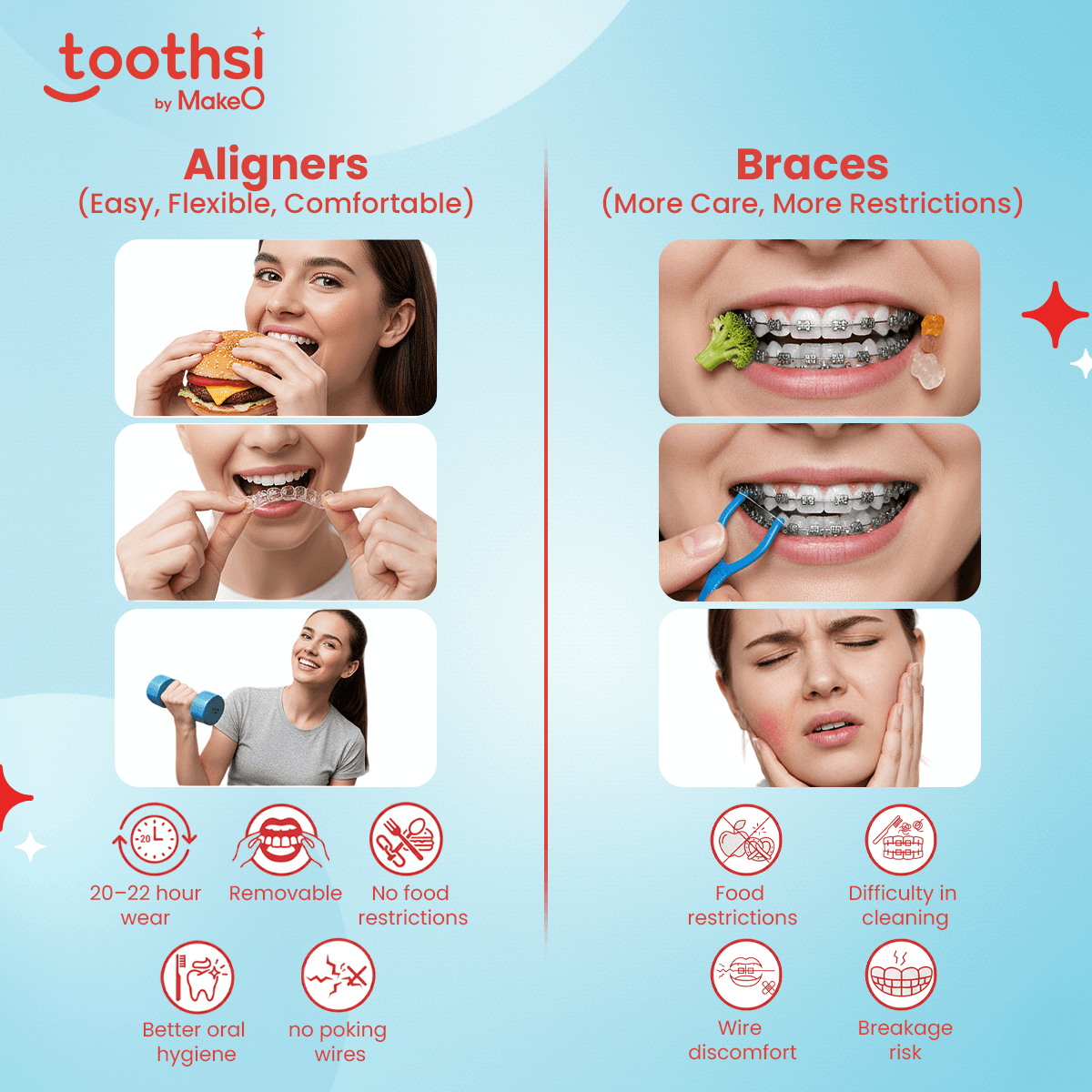
Clear Aligners are designed with modern needs - they fit seamlessly into lifestyles. Aligners are removable anytime, anywhere, which means you can eat anything without restrictions, plus you can continue to maintain better oral hygiene. There is no pain, no discomfort of wires, and with so much comfort and convenience, you can use them for 20–22 hours a day, which directly speeds up results.
Whereas for braces, you need to have extra care. There are food restrictions (no hard, sticky, chewy foods) with a higher chance of breakage. With braces, maintaining oral hygiene can be difficult, and discomfort from wires and brackets can slow consistency in chewing and cleaning.
All these factors can indirectly slow down treatment if not followed carefully.
2. Diet & Maintenance
Your diet and oral hygiene routine can either support or delay your orthodontic progress.
As Aligners are removable, they allow you to enjoy a normal diet. You simply take them off, eat, clean your teeth, and pop them back in. This reduces plaque buildup, decalcification and also reduces the chances of dental issues. The cleaner your teeth stay, the smoother and faster your alignment journey is.
Braces demand careful eating habits. There are certain foods that can damage brackets or wires and cause setbacks, and if not cleaned thoroughly around braces, can also lead to cavities, gum problems, and other dental issues.
3. Clinic Visits vs Remote Monitoring
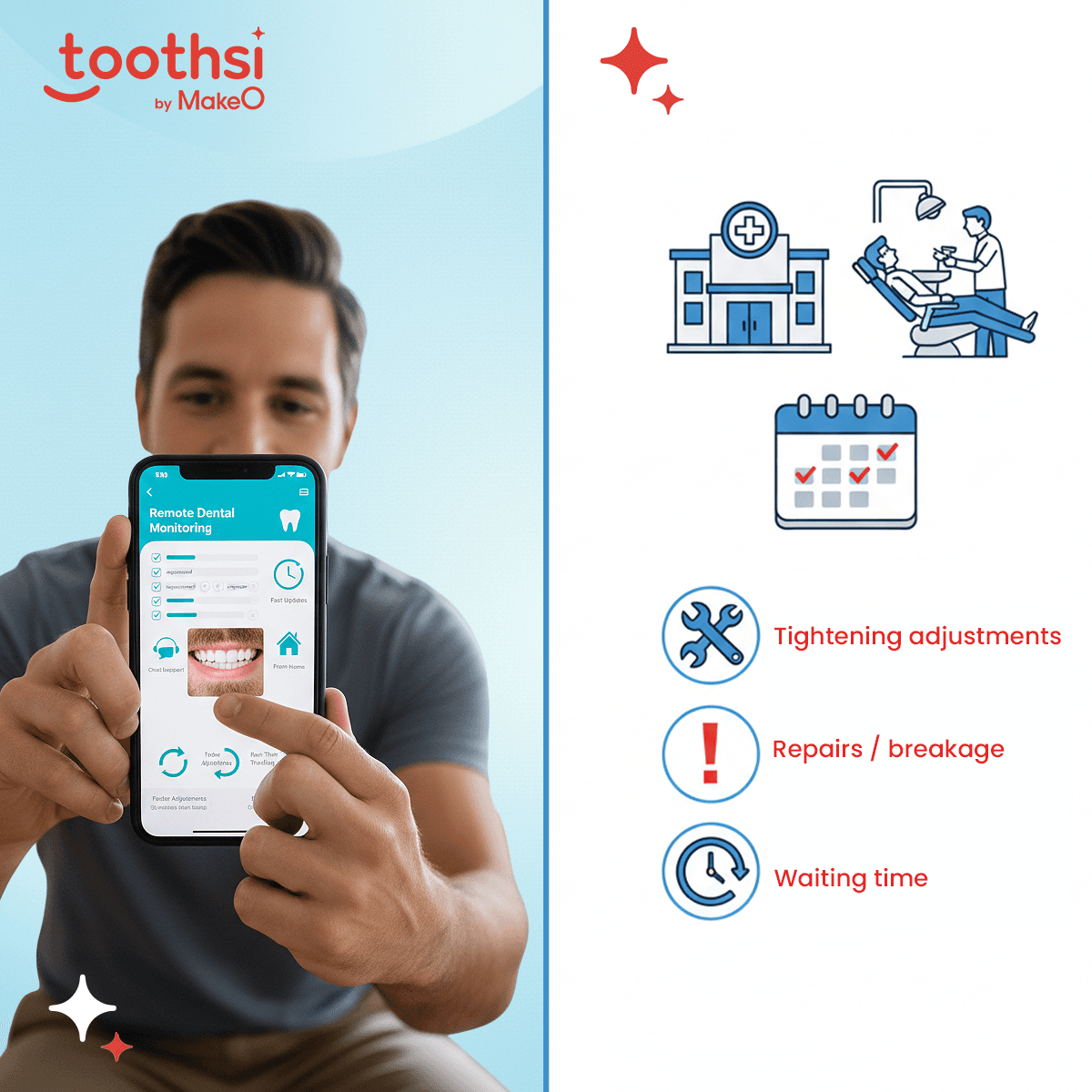
This is one of the biggest differences when comparing Braces vs Aligners.
Our aligner treatment plan at Toothsi comes with remote monitoring. Which means now you can track your progress from home, upload photos, and receive guidance without constant clinic visits.
This means:
- Fewer appointments
- No waiting time
- Faster adjustments
- Quick support anytime
Remote supervision helps you stay consistent, and consistency is the key to faster results.
Whereas Braces require regular in-clinic visits for tightening, adjustments, and repairs. Missed appointments or delays can slow down your treatment progress significantly.


Toothsi Aligner Tracking Advantage
One of the biggest advantages of choosing Toothsi Aligners is because of its smart tracking system. Toothsi's digital monitoring ensures:
- Real-time tracking of your teeth movement
- Timely reminders to switch aligner sets
- Expert supervision throughout
- Faster detection of issues
- More accurate and faster results compared to traditional processes
This tech-driven approach enhances compliance and eliminates delays that usually happen with braces.
In short, when comparing Aligners vs Braces, Aligners offer a lifestyle-friendly, low-maintenance, tech-enabled treatment path that keeps your progress on track. With features like remote monitoring and smart tracking, Toothsi Aligners make the entire journey faster, smoother, and much more convenient than traditional braces.
Your Dream Smile is One Click Away — Get Started With Toothsi!
Braces vs Aligners – Choosing the Faster Option for Your Case
When comparing Aligners vs Braces, the faster option depends on your age and the complexity of your dental issue.
Here’s a quick breakdown to help you decide:

Fastest Option for Teens
Teens with mild, moderate to complex alignment issues can often notice quicker results with clear Aligners, especially when they wear them consistently for 20 - 22 hours a day. Aligners also fit easily into daily routines, giving them an edge over braces.
Fastest Option for Adults
For adults balancing work and lifestyle, choosing between teeth Aligners vs Braces can be difficult, but Aligners usually offer faster and more comfortable correction comes with Aligners. With fewer clinic visits and remote monitoring (like with Toothsi), Aligners keep treatment moving without disruption.
Fastest Option by Case Type
Mild cases: Aligners are usually the fastest because they deliver precise, controlled movement.
Moderate cases: Aligners often remain quicker, provided the user is consistent.
Complex cases: Braces may be faster when major root movement, jaw correction, or heavy force is required. Toothsi aligners can solve complex cases as well.
In most mild, moderate to complex scenarios, Aligners outperform braces in both speed and convenience, making them the preferred choice for a smooth, faster smile transformation.
Straighten Your Smile, Not Your Schedule - Try Toothsi Aligners!