

What is meant by Early Tooth Enamel Damage?

MDS - Orthodontics, an Orthodontist and Implantologist with 30 years of experience. He practices in Andheri West, Mumbai.
Updated on April 24, 2026


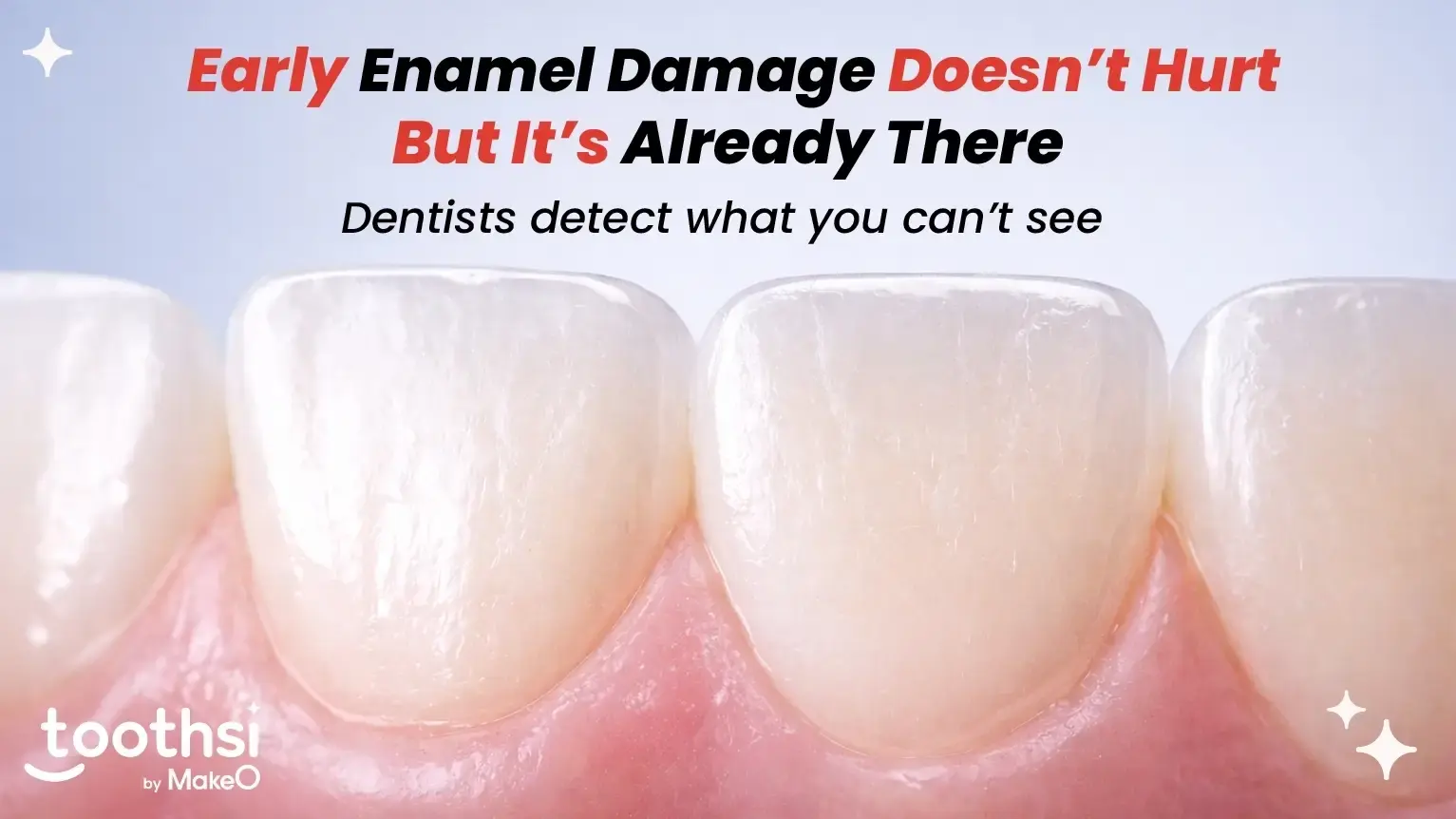
When dentists talk about early tooth enamel damage, they’re not referring to obvious issues like chipped teeth or visible cracks. Instead, they mean subtle, gradual changes that often go unnoticed by patients.
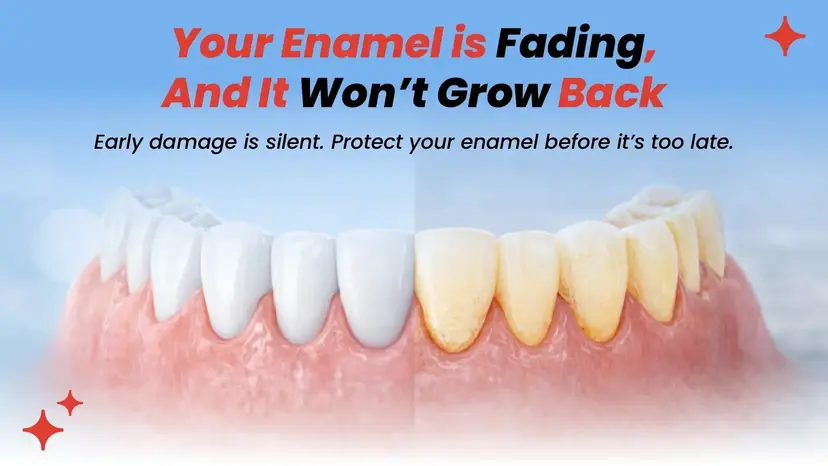
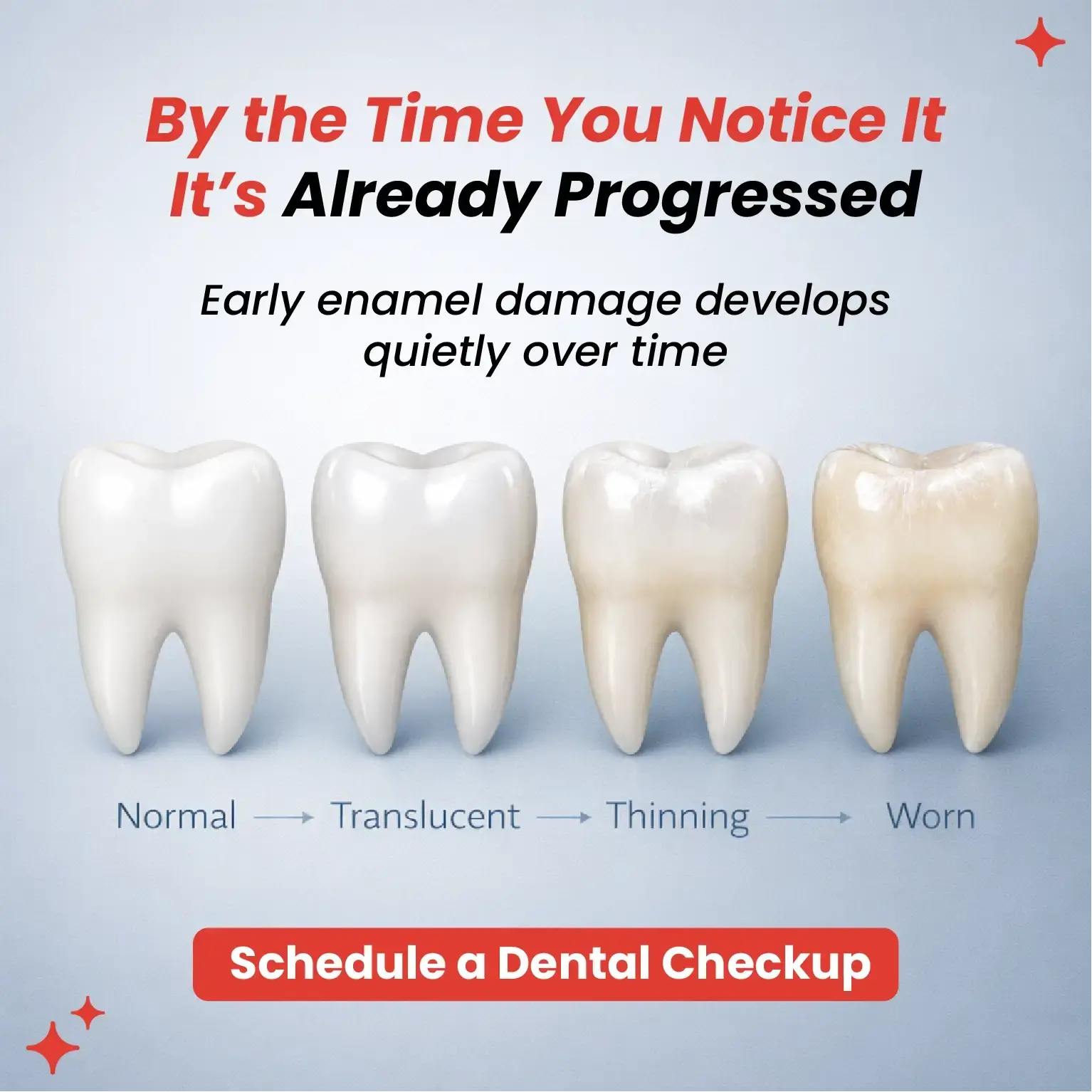
Tooth enamel is the outermost layer of your teeth, which is also the hardest substance in the human body, but once it’s damaged, it cannot regenerate. What makes early enamel damage concerning is that it doesn’t appear suddenly; it develops quietly over time through small, almost invisible changes.
This is why understanding early tooth enamel damage is so important. Recognizing these subtle changes before symptoms appear allows for timely intervention, helping prevent more serious dental issues in the future.
So what are you waiting for? Visit a dental clinic near you and improve your teeth's health!
What are First Subtle Signs Dentists Notice?

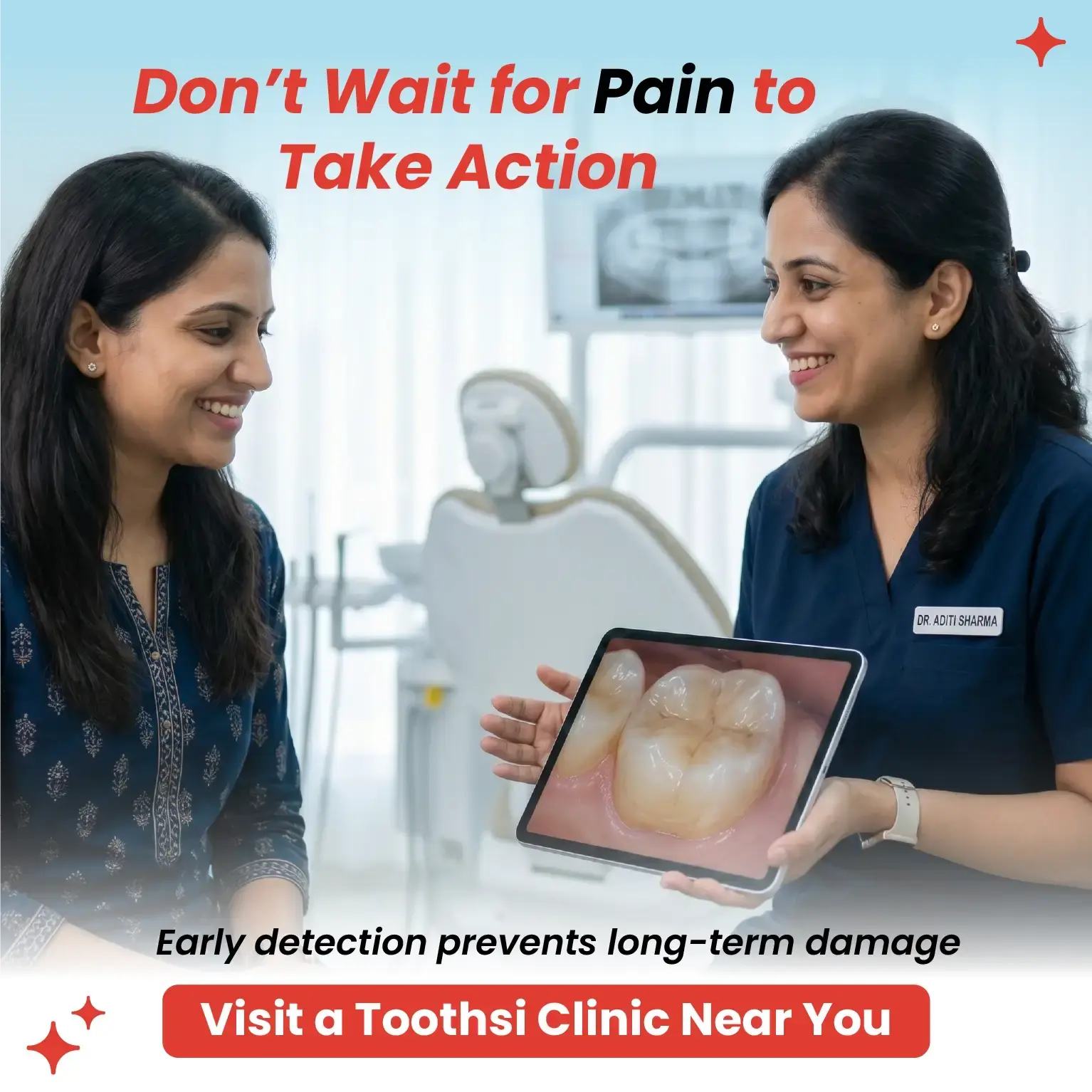
During routine dental examinations, early tooth enamel damage rarely causes pain or visible breakage. It appears as a set of quiet, clinical signals, ones that only a trained eye catches during a thorough dental examination, long before a patient feels anything.
- Tooth Enamel thinning along the gumline from overbrushing or erosion is a subtle but significant finding
- Left unmonitored, it progresses to expose dentine, one of the most direct causes of tooth sensitivity, which patients eventually feel
The pattern across all these findings is the same; they are all visible before symptoms develop. Regular dental examinations every six months allow dentists to catch early tooth enamel damage at the stage where it still matters most.
Dr. Manjul Jain, MDS (Orthodontics), senior orthodontist at Toothsi, says that early tooth enamel damage typically presents as a pattern of quiet, gradual changes rather than a single dramatic event. For early intervention and treatment, it is always better to get professional help.
How Dental Checkups Help Catch Tooth Enamel Issues Early?
During a routine dental examination, an orthodontist checks the teeth for more than just searching for cavities. Here’s what dentists look for during dental examinations:
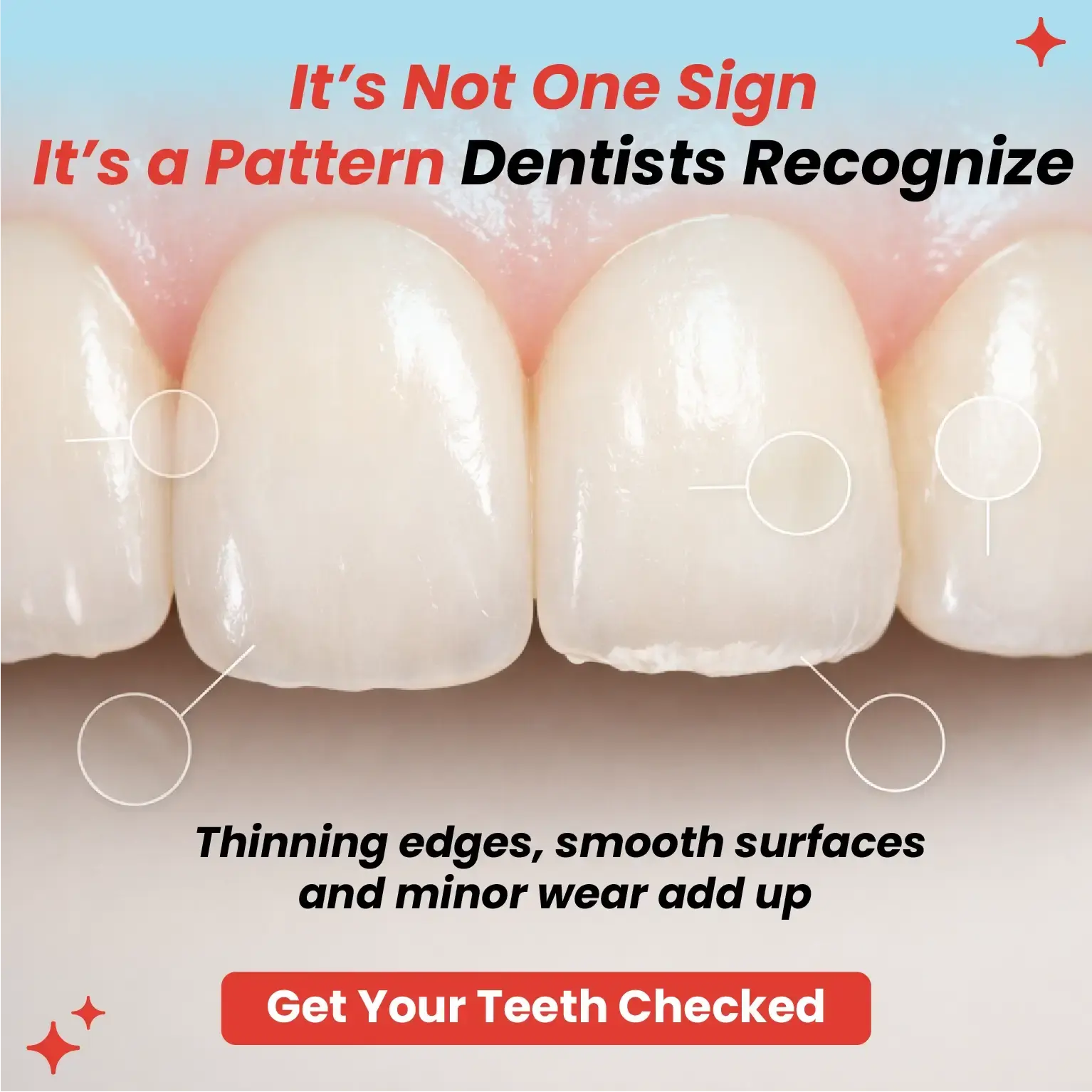
- Translucency along biting edges, as this is one of the first visible Tooth Enamel erosion signs, where front teeth begin to appear see-through at the tips.
- Surface texture changes because healthy enamel has a fine natural texture; Tooth Enamel thinning causes surfaces to appear unusually smooth or flat.

- Chalky teeth appearance: there is a whitish, opaque look on the tooth surface that signals weak Tooth Enamel beneath.
- Cupping or concavity on molars: small dips are forming on back teeth, commonly linked to acid-related Tooth Enamel wear patterns.
- A glassy sheen on enamel is an early clinical indicator that surface erosion has begun.
- Patient history review where the diet habits, acid reflux, medications, and grinding patterns are all cross-referenced with what is visually observed.
Why the Frequency of Checkups Directly Affects Enamel Health?

- Enamel does not regenerate, so once lost, it cannot grow back, making early identification the only meaningful window.
- Every six months is the recommended interval because that is approximately how long it takes for early tooth enamel damage to shift from a mild observation to an established wear pattern.
- Patients with longer gaps between visits consistently present with more advanced tooth enamel erosion signs.
- Weak tooth enamel identified at a routine six-month exam is a different picture entirely compared to the same enamel reviewed twelve or eighteen months later.
- Tooth sensitivity causes often only appear after enamel has already thinned significantly, meaning symptoms arrive too late to represent early detection.
Why Identifying Tooth Enamel Damage Early Matters More?
Yes, identifying enamel damage before treatment becomes necessary, as early detection is where effective prevention begins.
Tooth enamel is unique, and being the hardest substance in the body, it cannot regenerate once lost. This makes early identification critical, as any damage left unnoticed can progress into irreversible wear.
Understanding this shifts the focus from fixing problems to preventing them, highlighting the importance of regular checkups and timely intervention to protect long-term dental health.
What Dentists See Before Patients Feel Anything?
During dental visits, patients often sit down feeling completely fine, with no pain, no sensitivity, and nothing alarming, but a careful visual examination regularly reveals early tooth enamel damage that has already begun quietly progressing.
Dentists often observe early tooth enamel wear in patients who grind their teeth, frequently consume acidic foods, or have a history of acid reflux, long before those patients connect the habit to their dental health.
The early signs of tooth enamel erosion I look for include slight translucency along the biting edges, surface smoothing, or a faint glassy sheen that healthy enamel simply doesn't have.
These signs don't cause pain yet. That's precisely what makes them so important to catch.
Why Patient History Changes Everything?
Patient's history plays a crucial role in identifying and managing tooth enamel damage. When clinical observations are combined with the insights of a patient’s diet, medications, and lifestyle habits, weak tooth enamel becomes easier to identify, track, and monitor over time.
This holistic approach allows dentists to move beyond surface-level symptoms and understand the root causes of enamel wear. It also highlights why regular dental checkups are essential; they are not just a routine but a key step in enabling early detection and timely intervention.
Early Identification Is Key
By the time enamel damage becomes something a patient notices at home, sensitivity, discoloration, or visible wear, it has usually moved well past its earliest stage. Early tooth enamel damage rarely announces itself. It compounds quietly, and the clinical chair is often the only place it gets caught in time.
Find your Nearest Toothsi Dental Clinic, Walk in & Leave Smiling!
Key Takeaways:
- Early tooth enamel damage is gradual and often symptomless, making it easy to miss.
- Professional dental examinations can help catch damage before it worsens.
- Tooth sensitivity usually appears only after significant enamel thinning.
- Factors such as an acidic diet, teeth grinding, and poor habits contribute to enamel damage.
- Patient history plays a key role in identifying and tracking weak tooth enamel.
- Early identification helps prevent advanced damage and reduces the need for complex treatments.
- Preventive care and timely action are more effective than waiting for symptoms to appear.