

Teeth Whitening vs Teeth Scaling: Which One Is Right for You

MDS - Orthodontics, the Co-Founder & CEO of MakeO Toothsi. A certified lingual orthodontist with 15 years overall experience.
Updated on May 15, 2026

Ever wondered how something as simple as tooth color can impact how confident you feel while speaking or smiling? Research published in Head & Face Medicine (2025) highlights that tooth appearance, especially the color, plays a significant role in self-confidence and social perception, making it one of the most common concerns among dental patients.

This growing focus on smile aesthetics is precisely why treatments like teeth whitening and teeth scaling are gaining attention. But here’s where most people get confused: are they the same? And which one do you actually need?
While both procedures can improve your smile, they serve very different purposes. Choosing the right treatment isn’t just about appearance; it’s about understanding what your teeth actually need. In this guide, we break down the differences between teeth whitening and teeth scaling, how they work, and when to choose each so that you can make an informed decision backed by expert insights.
Take the first step towards healthy teeth today, or visit the nearest dental clinic!
What is Teeth Whitening?
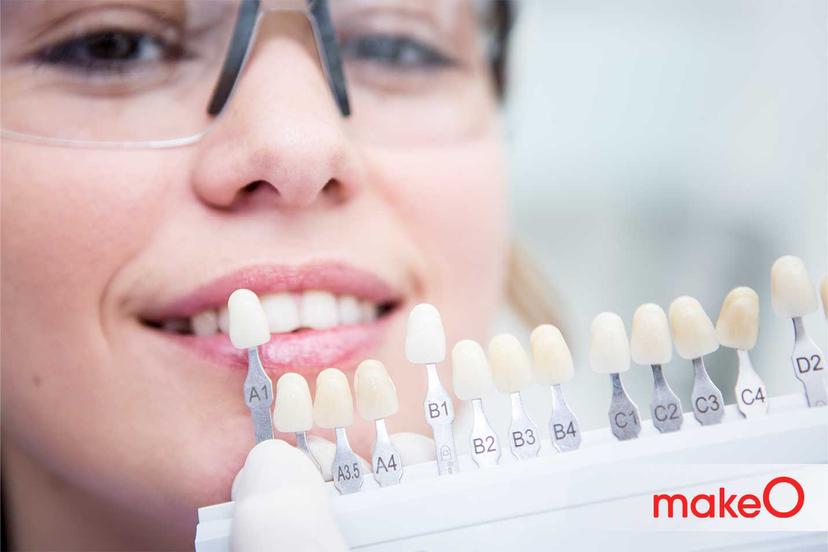
Teeth whitening is one of the most popular cosmetic dental procedures, designed to enhance the appearance of your smile by making your natural teeth look brighter and white.
What is Teeth Scaling?
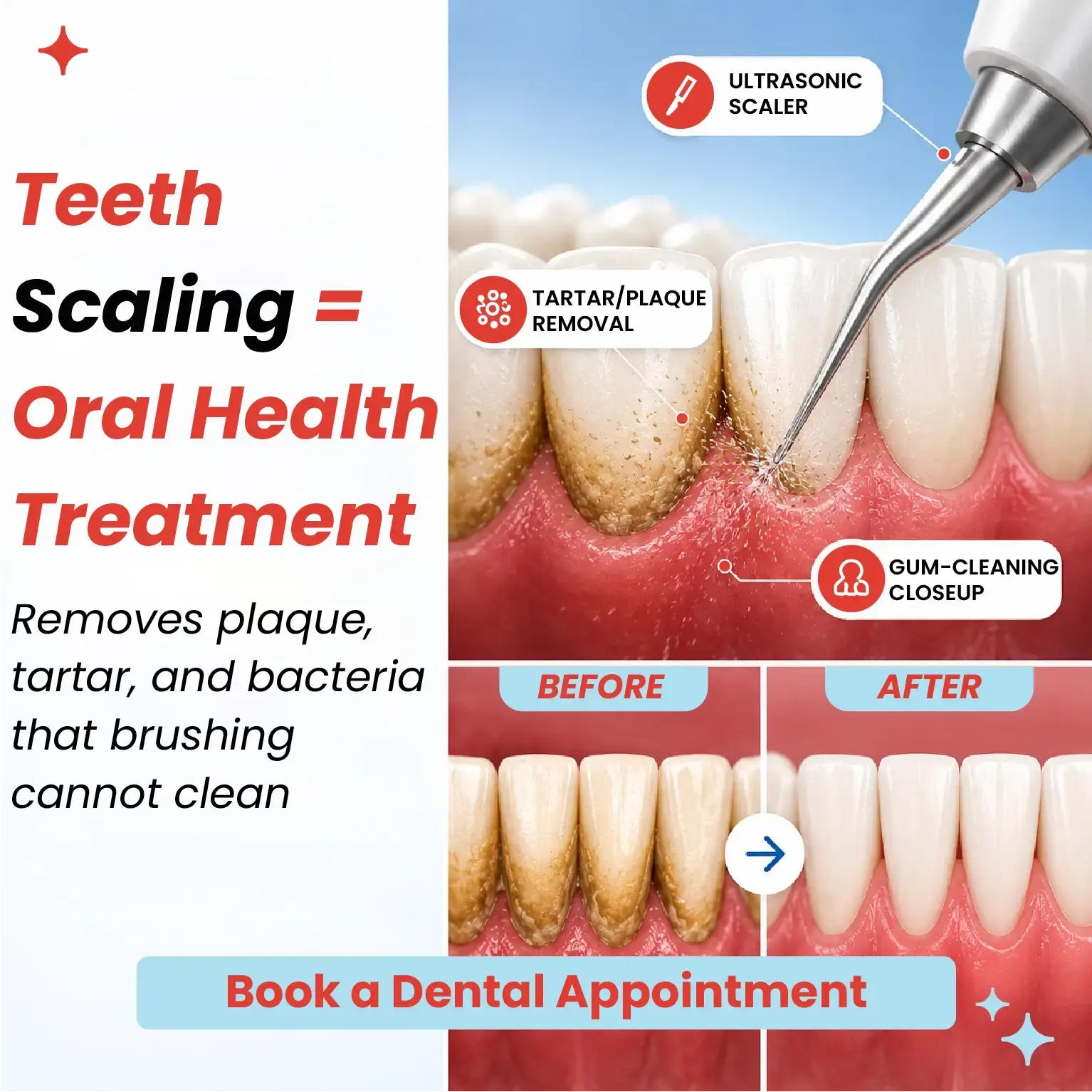
Teeth scaling is a professional dental procedure that removes plaque, tartar, and bacteria from your teeth in areas where regular brushing simply cannot reach.
Over time, the sticky bacteria on your teeth (called plaque) harden into tartar. Once tartar builds up, you cannot remove it at home, no matter how well you brush or floss. If left untreated, it can cause gum swelling, bad breath, and even serious gum disease.
What is the Difference Between Teeth Whitening and Teeth Scaling?
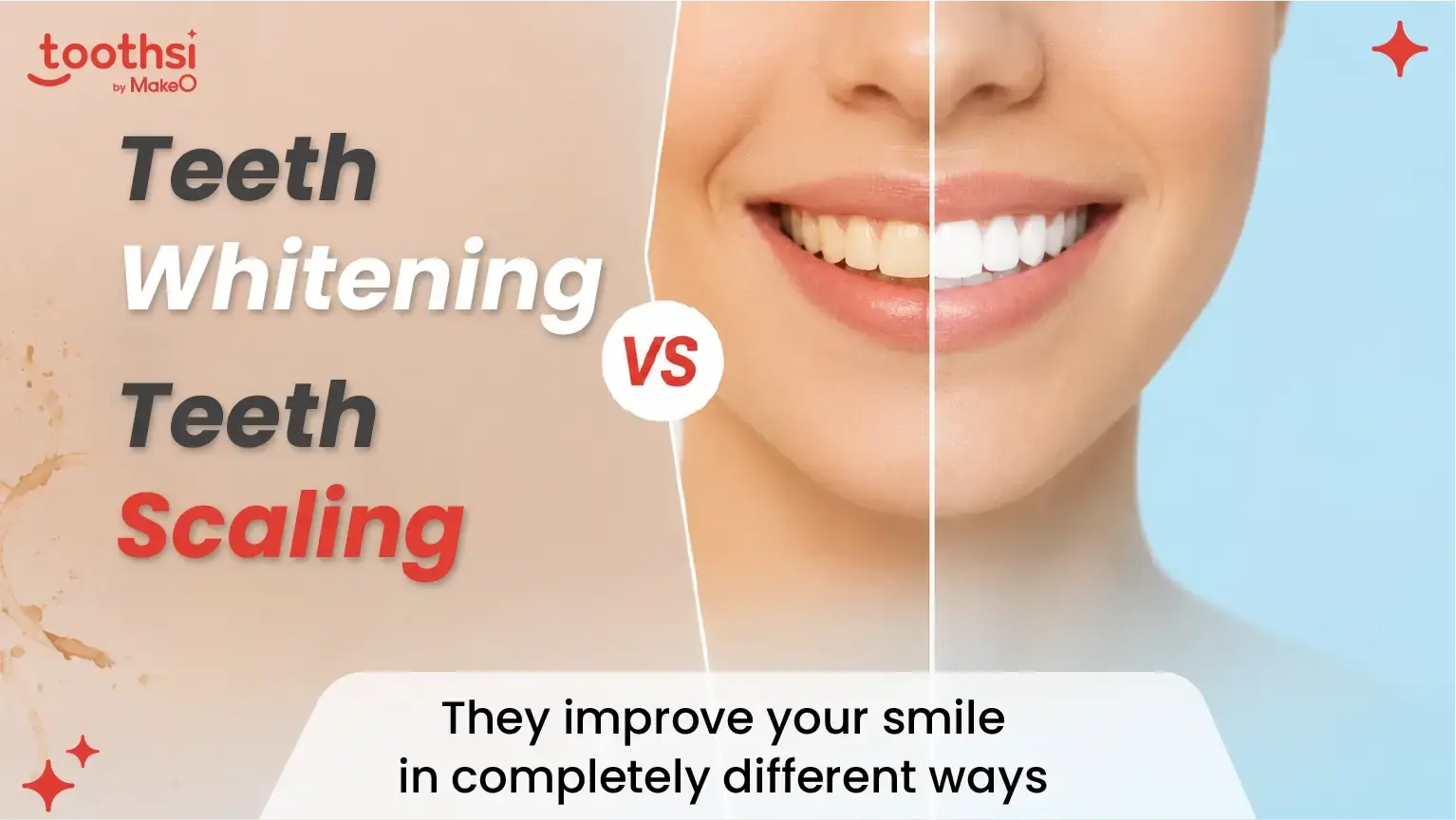
Understanding the difference between teeth whitening and teeth scaling is essential for choosing the right treatment for your needs. While both improve your smile, they serve very different purposes: one is cosmetic, and the other focuses on oral health.
Factor | Teeth Whitening | Teeth Scaling |
|---|---|---|
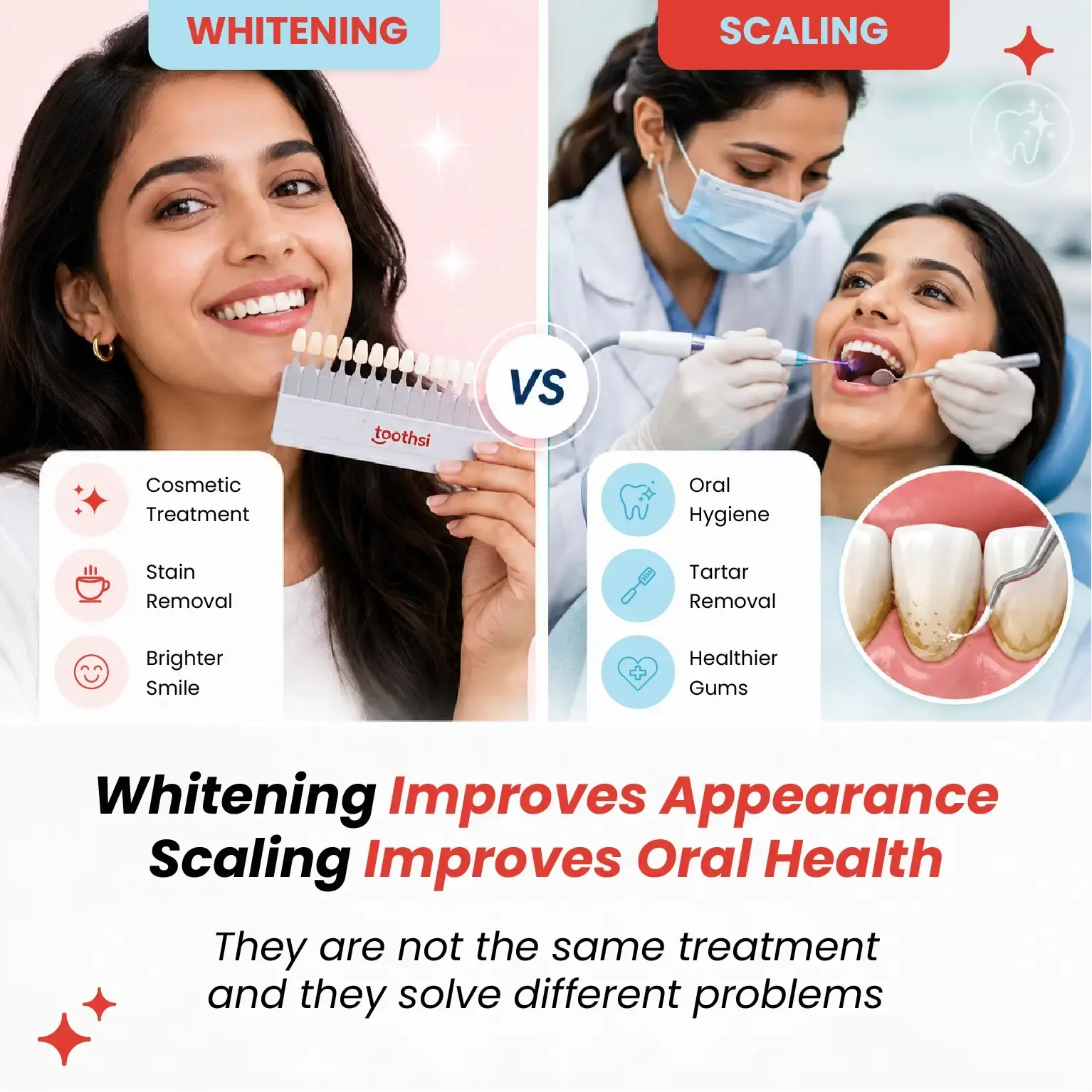
Purpose | It is a cosmetic procedure that enhances tooth color | It is a dental procedure to maintain overall oral health |
Focus | Remove stains and discoloration from enamel | Removes plaques, tartar, and bacteria from teeth and below the gumline |
Results | Whiter, brighter teeth, healthy teeth | Cleaner teeth with healthy gums |
Frequency | Occasionally, every 3 to 6 months | Recommended every 6 months for good oral hygiene |
Cost | In-office teeth whitening costs start at ₹ 8,000 and may exceed ₹ 25,000. This may vary depending on the clinic's location and the dental concerns | Starts from ₹600 onwards. Depending on the clinic's location and the dental concerns, this may vary |
Factors Affecting Cost | Type of whitening (in-office or at-home), number of sessions, and dentist expertise | Severity of tartar buildup, clinic location, and technology used |
Side Effects | Possible side effects of teeth whitening include tooth sensitivity, gum irritation, enamel damage, and uneven color. Contact your orthodontist if you experience discomfort. | Tooth sensitivity, gum soreness or minor bleeding, small gaps, and mild jaw discomfort can follow scaling. Consult an orthodontist for assessment and care. |
Benefits | Removes stains from tea, coffee, and aging to brighten your smile; professional whitening lightens teeth by several shades and supports oral health. | Removes plaque and tartar that cause gum disease, clears hard-to-reach areas, kills trapped bacteria, and freshens breath. |
How Do Teeth Whitening & Teeth Scaling Work?
Both teeth whitening and teeth scaling are designed to improve the smile, but they work in entirely different ways. One focuses on appearance, while the other focuses on oral health.
How Does Teeth Whitening Work?
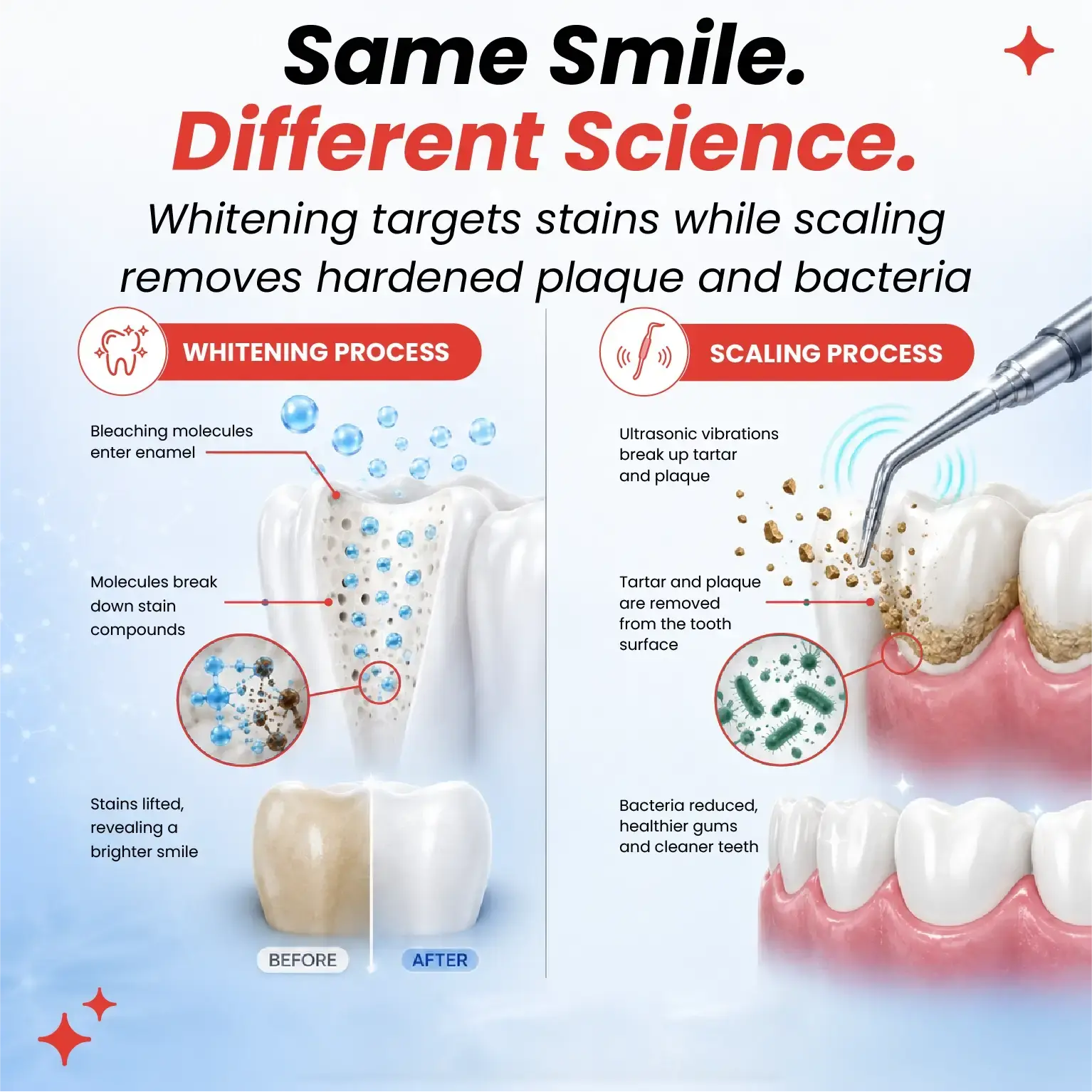
Teeth whitening uses clinically approved bleaching agents, such as hydrogen peroxide or carbamide peroxide, to safely lighten the natural color of your teeth. These active ingredients penetrate the enamel (the outer layer) and trigger an oxidation process that breaks down stain molecules from coffee, tea, smoking, and aging.
How Does Teeth Scaling Work?
Dentists use ultrasonic scalers that create high-frequency vibrations to break apart tartar deposits. These vibrations, combined with a stream of water, help wash away debris and bacteria efficiently. In certain cases, manual tools are used for precise cleaning.
Can You Do Teeth Whitening Without Scaling?
No, you cannot do teeth whitening before teeth scaling. Dentists often recommend teeth scaling first, for good reason; both treatments serve different purposes, and skipping scaling can actually reduce the effectiveness of whitening.
Why Do Dentists Recommend Teeth Scaling First?
Teeth scaling helps remove plaque, tartar, and bacteria from the surfaces of the teeth and below the gumline, where regular brushing cannot fully clean. If you leave these deposits untreated, they can create a barrier that prevents whitening agents from penetrating the enamel evenly.
Teeth whitening works best on a clean surface, as patients who undergo teeth scaling before whitening tend to see more uniform and noticeable results, as the bleaching agents can act directly on the enamel without obstruction.
You can choose teeth whitening without scaling, but for the safest and most effective outcome, dental experts strongly recommend scaling first.
Who Needs Which Treatment?
Deciding between teeth scaling and teeth whitening depends on your specific dental concerns.
You may need teeth scaling if:
- It’s been over 6 months since your last dental check-up
- Your gums bleed while brushing
- You notice visible plaque or tartar buildup
- You’re experiencing persistent bad breath
You may need teeth whitening if:
- Your teeth look yellow, dull, or stained even after cleaning
- Discoloration is caused by diet, smoking, or aging
- You have deeper stains from medications or past trauma
- You want a brighter smile for an event or to boost confidence
Tips to Maintain: Teeth Whitening and Teeth Scaling Results

Once you have completed your teeth scaling and teeth whitening treatment, the next important step is to maintain the results intact by following simple habits such as,
- Brush twice daily: Use a soft-bristled toothbrush and fluoride toothpaste to keep plaque from building up again after teeth scaling.
- Floss regularly: Flossing removes food and bacteria from between the teeth, protecting your gums and helping your teeth-whitening results last longer.
- Limit staining foods and drinks: Coffee, tea, and red wine can quickly dull the effects of teeth whitening. Try to cut back or rinse your mouth with water after consuming them.
- Visit your orthodontist every 6 months: Routine dental visits help maintain the results of both teeth scaling and teeth whitening by catching any early signs of tartar buildup or discoloration before they worsen.
Taking care of your smile after treatment does not have to be complicated. Small, consistent habits are very effective for keeping your teeth clean, bright, and healthy over time.
Visit your nearest Toothsi dental clinic for a quick consultation.