


Homemade Scrubs for Oily Skin: 7 DIY Recipes for Clear & Oil-Free Skin

Leading aesthetic physician - 30+ years of experience, specializes in Botox, dermal fillers, facial rejuvenation, laser hair reduction, & hydra facials.
Updated on July 20, 2026

Exfoliation is an essential step in any oily skincare routine, but how you exfoliate matters just as much as how often you do it. According to a 2025 national survey published in CosmoDerma, Indian dermatologists agree that gentle, barrier-friendly exfoliation can help remove dead skin cells, regulate excess sebum, unclog pores, improve skin texture, and support healthy skin renewal, especially for oily and acne-prone skin.
While a homemade scrub for oily skin can help remove surface buildup and leave your skin feeling smoother and refreshed, harsh or abrasive scrubs can irritate the skin and damage its protective barrier. Choosing the right ingredients and using them correctly is key to exfoliating safely.
In this blog, we have shared 7 easy DIY homemade scrubs for oily skin, explained how to use them safely, highlighted ingredients to avoid, and helped you understand when home remedies may not be enough.
If you're dealing with persistent acne, stubborn blackheads, clogged pores, post-acne pigmentation, or excessive oil production, it's worth consulting a dermatologist. At MakeO Skin & Hair Clinic, our experienced dermatologists create personalized treatment plans tailored to your skin type and concerns, combining evidence-based skincare with advanced treatments to help you achieve healthier, clearer-looking skin.
Claim your FREE dermatologist consultation worth ₹1,200 at MakeO
What Is Exfoliation?

Exfoliation is the process of removing dead skin cells, excess oil, dirt, and impurities from the surface of the skin. Skin exfoliation helps to unclog pores, reduce the occurrences of blackheads and whiteheads, and allow skincare products to penetrate deep under the skin.


Why Oily Skin Needs Regular Exfoliation?
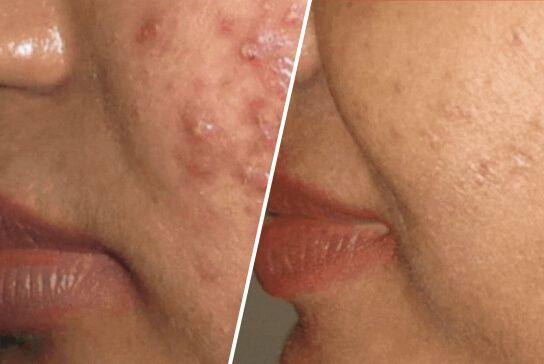
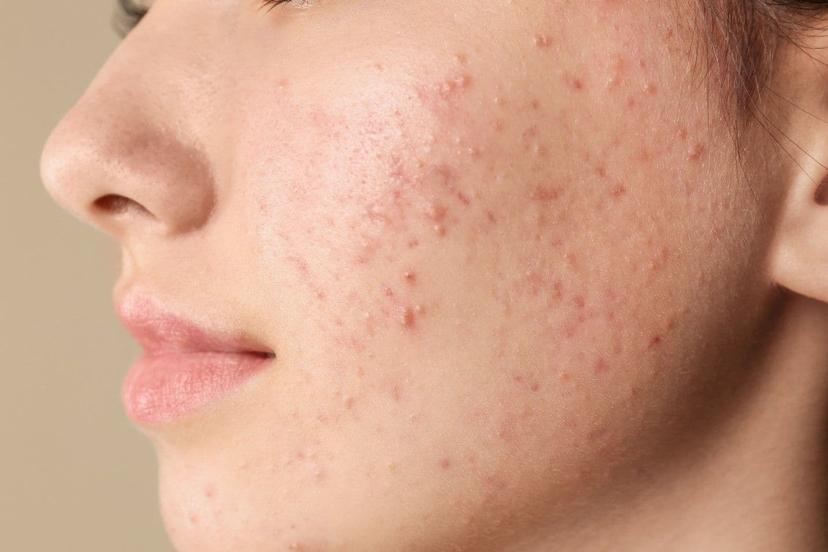
Oily skin produces more sebum compared to other skin types, making it more likely to trap dead skin cells, dirt, and bacteria inside the pores. Without regular exfoliation, this buildup can lead to clogged pores, blackheads, acne breakouts, and a dull-looking complexion.
Using an exfoliator for oily skin, one to three times a week, helps:
- Remove dead skin cells that contribute to clogged pores.
- Reduce excess oil without stripping the skin.
- Prevent blackheads, whiteheads, and acne.
- Improve skin texture and brightness.
- Enhance the absorption of serums and moisturizers.
Author Dr. Tavleen Kaur, BHMS, PGDCC - Aesthetic Physician at MakeO, specializing in PRP, GFC, Profhilo, MNRF, Botox, advanced laser treatments, and personalized acne and skin rejuvenation treatments.
While a homemade face scrub for oily skin can help remove surface dead skin cells and temporarily improve skin texture, it may not address the underlying causes of persistent oiliness, clogged pores, or recurring acne. DIY scrubs primarily work on the skin's surface, whereas concerns like blackheads, inflammatory acne, and excess sebum production often require targeted, clinically proven treatments.
Sometimes gentle exfoliation is an important part of an oily skincare routine, but over-scrubbing or relying solely on home remedies can irritate the skin barrier and potentially worsen oil production. For individuals experiencing frequent breakouts, stubborn blackheads, post-acne marks, or congested pores, dermatologist-guided treatments are often more effective.
Professional exfoliation treatments, such as chemical peels or acne treatments performed by professional dermatologists, help improve skin and manage breakouts from oiliness.
7 Best Ingredients for Homemade Scrubs for Oily Skin
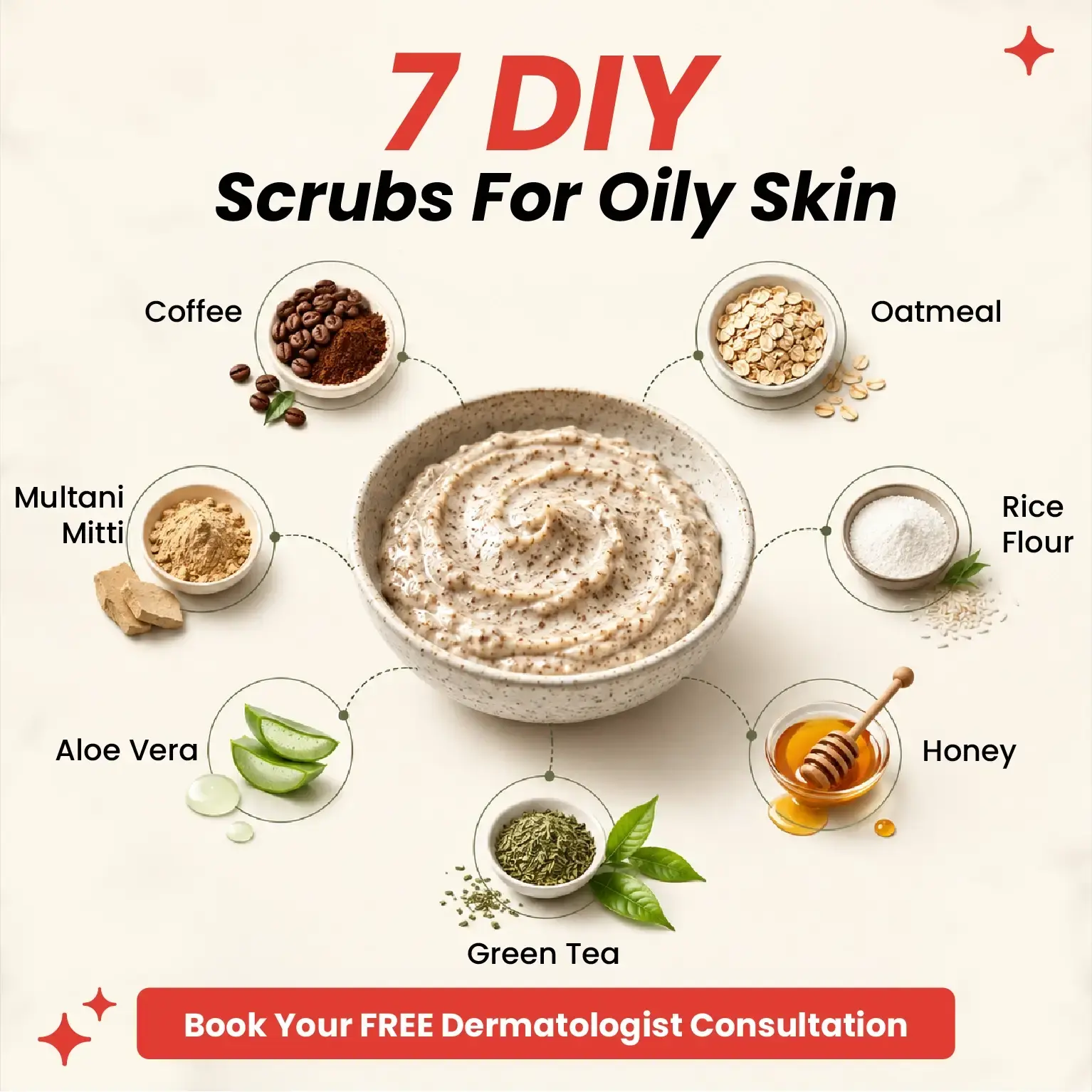
A homemade DIY face scrub for oily skin can help remove dead skin cells, manage oil, and remove impurities and dirt from the surface of the skin. These DIY face scrubs for oily skin have certain ingredients that are gentle, non abrasive and do not damage the skin barrier. Here are the 7 best rejuvenating homemade scrub recipes for oily skin:
1. Coffee Scrub for Oily Skin
Coffee is one of the most popular DIY face scrubs for oily skin. Coffee as an ingredient is used in the making of homemade scrubs because it has finely ground particles that help remove dead skin cells, excess oil, and impurities.
How to make a DIY Coffee Scrub Recipe
- 1 tbsp finely ground coffee
- 1 tbsp plain yogurt
- 1 tsp raw honey
Best For
- Excess oil
- Dull skin
- Mild blackheads
- Weekly exfoliation
2. Oatmeal Scrub for Oily Skin
Yes. Oatmeal is one of the gentlest natural exfoliators for oily skin because it removes dead skin while calming irritation.
It also contains anti-inflammatory compounds and antioxidants that make it suitable for oily, acne-prone, and sensitive skin.
How to Make a DIY Oatmeal Scrub Recipe
- 2 tbsp finely ground oats
- 1 tbsp plain yogurt
- 1 tsp honey
Mix all ingredients into a smooth paste to create a homemade exfoliating scrub for oily skin.
Best For
Acne-prone oily skin Sensitive oily skin Reducing excess oil
3. Rice Flour Scrub for Oily Skin
Rice flour is a popular ingredient in homemade exfoliating scrubs because it gently buffs away dead skin cells while helping absorb excess sebum. It leaves the skin feeling smoother and brighter, making it a popular ingredient in a homemade face scrub for oily skin.
How to make a DIY Rice Flour Scrub Recipe
- 1 tbsp rice flour
- 1 tbsp aloe vera gel
- 1 tsp rose water
Mix until a smooth paste forms.
Best For
- Oily skin with rough texture
- Mild pigmentation
- Weekly exfoliation
4. Honey Scrub for Oily Skin
Honey is a natural exfoliator; it is one of the best and gentlest ways to exfoliate the skin. Honey has humectants that attract moisture without making your skin look greasy and has antibacterial properties, which are highly suitable for oily and acne-prone skin.
How to make a DIY Honey Scrub Recipe
- 2 tbsp raw honey
- 1 tbsp finely ground oatmeal
Mix until evenly combined.
Best For
Dehydrated oily skin Mild acne Everyday skin dullness
5. Green Tea Scrub for Oily Skin
Green tea works well for oily skin. Green tea DIY face scrub for oily skin is rich in antioxidants that help calm irritated skin while reducing the appearance of excess oil. Combined with a gentle exfoliating ingredient, it makes an effective DIY scrub for oily skin.
How to Make a DIY Green Tea Scrub Recipe
- 1 tbsp finely crushed green tea leaves
- 1 tbsp yogurt
- 1 tsp honey
Mix into a thick paste.
Best For
- Oily skin exposed to pollution
- Mild redness
- Dull complexion
6. Aloe Vera Scrub for Oily Skin
Aloe is best for all skin types, but when it comes to oily skin and exfoliation, it is gentle, soothing, and has acne-healing properties. If your oily skin also feels irritated, aloe vera is one of the gentlest ingredients.
How to make a DIY Aloe Vera Scrub Recipe
- 2 tbsp fresh aloe vera gel
- 1 tbsp rice flour
Mix until smooth.
Best For
Sensitive oily skin Sun-exposed skin Mild acne
7. Multani Mitti Scrub for Oily Skin
Multani mitti, also known as fuller’s earth, is excellent for managing oil in the skin. A face scrub for oily skin helps absorb excess oil, remove impurities, and temporarily reduce shine. It is commonly used as a natural exfoliator for oily skin, especially during humid weather.
How to make a DIY Multani Mitti Scrub Recipe
- 1 tbsp Multani mitti
- 1 tsp rice flour
- Rose water as needed
Mix into a smooth paste.
Best For
- Excessively oily skin
- Enlarged pores
- Summer skincare
Homemade Scrubs vs. Chemical Exfoliators vs. Professional Treatments: Which Works Best?
Homemade scrubs can help remove surface dead skin cells and excess oil, while chemical exfoliators penetrate deeper into the pores to improve clogged pores and mild acne. However, if you're dealing with persistent breakouts, blackheads, post-acne marks, or excessive oil production, dermatologist-guided treatments offer the most targeted and long-lasting results because they address the underlying cause of your skin concerns.
Feature | Homemade scrubs | Chemical exfoliators | Professional treatment |
|---|---|---|---|
How do they work? | Physically remove surface dead skin cells | Dissolve dead skin cells and unclog pores | Treats the root cause of acne, excess oil, pigmentation, and skin texture concerns |
Depth of action | Surface-level exfoliation | Surface + Inside pores | Deeper targeting and customised treatment |
Best for | Mild oiliness | Mid-clogged pores and acne | Persistent acne, blackheads, pigmentation, enlarged pores, excessive oil production |
Results | Temporary smoother-looking skin | More consistent improvement with regular use | Personalized, long-term improvement under dermatologist supervision |
Limitations | Cannot treat active acne or deep congestion | May irritate if used incorrectly, and may not be enough for severe concerns | Customized treatment plans designed around your skin type and goals |
Examples | Oatmeal, rice flour, yogurt, coffee | Salicylic acid (BHA), glycolic acid (AHA), lactic acid | Chemical peels, HydraFacial, acne treatments, laser toning, prescription skincare |
Which Option Should You Choose?
While homemade scrubs and over-the-counter chemical exfoliators can be useful parts of a skincare routine, they often cannot address persistent skin concerns on their own. Professional evaluation helps identify the underlying cause of your skin issues and ensures you're using the most effective treatment for your skin type.
At MakeO, our dermatologists create personalized treatment plans that may include advanced chemical peels, HydraFacial, acne treatments, laser toning, and medical-grade skincare to help control excess oil, improve skin texture, reduce pigmentation, and achieve healthier-looking skin over the long term.
Book a FREE consultation with a MakeO dermatologist to receive a customized treatment plan for your skin concerns.
How to Use Homemade Face Scrubs Correctly: Ingredients to Avoid & Safety Tips
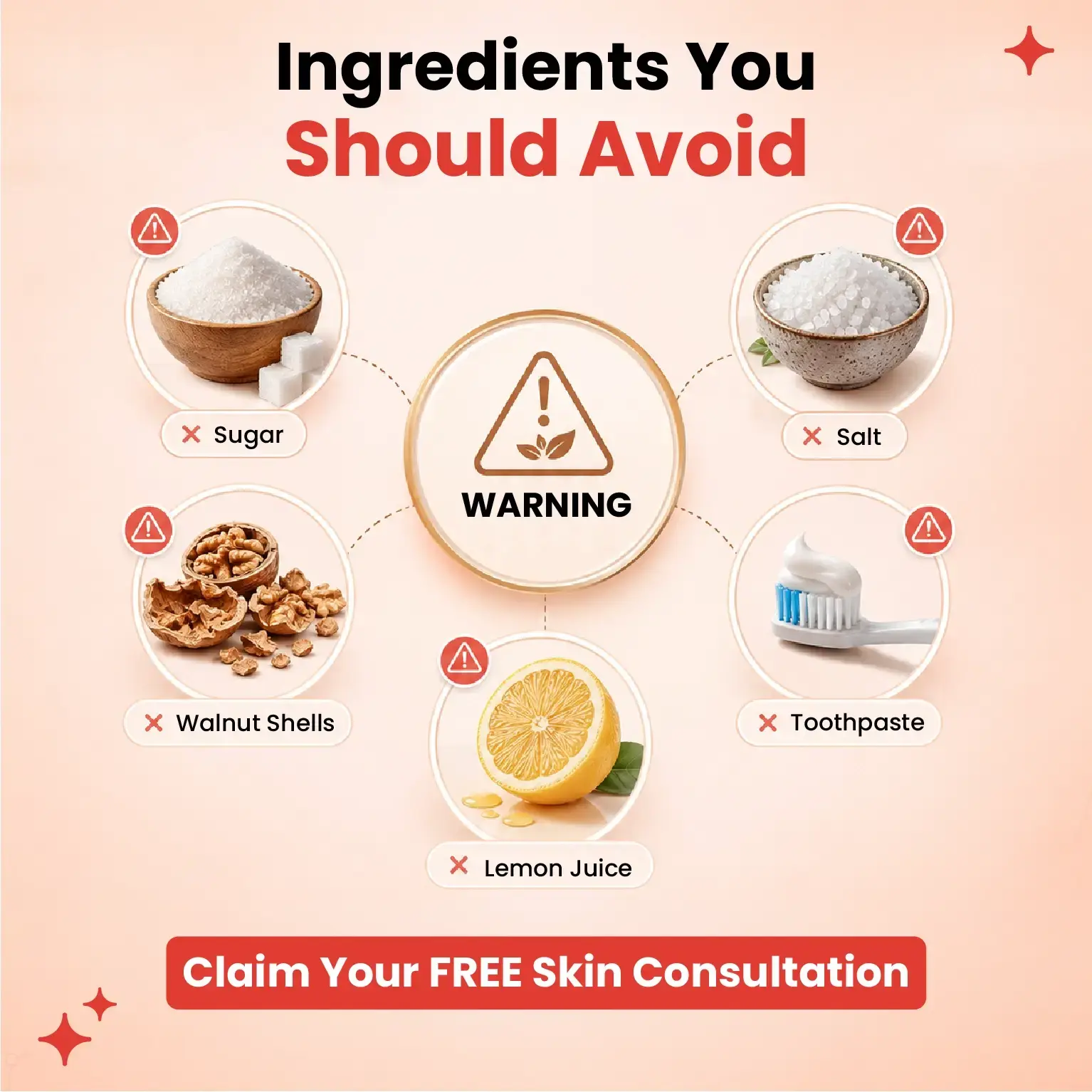
There are some DIY ingredients you must avoid for the betterment of your face. Here are some ingredients dermatologists recommend avoiding in a homemade exfoliating scrub for oily skin:
Ingredients | Why you should avoid it |
|---|---|
Sugar | Sugar crystals are rough and have uneven edges. When used as a homemade scrub for oily skin, it can tear the skin and cause irritation |
Salt | Salt is highly abrasive and may strip away natural moisture, leaving oily skin dehydrated and more prone to excess oil production. |
Walnut Shells | Crushed walnut shells have jagged particles that can damage the zskin barrier and worsen inflammation, especially if you have acne. |
Lemon Juice | Lemon is highly acidic in nature. When used in Diy skincare recipes, it may cause irritation, sun sensitivity, and pigmentation. |
Toothpaste |
Safety Tips
- Cleanse your face first to remove makeup, sunscreen, dirt, and excess oil.
- Apply the homemade face scrub for oily skin to damp skin.
- Massage gently using light circular motions for 30–60 seconds. Avoid applying excessive pressure.
- Rinse thoroughly with lukewarm water and pat your skin dry with a clean towel.
- Apply a lightweight, non-comedogenic moisturizer to restore hydration after exfoliating.
- Wear sunscreen (SPF 30 or higher) during the day, as freshly exfoliated skin is more sensitive to UV damage.
How Often Should You Exfoliate?
- Oily skin: Exfoliate 1 to 2 times a week.
- Acne-prone oily skin: Limit exfoliation to once a week and avoid scrubbing over active breakouts.
- Sensitive oily skin: Use a gentle natural scrub for oily skin no more than once a week, and discontinue use if irritation occurs.
Who Should Avoid Homemade Face Scrubs?
A homemade scrub for oily skin is not suitable for everyone. Physical exfoliation can worsen certain skin conditions and delay the healing process. Avoid using a DIY scrub for oily skin if you have:
- Active acne: Scrubbing inflamed pimples can increase irritation, spread bacteria, and worsen breakouts.
- Broken or damaged skin: Exfoliating cuts, wounds, or irritated skin can slow healing and compromise the skin barrier.
- Rosacea: Physical scrubs may trigger redness, burning, and flare-ups.
- Eczema: Scrubs can strip away essential moisture and worsen dryness and irritation.
- Recently had a chemical peel: Your skin needs time to heal after professional exfoliation, so avoid additional scrubbing.
- Recently underwent laser treatment: Freshly treated skin is more sensitive and should only be exfoliated when your dermatologist advises it.
What Should You Do Instead?
If you have any of the above skin concerns, it's best to consult a dermatologist before using homemade scrubs or exfoliating products.
At MakeO Skin & Hair Clinic, our dermatologists create personalized treatment plans based on your skin condition, sensitivity, and goals.
Depending on your skin's needs, our professional treatments may include:
- Chemical peels exfoliate dead skin cells, unclog pores, improve acne, and fade post-acne marks.
- Acne treatments to help control active breakouts, reduce excess sebum production, and prevent future acne.
- HydraFacial deeply cleans pores, removes impurities, gently exfoliates, and hydrates oily skin.
- Laser toning to improve uneven skin tone, reduce post-acne pigmentation, and enhance overall skin clarity.
Book your appointment at MakeO, where our Dermatologists create personalized treatment plans by evaluating your skin type, acne severity, oil production, and pigmentation concerns. This customized approach combines evidence-based skincare with advanced dermatological treatments to help you achieve clearer, healthier-looking skin over time.