

Aloe Vera for Acne: How to Use It and What Results to Expect?

MD Dermatologist with 10+ years of experience, specializing in clinical and cosmetic dermatology, advanced laser treatments, and trichology.
Updated on May 20, 2026


From DIY face masks to soothing overnight gels, aloe vera has been one of the most talked-about skin-suiting ingredients. Wondering how? Scroll through any skincare trends or products, and you will find aloe vera listed in most of the ingredients, especially for treating pimples, acne, and redness.
But does aloe vera really help acne, or is it just another internet skincare myth? The answer lies somewhere in between.
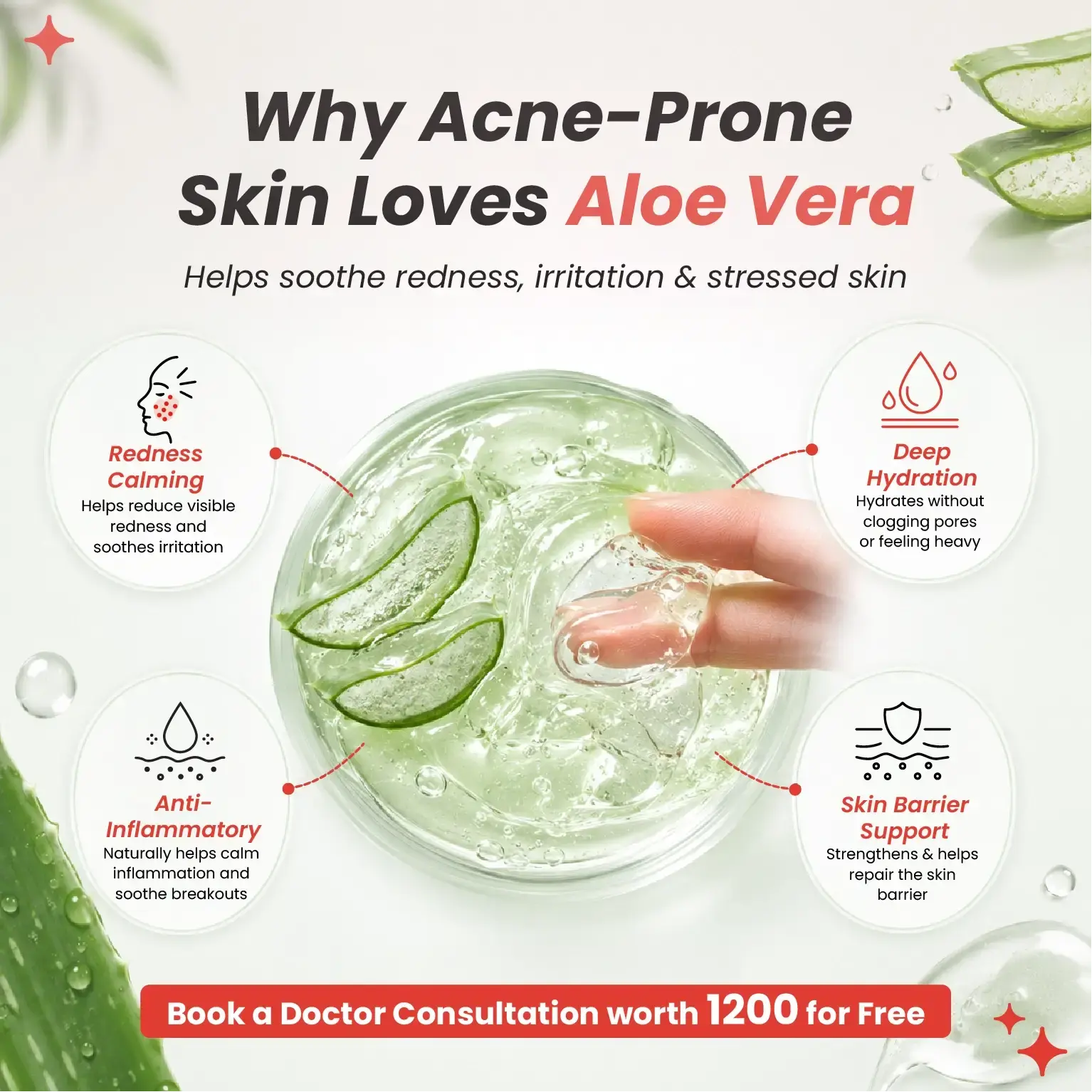
Recent studies from the National Center for Complementary and Integrative Health (NCCIH) suggest that topical aloe vera gel may help improve acne and has soothing and anti-inflammatory properties, especially for irritated or sensitive skin.
This is one reason why aloe vera gel for acne has become so popular among people looking for gentle skincare options. And if home remedies are no longer enough, professional treatments can help take your results further.
Struggling with stubborn acne or recurring breakouts? Talk to a MakeO Doctor for free!
Can Aloe Vera Really Help with Acne and Oily Prone Skin?
Yes, for a long time, aloe vera has been a popular acne care ingredient because it feels cooling, light, and gentle on stressed skin. The latest medical reports of NCCIH keep the verdict measured: aloe gel may help calm irritation and may improve acne when used alongside other treatments.
Helps Calm Redness and Irritation
One of the biggest benefits of aloe vera for acne-prone skin is its calming effect on irritated or inflamed areas. Acne breakouts can often leave the skin looking red, sensitive, and uncomfortable when you use certain products like salicylic acid or benzoyl peroxide.
Lightweight Hydration Without Feeling Greasy
People with oily or acne-prone skin often avoid moisturizers because they fear they can be heavy on the skin or clog pores. Aloe vera provides lightweight moisturization without leaving the skin feeling heavy or greasy, unlike thick creams.
May Support Skin Recovery After Breakouts
Another benefit of aloe vera for acne-prone skin is that it may help support the skin after breakouts. Acne can leave behind temporary redness, dark marks, or sensitivity, especially if the skin barrier is damaged from over-exfoliation or harsh products.
While it may not remove deep acne scars, it can help reduce post-acne redness and support overall skin comfort when used consistently as part of a gentle skincare routine
Natural & Has Anti-Inflammatory Properties
Aloe vera is known for its natural soothing and anti-inflammatory properties, which are beneficial for both oily, acne-prone skin and sensitive skin. When the skin is irritated or inflamed from pimples and leaves red marks, aloe vera may help calm the irritation while providing a cooling sensation.
Why Aloe Vera Is Popular for Sensitive Skin?
Sensitive skin can react easily to strong skincare ingredients, fragrances, or harsh exfoliants. Aloe vera is widely used because it feels gentle on the skin and is often included in products for sensitive or irritated skin.
Many fragrance-free aloe vera gels are lightweight, effortless to apply, and suitable for daily use. However, it is still important to patch test before applying aloe vera to the entire face, especially if you have highly reactive skin or allergies to plant-based ingredients.
How to Use Aloe Vera for Acne?
Here’s how you can use aloe vera for acne, pimples, or redness safely without risking your skin barrier.
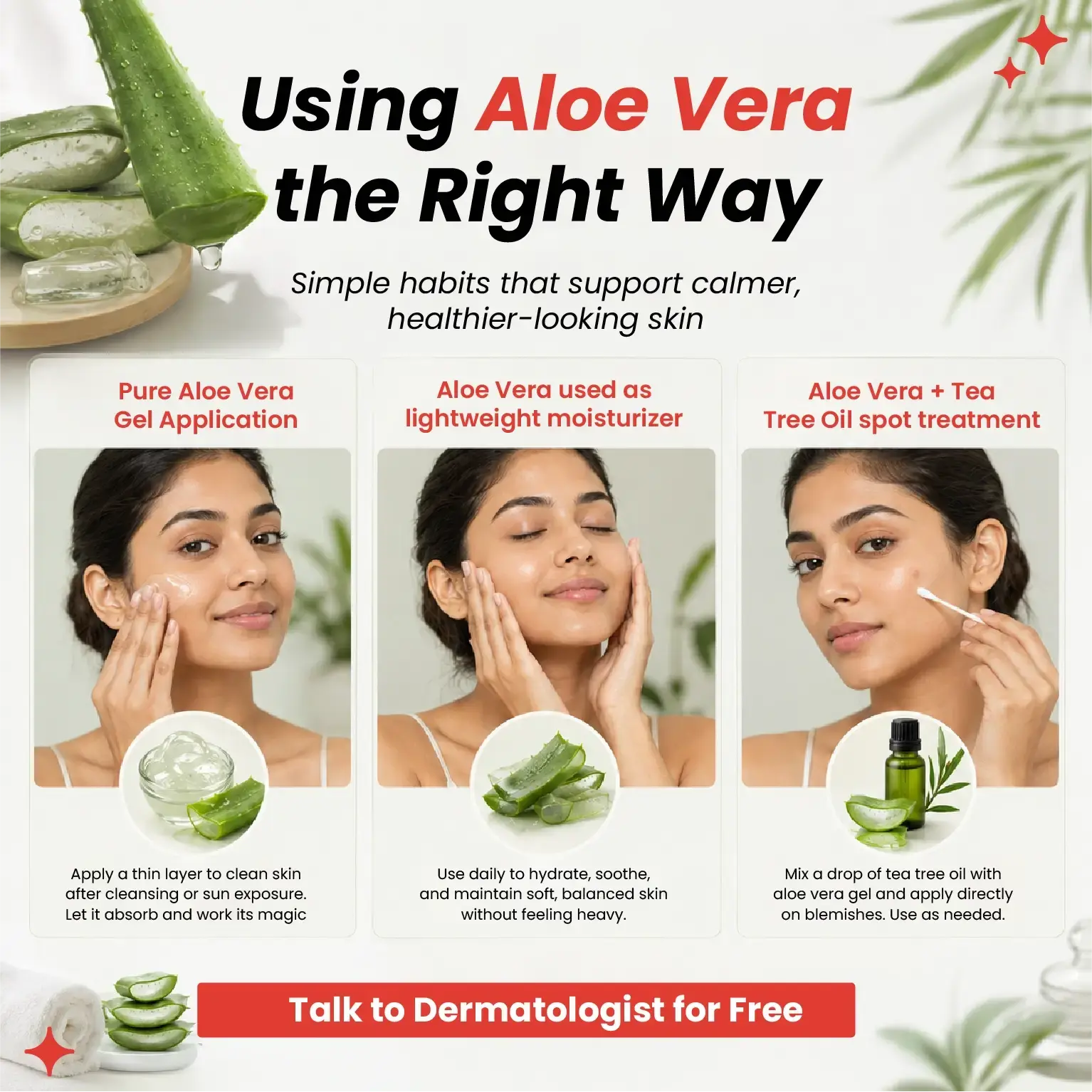
- Pure Aloe Vera Gel: For active pimples, apply a thin layer of aloe vera gel for acne on clean skin and leave it on for a short while or overnight if your skin tolerates it well.
- Aloe Vera as Moisturizer: If your skin feels dry from acne products, aloe vera can also be used as a light moisturizer. A thin layer is usually enough, especially if you want a lightweight step in your acne routine.
- Aloe Vera + Tea Tree Oil: You can also combine aloe vera with tea tree oil for extra support with breakouts, but the process needs to be done carefully. Aloe vera works wonderfully as a soothing base, so you need to dilute tea tree oil, as it can sometimes be irritating. Apply only a small amount to affected areas, and always patch-test before use.
Aloe Vera vs Popular Chemical Based Acne Treatments
Treatment | Best for | Effects on skin |
|---|---|---|
Salicylic acid | Helps manage clogged pores, whiteheads, blackheads, and pimples, and exfoliates the skin | Can dry or irritate some skin types |
Benzoyl peroxide | Can help treat active acne and also reduces acne-causing bacteria | Can dry, irritate, or peel the skin |
Retinoids | Helps manage blackheads, whiteheads, and ongoing acne control. | Moderate, irritation can happen at the initial time |
Tea Tree Oil | Spot treatment for inflamed pimples. | Can irritate sensitive skin, so use carefully. |
Niacinamide | Helping reduce redness, controlling oil, and providing general support for acne-prone skin are the key benefits. | Low side effects suit all skin types |
Are There Any Side Effects of Aloe Vera on the Face?
Although aloe vera works well for many skin types, some people may experience irritation and sensitivity, which can damage the skin barrier.
Possible side effects of aloe vera on the face include:
- Redness or irritation may appear or feel uncomfortable after application.
- Itching or burning sensation, which is something more common in people with sensitive or reactive skin.
- Small bumps or breakouts: at times, certain aloe vera products with additives may clog pores or trigger acne.
- Dryness or tightness can occur with overuse of aloe vera or when it is combined with strong acne treatments, which may weaken the skin barrier.
- Allergic reactions can occur in some people, including swelling, rashes, or severe irritation.
To reduce the risk of side effects:
- Choose fragrance-free and alcohol-free aloe vera gel,
- Patch test before full-face use,
- Avoid layering too many active ingredients together.
Not sure if aloe vera is enough for your acne? Book a free dermatologist consultation at MakeO!
Why Patch Testing Aloe Vera Matters?
Before applying aloe vera, you must conduct a patch test, especially if you have sensitive or reactive skin. A patch test can help you check whether your skin adapts to the product without irritation.
To patch test aloe vera:
- Apply a small amount behind your ear or on your inner arm.
- Leave it on for 24 hours.
- Watch for redness, itching, or discomfort.
This simple step can help reduce the risk of unexpected reactions, particularly when trying fresh aloe vera gel or a new skincare product for the first time.
When Is Aloe Vera Not Enough for Acne?
Aloe vera can help soothe redness, irritation, and mild breakouts, but it may not be enough for moderate or severe acne. If your acne keeps coming back, feels painful, or starts leaving marks and scars, it may be time to look beyond home remedies and try professional acne treatments.
When Should You See a Dermatologist for Acne?
A dermatologist can help identify the root cause of your acne and recommend treatments tailored to your skin type, acne severity, and concerns such as pigmentation or scarring.
Signs You Need Professional Acne Treatment

Here are some signs to look for that may indicate you need to see a professional dermatologist:
- Painful cystic acne,
- Frequent or stubborn breakouts,
- Acne scars or dark marks,
- Skin irritation from trying too many products,
- Or acne that does not improve after a few weeks of consistent skincare.
In these cases, relying only on aloe vera for acne may delay proper treatment and allow breakouts to worsen over time.
Professional treatments can also help when over-the-counter products stop working or when your skin becomes sensitive from experimenting with multiple ingredients.
At MakeO, our team of dermatologists may recommend treatments to support clearer, healthier-looking skin, depending on your concerns. Some common skin treatment options include:
- Chemical Peels for acne marks, uneven texture, and skin brightening,
- Hydrafacial for deep cleansing and hydration,
- Carbon Facial for oily skin, blackheads, and clogged pores.
These treatments are usually combined with a personalized skincare routine to help manage acne-prone skin more effectively over time.