

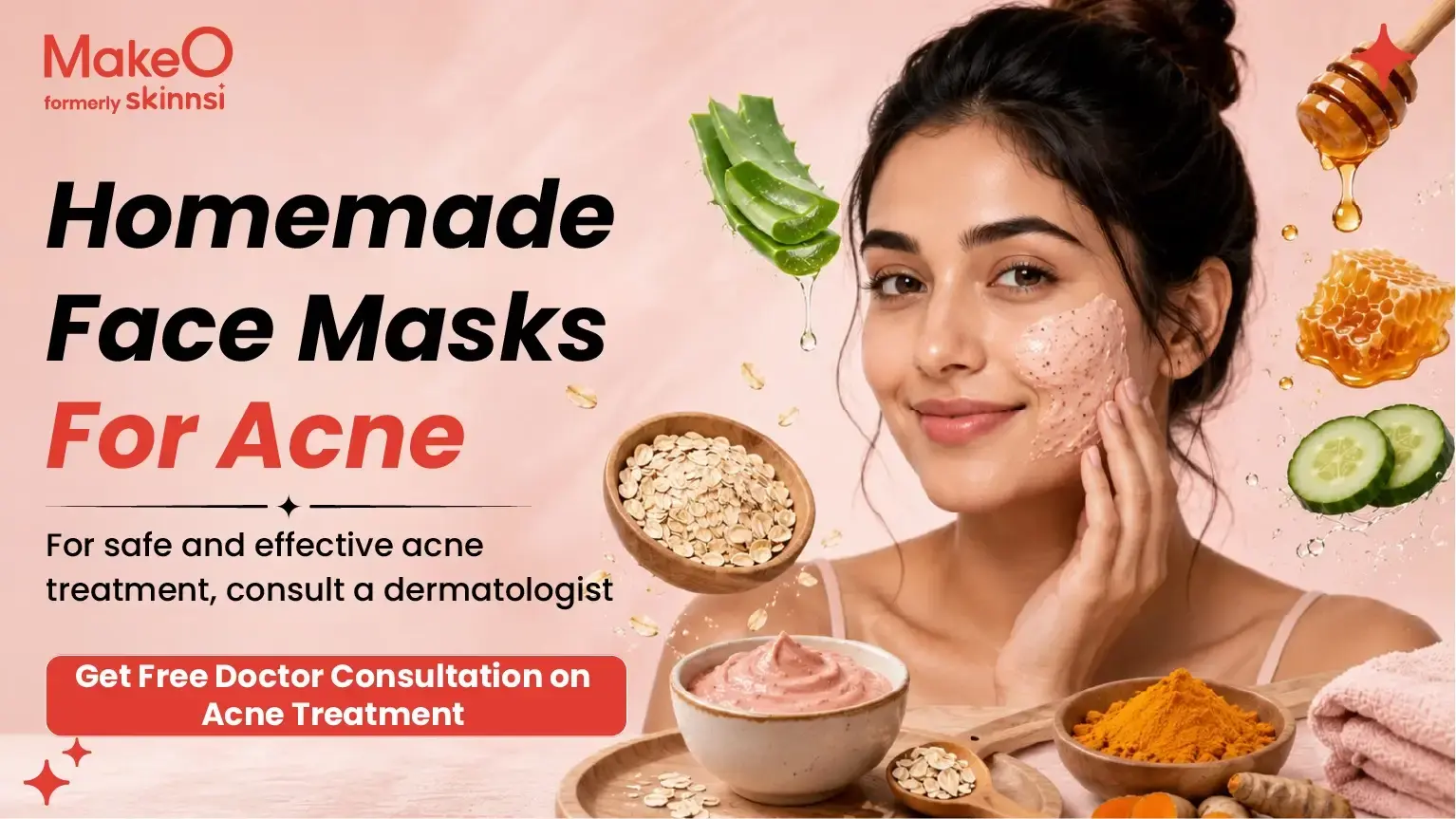
Homemade Face Masks for Acne: 10 Natural DIY Recipes That Actually Help

BHMS with PGDCC, an experienced aesthetic physician specializing in PRP, GFC, Profhilo, MNRF, Botox, advanced laser treatments, & permanent makeup.
Updated on July 10, 2026
Acne doesn't always require a complicated skincare routine. While professional acne treatment is often the most effective solution for persistent or severe breakouts, mild acne may benefit from simple at-home care.
The right homemade face mask for acne can help soothe irritated skin, reduce excess oil, and support your skin's natural barrier using ingredients you may already have at home.
In this blog, learn how to choose the best acne face mask for your skin type, understand the science behind popular DIY ingredients, discover which ingredients to avoid, and explore safe recipes you can make at home. Whether you have oily, dry, or sensitive skin, we'll also explain when a natural face mask may help and when it's time to consider a professional treatment for acne for clearer, healthier-looking skin.


Can Homemade Face Masks Really Help Acne?
Yes. Homemade face masks can help mild acne by reducing excess oil, calming inflammation, and supporting the skin barrier. However, they cannot treat moderate or severe acne, which requires dermatologist-guided treatment.
What Causes Acne?
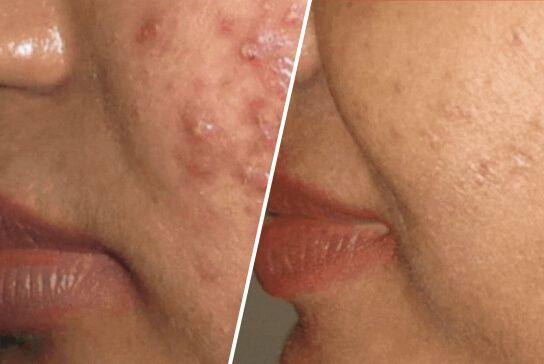
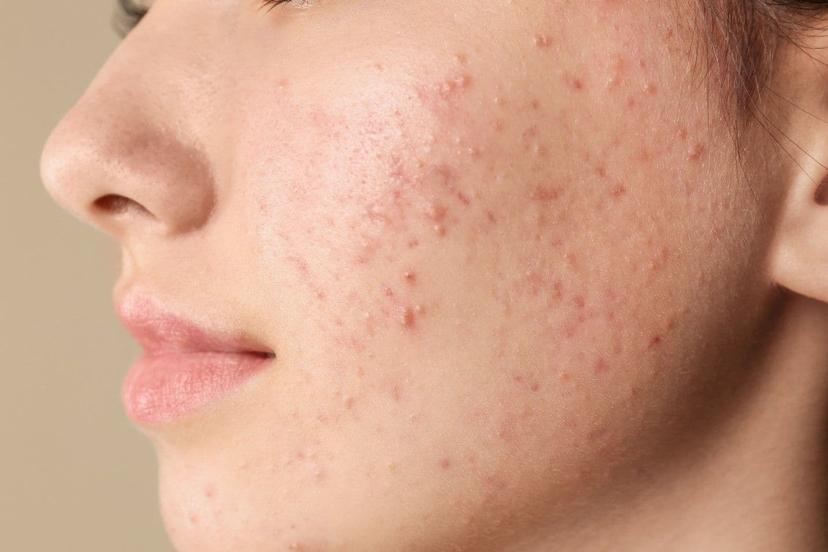
Acne develops when hair follicles become clogged with excess oil (sebum), dead skin cells, and impurities. This creates an environment where acne-causing bacteria can multiply, triggering inflammation and leading to pimples, blackheads, whiteheads, or more severe breakouts. Several factors can contribute to acne, including:
- Excess Oil Production: Overactive sebaceous glands produce more oil than the skin needs, increasing the risk of clogged pores.
- Clogged Pores: A buildup of dead skin cells and sebum blocks hair follicles, creating the ideal environment for acne to develop.
- Hormonal Changes: Hormonal fluctuations during puberty, menstruation, pregnancy, or conditions like PCOS can increase oil production and trigger breakouts.
- Inflammation: As the body's immune system responds to clogged pores and bacteria, redness, swelling, and painful acne lesions can develop.
Book your appointment with MakeO to help manage active breakouts, improve skin texture, and reduce post-acne marks.
Best Homemade Face Masks For Acne
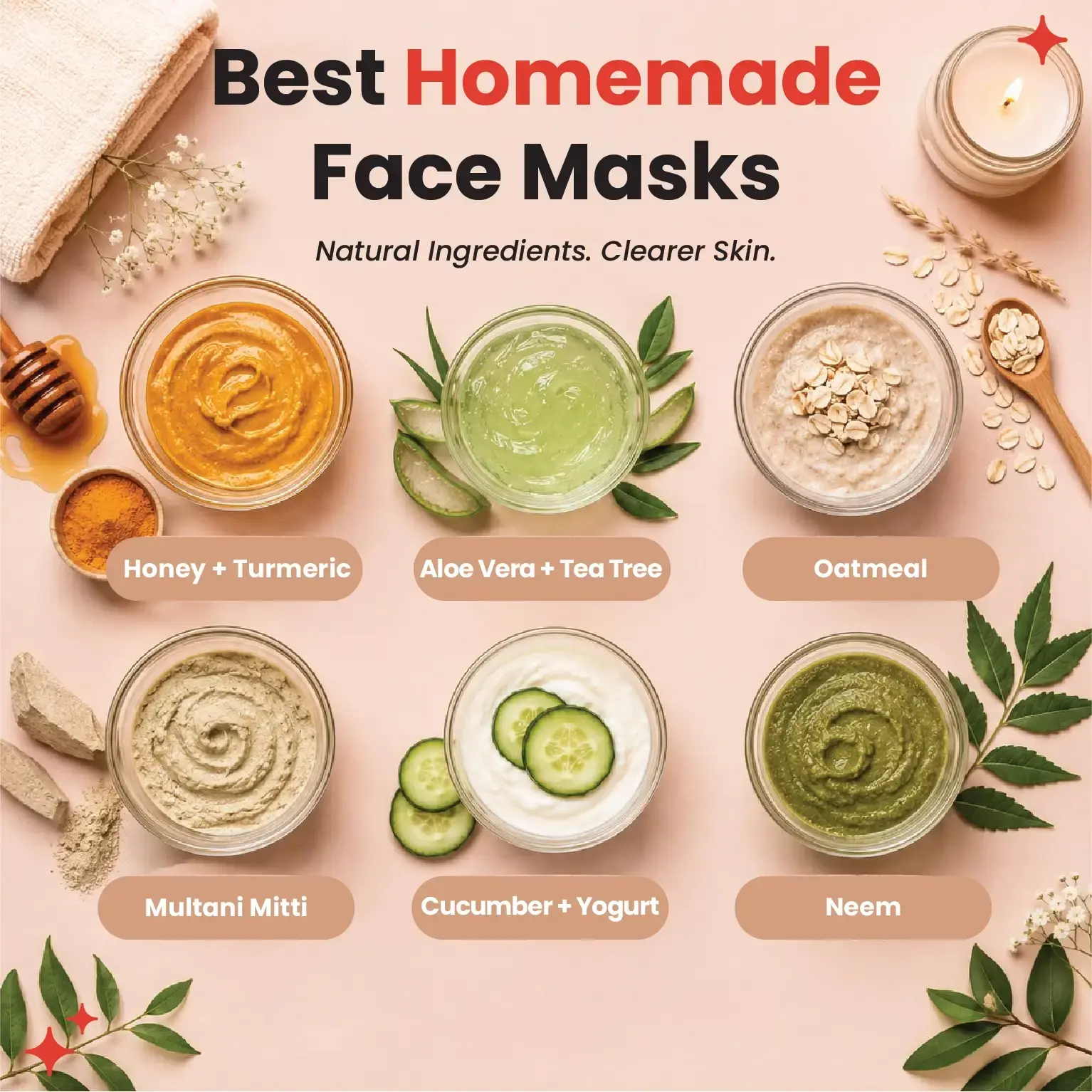
There is no single best homemade mask for acne. Different ingredients target different concerns, such as reducing excess oil, calming inflamed skin, soothing irritation, or improving skin texture. A homemade face mask for acne can support your skincare routine by addressing some of the common factors that contribute to breakouts, such as excess oil, inflammation, clogged pores, and a weakened skin barrier.
Below are some of the best homemade face masks for acne, along with how to prepare and use them safely.
1. Honey And Turmeric Homemade Face Mask For Glowing Skin And Acne
When the ingredient honey is combined with turmeric, they together create a honey-turmeric mask, which is one of the most popular DIY remedies for mild acne and provides an instant boost of glow to the skin.
How Do Honey And Turmeric Help To Heal Acne?
Honey is a natural humectant, which means it can draw moisture from the skin without clogging pores. It has some natural enzymes and antimicrobial properties, which may help prevent the growth of acne-causing bacteria while keeping the skin healthy and hydrated.
On the other hand, turmeric contains curcumin, a plant compound known for having anti-inflammatory and antioxidant properties. Curcumin helps in reducing redness and swelling of mild acne while protecting the skin from oxidative stress caused by inflammation
In a honey-turmeric face mask, the ingredient honey helps keep the skin hydrated, while turmeric is known for its soothing and antioxidant properties that may help calm inflamed skin.
Ingredients
- 1 tablespoon raw honey
- Less than half a teaspoon of turmeric powder
How to Make
- Mix the honey and turmeric until you get a smooth paste.
How to Apply
- Apply evenly to clean skin.
- Leave it on for 10 to 15 minutes.
- Rinse with lukewarm water and gently pat dry.
Best For
- Mild acne
- Redness
- Dull skin
- Homemade face mask for glowing skin and acne
Frequency: 2 to 3 times a week.
Precautions
- Perform a patch test before use.
- Turmeric may temporarily stain light-colored towels or clothing.
2. Aloe Vera And Tea Tree Acne Face Mask
Aloe vera tea tree acne face mask is ideal for oily and acne-prone skin because it targets both inflammation and excess sebum.
How Do Aloe Vera And Tea Tree Work On Acne?
Aloe vera contains polysaccharides, vitamins, and antioxidants that help hydrate the skin, support wound healing, and reduce irritation. It also helps strengthen the skin barrier, allowing acne lesions to heal more comfortably.
Tea tree oil contains terpinen-4-ol, which is a natural compound with antimicrobial properties that has been studied for its ability to reduce acne-causing bacteria on the skin. It may also help decrease redness and swelling. However, tea tree oil is highly concentrated and should always be diluted before applying it to the skin.
Ingredients
- 2 tablespoons fresh aloe vera gel
- 2 (not more than 2) drops of tea tree oil
How to Make
- Mix the tea tree oil thoroughly into the aloe vera gel.
How to Apply
- Apply a thin layer to clean skin, leave for 10 to 15 minutes, and rinse off.
Best For
- Oily skin
- Acne-prone skin
- Reduce excess oil
- Calm inflamed skin
Frequency: 2 times a week.
Precautions: Never use undiluted tea tree oil directly on your skin, as it can irritate.
3. Oatmeal Face Mask For Acne-Prone Skin
An oatmeal face mask is excellent for acne-prone skin because it absorbs excess sebum, reduces redness, and soothes inflammation. The beta-glucans in oats form a protective, hydrating layer without clogging your pores.
How Does Oatmeal Help With Acne?
Oats contain beta-glucans, which help retain moisture and strengthen the skin barrier, as well as avenanthramides, unique antioxidants known to reduce itching, redness, and inflammation. Finely ground oatmeal also acts as a mild physical exfoliant, helping remove dead skin cells without damaging the skin barrier.
Ingredients
- 2 tablespoons finely ground oatmeal
- 2 tablespoons plain yogurt or water
How to Make
- Mix until a smooth paste forms.
How to Apply
- Apply evenly and leave on for 15 minutes before rinsing.
Best For
- Sensitive skin
- Soothe irritated skin
- Improve skin texture
Frequency: 2 to 3 times weekly.
Precautions: Avoid vigorous scrubbing when removing the mask.
4. Cucumber And Yogurt Face Mask
A cucumber face mask with yogurt is one of the best face masks for acne and soothing irritated skin while improving hydration and skin radiance.
Cucumber has about 95% water and contains vitamin C and antioxidants that help cool irritated skin and reduce temporary redness. Its high water content makes it refreshing for inflamed skin.
Yogurt contains lactic acid, a naturally occurring alpha hydroxy acid (AHA) that gently exfoliates dead skin cells. This mild exfoliation can help keep pores clearer and improve overall skin texture without being overly harsh.
Ingredients
- Half cucumber, blended
- 2 tablespoons plain yogurt
How to Make
- Blend the cucumber and mix with yogurt.
How to Apply
- Apply evenly and leave on for 15 minutes before rinsing.
Best For
- Homemade face mask for glowing skin and acne
- Sensitive skin
- Brighten dull skin
Frequency: 2 times weekly.
Precautions: Use plain, unsweetened yogurt to avoid added sugars or flavorings.
5. Multani Mitti Face Mask For Oily Acne-Prone Skin
A Multani Mitti face pack is one of India's most popular natural face packs for pimples, especially for oily skin.
Multani mitti is also known as fuller's earth. It is excellent for oily skin as it helps absorb excess sebum, unclogs pores, and prevents acne. Multani mitti is also used as a natural face scrub to exfoliate all the dirt and impurities on the skin.
Ingredients
- 2 tablespoons Multani Mitti
- Rose water or plain water
How to Make
- Mix into a smooth paste.
How to Apply
- Apply a thin layer and rinse after 10–15 minutes.
Best For
- Oily skin
- Face pack for acne
- Reduce excess oil
Frequency: Once or twice weekly.
Precautions: Avoid allowing the clay to become overly dry and crack on your skin, as this may increase dryness and irritation.
6. Neem face Mask For Pimples
A neem face pack has long been used in traditional skincare for acne-prone skin. Neem leaves contain bioactive compounds such as nimbidin and azadirachtin, which have antimicrobial and anti-inflammatory properties. While more clinical research is needed, neem may help calm irritated skin and support clearer-looking skin when used as part of a regular skincare routine.
Ingredients
- 1 tablespoon neem powder
- Rose water
How to Make
- Mix into a smooth paste.
How to Apply
- Leave on for 10–15 minutes before rinsing.
Best For
- DIY face mask for pimples
- Acne-prone skin
- Oily skin
Frequency: 1 to 2 times weekly.
Precautions: Patch test before applying to your face.
7. Banana and Honey Face Mask For Dry, Acne-Prone Skin
Dry skin needs hydration during acne treatment, and this homemade face pack helps replenish moisture.
Bananas contain vitamin B6, vitamin C, potassium, and natural sugars that help soften the skin. Combined with honey, they support the skin barrier and reduce dryness caused by acne treatments, helping the skin recover more comfortably.
Ingredients
- ½ ripe banana
- 1 tablespoon honey
How to Make
- Mash and mix until smooth.
How to Apply
- Apply for 15 minutes before rinsing.
Best For
- Dry acne-prone skin
- Improve skin texture
- Homemade face mask for glowing skin and acne
Frequency: Twice weekly.
Precautions: Use a fresh banana each time.
8. Avocado Face Mask
A homemade avocado face mask for acne helps hydrate the skin and contains many skin-conditioning nutrients.
Avocados have healthy fatty acids, vitamin E, and antioxidants that help reinforce the skin barrier and reduce moisture loss. A stronger skin barrier can better tolerate acne treatments while reducing dryness and irritation.
Ingredients
- ¼ ripe avocado
- 1 teaspoon honey
How to Make
- Mash together until creamy.
How to Apply
- Leave on for 15 minutes before rinsing.
Best For
- Dry acne-prone skin
- Soothe irritated skin
- Improve skin texture
Frequency: Once or twice weekly.
Precautions: Avoid if you have an avocado allergy.
9. Raw Honey Spot Mask For Acne
A raw honey face mask can also be used as a spot treatment instead of applying it to the entire face.
Raw honey forms a protective layer over individual pimples while providing hydration and naturally occurring antimicrobial compounds. This creates a moist environment that supports the skin's natural healing process and may help reduce irritation around blemishes.
Ingredients
1 teaspoon raw honey
How to Make
No preparation required.
How to Apply
Apply directly to individual pimples for 15 to 20 minutes before rinsing.
Best For
- Mild pimples
- Homemade face mask for acne
- Natural skincare routine
Frequency: Once daily as needed.
Precautions: Use only pure, raw honey and discontinue use if irritation develops.
10. Activated Charcoal Face Mask For Acne
A charcoal face mask is commonly used to refresh and unclog pores in oily skin. Activated charcoal has a highly porous surface that can bind to excess oil and surface impurities, leaving the skin feeling cleaner. Although it won't remove blackheads permanently or treat acne at its source, it may help reduce shine and improve the appearance of oily skin.
Ingredients
- 1 teaspoon activated charcoal powder
- 2 teaspoons aloe vera gel
How to Make
- Mix into a smooth paste.
How to Apply
- Leave on for about 10 minutes before rinsing.
Best For
- DIY acne mask
- Oily skin
- Unclog pores
- Reduce excess oil
Frequency: Once weekly.
Precautions: Overuse may dry out the skin, so limit application to once a week.
Reviewed by Dr. Jill Chitalia, MD, Dermatologist with 10+ years of experience in clinic and cosmetic dermatology, explains,
"Homemade face masks can be a helpful addition to your skincare routine, particularly for mild acne and occasional breakouts. Ingredients such as honey, aloe vera, oatmeal, and turmeric may help soothe irritated skin, reduce excess oil, and support the skin's natural barrier when used appropriately. However, it's important to remember that DIY remedies are supportive rather than curative.
If you experience persistent acne, painful cystic acne, frequent breakouts, or acne that is leaving scars, I recommend consulting a dermatologist instead of relying solely on home remedies because acne often has underlying causes, such as hormonal changes or inflammation, that require evidence-based treatments tailored to your skin type.
Combining professional guidance with a consistent skincare routine offers the best chance of achieving clearer, healthier skin while reducing the risk of long-term scarring.
Best Natural Ingredients For Acne Face Masks
Honey, aloe vera, turmeric, oatmeal, and yogurt are among the best natural ingredients for acne because they help hydrate the skin, reduce inflammation, absorb excess oil, and support the skin barrier.
Note: While these natural ingredients may help manage mild breakouts, they work best as part of a consistent skincare routine rather than as a standalone acne treatment.
Ingredients | How does it help acne-prone skin | Best for |
|---|---|---|
Honey | Naturally hydrates the skin without clogging pores and has antimicrobial properties that may help reduce acne-causing bacteria while supporting the skin barrier. | Dry acne-prone skin, homemade face mask for acne, homemade face mask for glowing skin and acne |
Aloe Vera | Rich in polysaccharides and antioxidants that help soothe irritated skin, reduce redness, and support the skin's natural healing process. | Sensitive skin, inflamed acne, natural face mask for acne |
Oatmeal | Contains beta-glucans and avenanthramides that help calm redness, strengthen the skin barrier, and gently cleanse without stripping moisture. | Sensitive skin, irritated skin, redness |
Turmeric | Has curcumin, which possesses anti-inflammatory and antioxidant properties that may help calm inflamed pimples and reduce redness. | Mild acne, face mask for acne, occasional breakouts |
Multani Mitti | Naturally absorbs excess sebum, dirt, and surface impurities, helping reduce shine and keep pores feeling cleaner. | Naturally absorbs excess sebum, dirt, and surface impurities, helping reduce shine and keep pores feeling cleaner. |
Yogurt | Contains lactic acid, a gentle alpha hydroxy acid (AHA) that exfoliates dead skin cells, improves skin texture, and promotes brighter-looking skin. | Dull skin, rough skin texture, acne face mask |
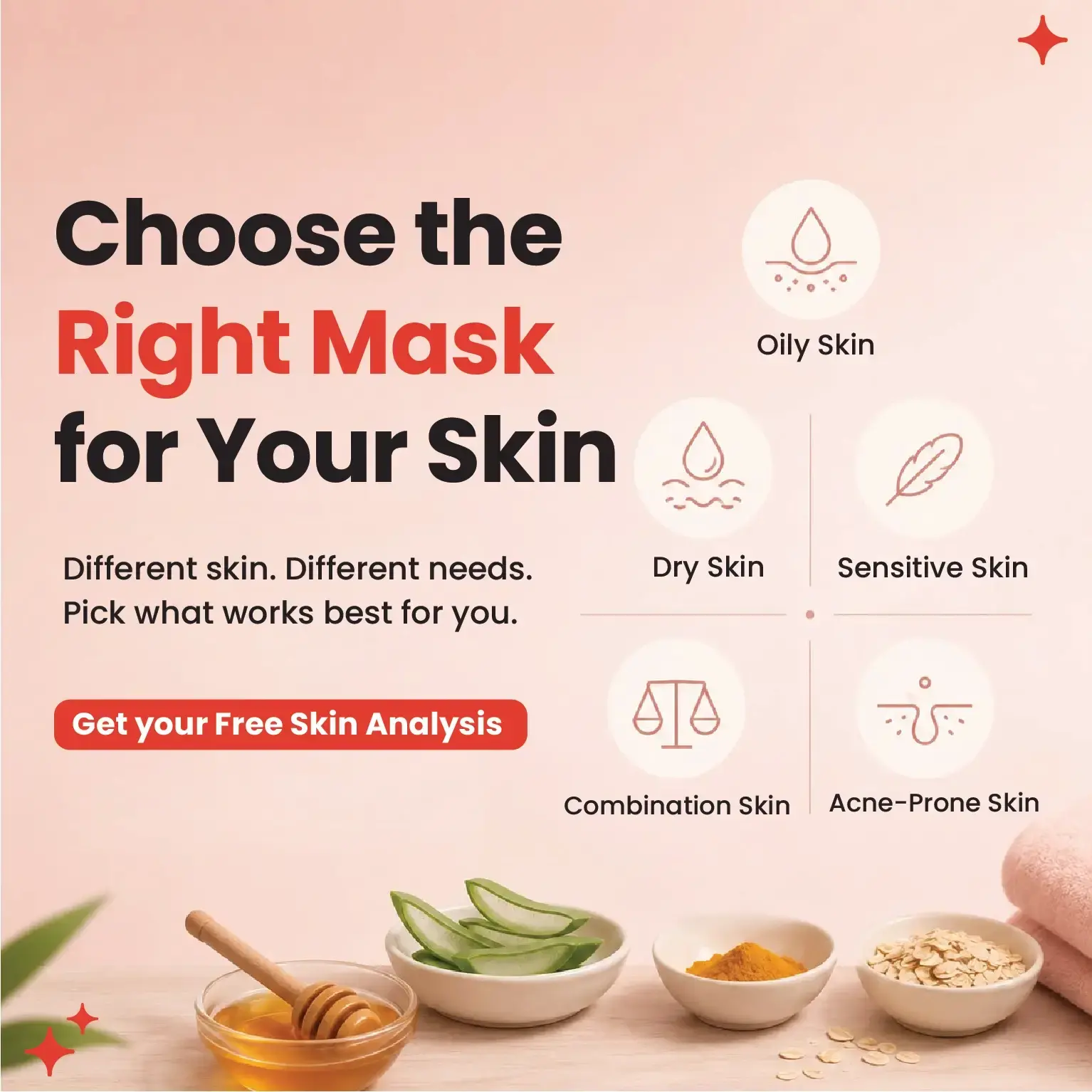
Which Homemade Face Mask Is Best for Your Skin Type?
Some of the best homemade face masks that you can try, according to your skin type, are
Skin Type | Recommended face mask | Why it works |
|---|---|---|
Oily skin | Multani Mitti + Tea Tree Oil | Helps absorb excess oil, unclogs pores, and makes an effective natural face pack for pimples and a DIY acne mask for oily skin. |
Dry Skin | Honey + Banana | Hydrates the skin, supports the skin barrier, and makes a nourishing homemade face pack for dry, acne-prone skin. |
Combination | Cucumber + Yogurt | Balances hydration while gently exfoliating, making it a refreshing homemade skin mask for combination skin. |
Sensitive Skin | Aloe Vera + Oatmeal | Helps calm redness, soothes irritation, and supports the skin barrier with minimal risk of dryness. |
Acne-Prone Skin | Honey + Turmeric | Helps soothe mild inflammation and is one of the most popular face packs for acne and DIY face masks for pimples for occasional breakouts. |
Quick Tip: If you are unsure which homemade acne face mask to choose, start with gentle ingredients like aloe vera, honey, or oatmeal. Patch test every homemade skin mask before applying it to your face, and consult a dermatologist if you have persistent, painful, or cystic acne.
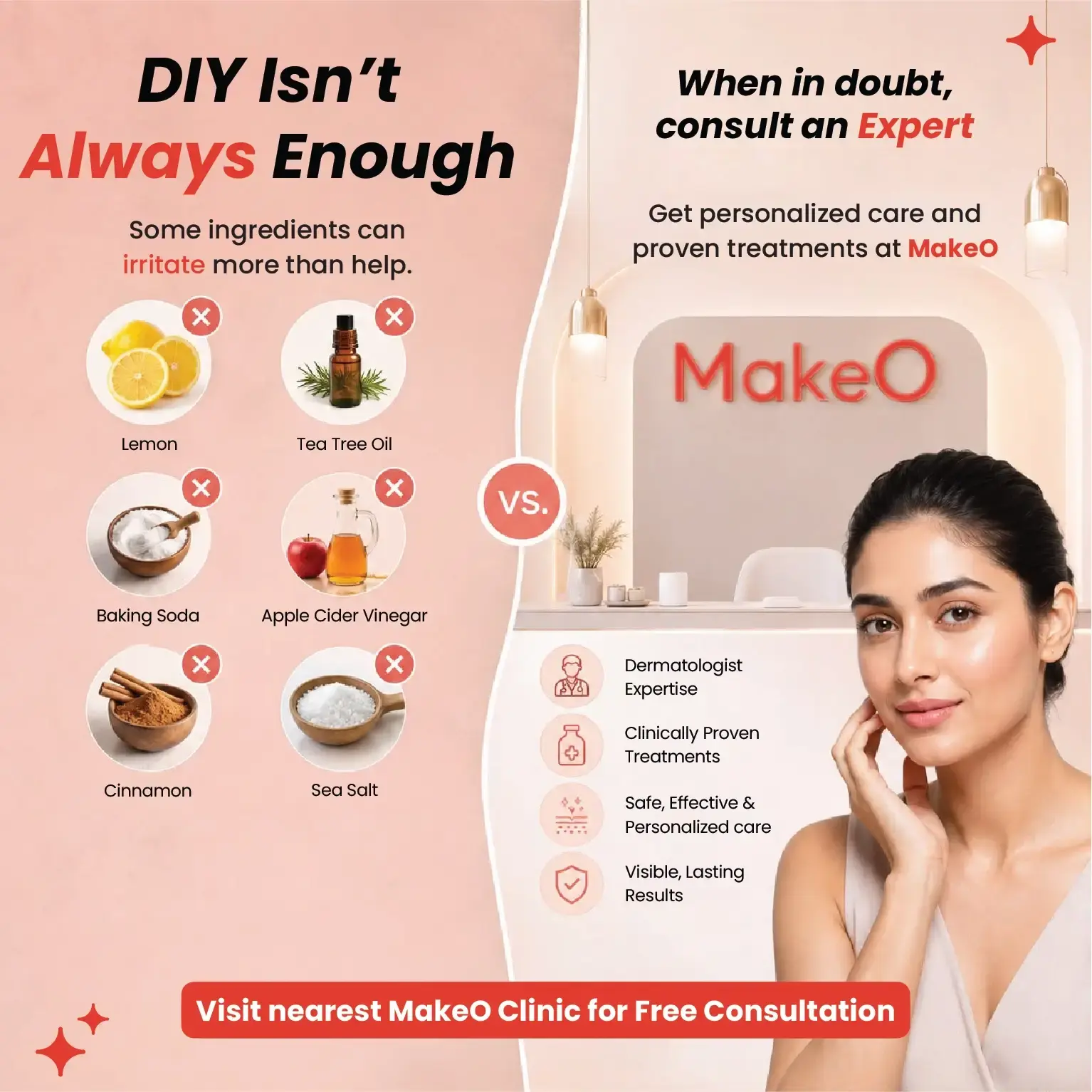
Ingredients to Avoid in DIY Face Masks
Some of the ingredients that you must avoid in a homemade face mask for acne
Ingredients | Why you should avoid it |
|---|---|
Lemon juice | Lemon juice is highly acidic and can disrupt your skin's natural pH. It may cause irritation, chemical burns, and excessive dryness, and increase the risk of sun sensitivity and hyperpigmentation after UV exposure. |
Apple Cider Vinegar | Although there are many who use ACV in DIY skincare, it is highly acidic and may burn or irritate the skin, especially if used undiluted. |
Baking Soda | Baking soda has a high alkaline pH that can strip away your skin's protective barrier (acid mantle). This may lead to dryness and irritation and make acne-prone skin more vulnerable to bacteria. |
Sugar, Coffee Grounds & Walnut Shells | These physical exfoliants are too abrasive for facial skin. Their rough particles can create tiny micro-tears, increasing inflammation and potentially worsening acne. |
Toothpaste | Toothpaste is formulated for teeth, not skin. Ingredients such as hydrogen peroxide, menthol, and baking soda can cause irritation, excessive dryness, and even chemical burns when applied to pimples. |
Undiluted Essential Oils | Essential oils, including tea tree oil, are highly concentrated. Applying them directly to the skin can trigger allergic reactions, irritation, or contact dermatitis. Always dilute them in a suitable carrier, such as aloe vera gel or a carrier oil, before |
Dermatologist's Advice: A good acne face mask should help support your skin barrier, not damage it. So be cautious and use gentle ingredients such as honey, aloe vera, oatmeal, and yogurt, and avoid harsh DIY trends that promise instant results. If your acne is persistent, painful, or causing scars, consult a dermatologist instead of experimenting with potentially irritating home remedies.
Why Homemade DIY Face Masks Are Not Enough?
Sometimes, homemade DIY face masks are not enough for treating acne because at times your skin needs professional treatment rather than these homemade ones. However, if your acne is caused by deeper underlying factors, home remedies alone may not deliver the results you're looking for.
If you're experiencing persistent breakouts, painful acne, hormonal acne, cystic acne, or acne scars, and no amount of skincare or homemade face masks for acne remedies is working for you, then it's a sign to receive professional dermatological care.
Why Choose MakeO for Acne Care Treatment?
At MakeO, acne treatment is designed by dermatologists to go beyond what a face mask for acne can achieve. In our professional skincare clinic, our professional team of dermatologists designs your treatment plan according to your skin type, acne severity, and long-term skin goals.
Here's what makes MakeO different:
- Dermatologist-designed treatment plans: Every protocol is created to help manage acne, improve skin texture, restore hydration, and support overall skin health.
- Personalized skin assessment: Before recommending any treatment, dermatologists evaluate your skin type, acne concerns, pigmentation, and hydration levels to create a customized treatment plan.
- Advanced acne and skin treatments: Depending on your skin's needs, your dermatologist may recommend treatments such as HydraFacial, chemical peels, laser toning, anti-pigmentation treatments, or DermaFacial to target active acne, acne marks, uneven skin tone, and dullness.
- Experienced dermatologists and skincare experts: Treatments are performed following standardized clinical protocols to ensure safety, consistency, and effective care.
- Professional-grade technology: MakeO combines dermatologist-approved skincare products with advanced US FDA-cleared technologies to deeply cleanse pores, improve skin texture, restore hydration, and support healthier-looking skin.
- High standards of hygiene and safety: Every treatment follows strict hygiene protocols to provide a safe and comfortable skincare experience.
- Convenient treatment options: Based on service availability, you can choose to visit a MakeO clinic or book selected skincare services at home.
Whether your goal is to treat acne, reduce post-acne pigmentation, improve skin texture, boost hydration, or achieve a healthier glow, MakeO offers personalized solutions backed by dermatology expertise.
Ready to move beyond home remedies? Schedule a skin assessment at MakeO and get rid of acne and pigmentation.
The Bottom Line
A homemade face mask for acne can be a helpful addition to your skincare routine, but it cannot replace professional treatment for moderate to severe acne. If you're dealing with hormonal acne, cystic acne, painful acne, or persistent breakouts, consulting a dermatologist early can help prevent long-term scarring and guide you toward treatments that are designed for your skin's unique needs.
Key Takeaways
- Homemade face masks work best for mild acne and occasional breakouts, not severe or cystic acne.
- Ingredients like honey, aloe vera, turmeric, oatmeal, Multani Mitti, and yogurt may help soothe inflammation, hydrate the skin, and control excess oil.
- Always choose a face mask based on your skin type, whether oily, dry, combination, or sensitive.
- Avoid harsh DIY ingredients such as lemon juice, baking soda, toothpaste, and undiluted essential oils, as they can damage the skin barrier.
- Patch test every DIY face mask before applying it to your entire face.
- Persistent, painful, hormonal, or cystic acne usually requires dermatologist-guided treatment rather than home remedies.
- Professional treatments such as chemical peels, HydraFacials, laser toning, and customized acne treatments can help address acne, post-acne pigmentation, and skin texture more effectively.